

Disclosure: As an Amazon Associate, Bookish Wisdom earns from qualifying purchases. This doesn't change our picks or your price.
TL;DR: When her family loses its money, young Agnes Grey becomes a governess to help them. She is mistreated by two wealthy families whose spoiled children torment her and whose parents blame her for everything. Through patience and quiet dignity, she survives, and she finds love with the modest Mr. Weston and a new life running a small school with her mother.
Table of Contents
Agnes Grey at a Glance
| Author | Anne Brontë |
| First published | 1847 |
| Type | Novel |
| Best for | readers who want a quiet, honest classic about work and dignity |
Agnes Grey is the first novel by Anne Brontë, published in 1847. It draws on Anne's own experiences as a governess and gives a realistic picture of the job's loneliness and humiliations. Below you will find a part-by-part summary, five key takeaways, ideas worth remembering and a note on who will enjoy it.
Content note: Includes cruelty to animals by children and emotional mistreatment.
Main Characters
- Agnes Grey: A gentle, determined young governess and the narrator.
- The Bloomfields: A family with unruly, cruel children.
- Rosalie Murray: A vain, flirtatious pupil.
- Mr. Weston: A kind, sincere young man who notices Agnes.
- Mrs. Grey: Agnes's practical, loving mother.
What Happens, Part by Part (Contains Spoilers)
Leaving home
Agnes's father loses the family's savings in a failed investment. Wanting to help and prove herself, Agnes, the youngest daughter, becomes a governess, though her family thinks she is too young and sheltered.
The Bloomfields
Her first post is with the Bloomfields, whose children are wild and spoiled. Tom tortures birds, and the girls ignore her. Their parents give Agnes no authority but blame her for their behavior. She is dismissed after less than a year.
The Murrays
Agnes's second post is with the wealthy Murray family at Horton Lodge. Her older pupil, Rosalie, is beautiful and vain, interested only in flirting and marrying well. Agnes is treated as invisible. She takes comfort in helping poor local villagers.
Mr. Weston
Agnes meets Mr. Weston, the new curate, who is kind to the poor and to her. She quietly falls in love. Rosalie, jealous of the attention, flirts with Weston to tease Agnes, while she herself marries a rich, unpleasant lord and becomes unhappy.
A new start
After her father's death, Agnes and her mother open a small school in a seaside town. One morning on the beach, Agnes meets Mr. Weston again, who has found a new post nearby. He proposes, and they marry and live modestly and happily.
5 Key Takeaways
- Dignity does not depend on social status.
- Patience can be a form of strength.
- Parents shape children's character.
- Kindness to the powerless reveals true character.
- Quiet love can be the most lasting.
Ideas Worth Remembering
These are paraphrased, not direct quotes:
- Being underestimated can build resilience.
- Wealth does not make people good or happy.
- Honest work deserves respect.
Who Should Read Agnes Grey?
Read Agnes Grey if you enjoy the Brontës, quiet realistic novels or stories about working women. It suits teens and adults.
Questions to Think About After Reading
These prompts work for solo reading, a book club or a classroom discussion of Agnes Grey:
- Why are the children so badly behaved?
- How does Agnes stay true to herself?
- Compare Agnes to Jane Eyre.
How to Use This Summary
Use this page as a quick reference before a book club meeting, an exam, or a decision about whether Agnes Grey is worth your time. The takeaways are written to stand on their own. If a point interests you, go back to the book for the author's full story, characters and style, which no short summary can replace.
A Note on Accuracy and Spoilers
This summary is based on the published text of Agnes Grey, not on any film, series or stage adaptation, which often change the story. Details are kept at the level of the main events so that nothing is invented. Editions differ slightly in length and wording, so page numbers and small details may vary between copies.
Should You Read the Book?
Yes. It is short, gentle and sharply observant about class and childhood, and it offers a realistic look at a governess's life.
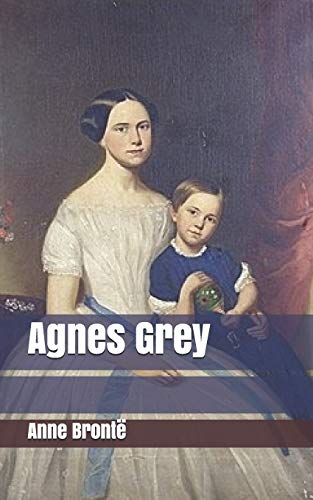
Check price of Agnes Grey on Amazon
What to Read Next
- The Tenant of Wildfell Hall by Anne Brontë: Anne's bolder second novel
- Jane Eyre by Charlotte Brontë: another governess's story
- Villette by Charlotte Brontë: a lonely teacher abroad
Related: The Tenant of Wildfell Hall by Anne Brontë: Summary and Key Takeaways
Frequently Asked Questions
What is Agnes Grey about?
A young governess endures difficult employers and finds love and independence.
Who wrote Agnes Grey?
Anne Brontë, in 1847.
Is it autobiographical?
Partly. Anne worked as a governess herself.
Who does Agnes marry?
Mr. Weston.
Why does Agnes become a governess?
Her family loses its money, and she wants to help.
What age is it for?
Teens and adults.
How long is it?
About 250 pages.
Is it as famous as Jane Eyre?
No, but it is admired for its honesty and quiet strength.
What happens to Rosalie Murray?
She marries a rich lord for status and becomes unhappy.
How does it end?
Agnes and Mr. Weston marry and live happily with their children.
Who is Tom Bloomfield?
A cruel young pupil who torments animals and is encouraged by his relatives.
Where do Agnes and her mother open their school?
In a seaside town, where Agnes later meets Mr. Weston again on the beach.
Who are the main characters in Agnes Grey?
The main characters are Agnes Grey, the Bloomfields, Rosalie Murray, Mr. Weston and Mrs. Grey. Agnes Grey: A gentle, determined young governess and the narrator. The Bloomfields: A family with unruly, cruel children. Rosalie Murray: A vain, flirtatious pupil.
Is Agnes Grey worth reading?
It depends on what you want. The book is best for readers who want a quiet, honest classic about work and dignity. If that describes you, it is likely a good fit. If not, the titles under What to Read Next may suit you better.