

Disclosure: As an Amazon Associate, Bookish Wisdom earns from qualifying purchases. This doesn’t change our picks or your price.
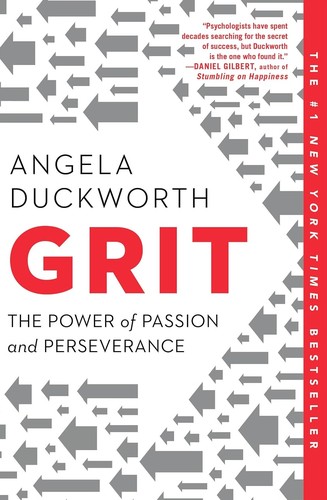
TL;DR: Grit: The Power of Passion and Perseverance by Angela Duckworth argues that long-term success depends less on talent than on grit, a combination of passion and perseverance for long-term goals. Duckworth shows how grit can be measured and grown through interest, practice, purpose and hope, and how parents, coaches and cultures can nurture it.
Grit grew out of Angela Duckworth’s journey from seventh-grade math teacher to psychology professor at the University of Pennsylvania. As a teacher, she noticed that IQ didn’t fully explain who succeeded in her classroom, and she went on to study grit in settings from West Point to the National Spelling Bee. Published in 2016, the book blends research with stories of high achievers and practical advice. It also sparked debate about how much grit explains and how it should be used. Here’s a summary of the main ideas.
Table of Contents
Grit at a Glance
| Detail | Info |
|---|---|
| Author | Angela Duckworth |
| Published | 2016 |
| Genre | Psychology, self-help |
| Core idea | Grit, passion plus perseverance, predicts long-term achievement |
| Structure | Three parts: what grit is, growing it inside and growing it outside |
| Best for | Students, parents, coaches and professionals who want to build persistence |
What Is Grit About?
Duckworth defines grit as perseverance and passion for long-term goals. Gritty people don’t just work hard; they stay devoted to a consistent top-level goal over years. She says that talent matters, but effort counts twice: talent multiplied by effort equals skill, and skill multiplied by effort equals achievement. Because effort enters both equations, someone with less natural talent who keeps going can overtake a talented person who quits.
She illustrates the idea through research on cadets at the United States Military Academy at West Point, where a measure of grit predicted who would complete the grueling summer training known as Beast Barracks better than the school’s own admission score. She found similar results among spelling bee finalists, sales employees and novice teachers.
Key Ideas, Part by Part
Part One: What Grit Is and Why It Matters
The first chapters explain how grit differs from talent and why we undervalue effort. Duckworth notes that we are often enamored of natural talent and that this bias can discourage those who need to work harder. She offers a short grit scale, with items such as I finish whatever I begin and I have been obsessed with a certain idea for a short time but later lost interest, so readers can estimate their own level.
She also argues that grit can grow. It is partly shaped by genes, but experience, culture and maturity also play a role, and many people become grittier as they age.
Part Two: Growing Grit From the Inside
The second part gives four ingredients for developing grit from within. Interest means finding something you enjoy and that fascinates you, which usually develops through exploration rather than a sudden epiphany. Practice means deliberate practice, a concept from psychologist Anders Ericsson that involves setting a stretch goal, focusing fully, getting immediate feedback and repeating until mastery.
Purpose means connecting your work to something beyond yourself, so that your effort has meaning for others. Hope means believing that your efforts can improve the future, which Duckworth links to a growth mindset, the belief that abilities can be developed. She also describes goal hierarchies, in which low-level goals serve mid-level goals that serve a top-level goal.
Part Three: Growing Grit From the Outside
The final part looks at how parents, teachers, coaches and organizations can foster grit. Duckworth describes parenting that combines high expectations with warmth, and gives the hard thing rule used in her own family: everyone must do something hard that requires daily practice, you can quit only at a natural stopping point, such as the end of a season, and you choose your own hard thing.
She also highlights the benefits of extracurricular activities that last for years, and the power of culture, using the example of coach Pete Carroll and the Seattle Seahawks, whose team culture emphasized competition, passion and mutual support. Gritty cultures, she says, define norms and shared identity.
7 Key Takeaways From Grit
- Effort counts twice. It builds skill and then turns skill into achievement.
- Grit is passion plus perseverance. Sticking with a long-term goal matters more than short bursts.
- Interest comes from exploration. Try different things to find what fascinates you.
- Practice deliberately. Stretch goals, focus and feedback build mastery.
- Connect to purpose. Work that helps others sustains motivation.
- Cultivate hope. Believe in growth and keep going after setbacks.
- Create supportive environments. Warmth and high standards help others grow.
Ideas Worth Remembering
- Talent matters, but effort multiplies it twice. (paraphrased)
- Your top-level goal should guide smaller goals, not the other way round. (paraphrased)
- Passion often develops over time rather than arriving fully formed. (paraphrased)
- Doing a hard thing regularly builds the habit of not giving up. (paraphrased)
How to Apply Grit in Real Life
- Take the grit scale. Use it as a starting point, not a label, and revisit in a year.
- Pick a hard thing. Choose something challenging, and practice a little each day.
- Use deliberate practice. Set a specific stretch goal and ask for feedback.
- Find your why. Write down how your work helps someone else.
- Build a gritty team. Share high standards and show support.
Criticisms and Limits
Critics note that Grit’s claims have been tempered by later research, which suggests that grit’s added value over conscientiousness is limited and that some effects are smaller than early studies indicated. Others warn that focusing on grit can distract from structural factors, such as poverty and unequal schools, that limit what effort can accomplish.
Duckworth herself has said that grit should not replace other support, and that it’s a skill to be taught, not a test to be passed. Read with that in mind, the book remains an engaging overview of research on persistence and a useful prompt to examine your goals.
The Hard Thing Rule in Practice
In Duckworth’s family, each person chooses a hard thing, which might be practicing the piano, running or yoga, and works on it daily. Quitting is allowed only at the end of a season or after a set period, not on a bad day. The rule teaches that difficulty is normal and that perseverance is a skill. Many readers adapt the rule at work or in school, picking a small, difficult activity and agreeing to see it through for a set time.
Criticisms of Grit
Researchers and writers have raised several concerns. Some argue that grit overlaps strongly with conscientiousness, a trait already studied by psychologists, and that its predictive power is modest. Others worry that emphasizing grit can blame people for failing in systems with unequal resources. Duckworth has acknowledged limits and cautioned against using grit scores for high-stakes decisions such as school admissions. These critiques are a reminder that grit is one factor among many, alongside opportunity, support and luck.
When to Persevere and When to Quit
A common question is whether grit means never quitting. Duckworth says no: gritty people quit lower-level goals that aren’t working but stay committed to higher-level ones. If something isn’t fulfilling after reasonable effort and feedback, you may choose another path, as long as you pursue your overarching purpose. The goal hierarchy helps you decide: ask whether quitting a task helps you serve a larger goal. This flexibility keeps grit from becoming stubbornness.
Grit for Parents and Teachers
Adults can encourage grit by combining high expectations with warmth and support. Praise effort and strategy rather than innate talent. Encourage children to stick with an activity for at least a season, and talk about how they felt during challenges. Teachers can create classrooms where mistakes are part of learning and where students receive clear, timely feedback. Duckworth also recommends modeling grit by sharing your own struggles. Children learn persistence best when they see it practiced by people they admire.
Grit and Growth Mindset
Duckworth builds on Carol Dweck’s research on mindset, which distinguishes between a fixed belief that abilities are set and a growth belief that they can be developed. People with a growth mindset treat setbacks as information and keep trying, which supports grit. You can encourage this by changing your self-talk: replace I’m just not good at this with I’m not good at this yet. Praise strategies and effort, ask what you learned from a failure and look for role models who struggled before succeeding.
A Weekly Grit Check-In
To make the ideas practical, try a weekly check-in. Write down your top-level goal and the mid-level goals that support it. Note what you practiced deliberately this week, what feedback you received and what you plan to change. Ask whether your work still feels meaningful, and who it helps. Finally, rate your hope from one to five and write one reason for it. Ten minutes a week keeps your goals visible and helps you decide where to persist and where to adjust.
Grit in One Minute
Grit is passion plus perseverance for long-term goals. Effort counts twice, building skill and turning skill into achievement. Find your interest, practice deliberately, connect to purpose and keep hope alive. Use the hard thing rule: pick a challenging activity, practice daily and quit only at a natural stopping point. Surround yourself with people who combine high standards with warmth.
Who Should Read Grit?
Read it if you want to understand what drives long-term success, if you’re a parent, teacher or coach who wants to support persistence or if you’re working on a goal that feels hard. It’s also good for readers who like psychology with stories. If you prefer practical systems, pair it with a habit book such as Atomic Habits.
What to Read Next
- Peak by Anders Ericsson and Robert Pool the science of deliberate practice
- Mindset by Carol S. Dweck the research on growth and fixed mindsets
- Atomic Habits by James Clear a practical guide to building routines
Related: books like The 7 Habits of Highly Effective People and Atomic Habits summary and key takeaways.
Frequently Asked Questions
What is the main idea of Grit?
That passion and perseverance for long-term goals, called grit, predict success more reliably than talent alone.
What is the hard thing rule?
Everyone in the family does something hard daily, can quit only at a natural stopping point and chooses their own hard thing.
Can grit be learned?
Duckworth says yes, through interest, practice, purpose, hope and supportive environments.
Is Grit scientifically solid?
It’s influential, though later research suggests that grit overlaps with conscientiousness and has more modest effects than early claims.
What should I read after Grit?
Try Peak for deliberate practice or Mindset for growth thinking.