
Disclosure: As an Amazon Associate, Bookish Wisdom earns from qualifying purchases. This doesn’t change our picks or your price.
Quick answer: Good discussion questions for Homegoing by Yaa Gyasi focus on the legacy of the slave trade, two family lines across 300 years, Ghana and America, identity and belonging, and how history lives inside each generation. Below are 17 questions grouped by theme, plus a spoiler-free summary.
Quick facts
Author: Yaa Gyasi
Published: 2016
Setting: Ghana’s Gold Coast and the United States, from the 1700s to the present
Recognition: National Book Critics Circle John Leonard Award and PEN/Hemingway Award for a debut novel
Length: about 300 pages
Content note: slavery, violence, sexual violence and addiction
Homegoing starts with two half-sisters in 18th-century Ghana who never meet. One marries a British slaver and lives in the castle above; the other is imprisoned in its dungeon and shipped to America. Each chapter follows the next generation of one family or the other. It’s a short book that covers 300 years, and book clubs love tracing the threads between chapters. This guide includes a spoiler-free summary, characters and themes, and 17 discussion questions grouped by theme. The questions contain spoilers.
Table of Contents
Spoiler-Free Summary
Effia and Esi are half-sisters born to the same mother in different villages on Ghana’s Gold Coast in the 1700s. Effia is married to a British governor and lives in comfort at Cape Coast Castle.
Esi, unknown to Effia, is captured and held in the dungeons of that same castle before being sold into slavery in America.
From there, the novel alternates between the two family lines, one chapter per generation. Effia’s descendants live through wars, colonial rule and missionary schools in Ghana. Esi’s descendants live through slavery in the American South, the convict-lease system, the Great Migration, Harlem’s jazz era and the drug crisis. The final chapters bring the two lines together in the present day.
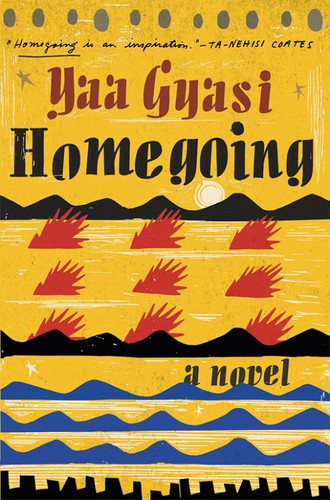
Check price of Homegoing on Amazon
Main Characters and Themes
| Character or Theme | What to Know |
|---|---|
| Effia | The sister who marries a British governor |
| Esi | The sister captured and enslaved in America |
| Maame | Their mother, whose secret links the two lines |
| Quey and James | Effia’s descendants caught between worlds in Ghana |
| Ness, Kojo and H | Esi’s descendants in the American South |
| Willie and Sonny | Esi’s descendants during the Great Migration and Harlem years |
| Marjorie and Marcus | The two lines’ present-day descendants |
| The stone pendant | A family heirloom that ties the story together |
| Legacy | How the past shapes each generation |
| Belonging | Home, displacement and identity |
Discussion Questions (Contains Spoilers)
Effia and Esi
- How did the opening chapters of Effia and Esi set up the rest of the book?
- What does Cape Coast Castle represent for each sister?
- Who bears responsibility for the slave trade in the novel, and how does Gyasi show its complexity?
The Ghana Line
- How does each generation in Ghana deal with the family’s ties to the slave trade?
- What role do colonialism and missionaries play in the Ghana chapters?
- Which Ghana chapter stayed with you most?
The American Line
- How does H’s chapter show slavery continuing in another form after emancipation?
- What did Willie’s story in Harlem reveal about the Great Migration?
- How does each American generation fight for dignity in a different way?
- Which American chapter affected you most?
Structure and Style
- Each chapter is almost a short story. How did that structure work for you?
- Did you use the family tree at the front? Why do you think Gyasi included it?
- Which character did you want to know more about?
Marjorie, Marcus and the Big Picture
- What does the ending suggest about history, healing and home?
- Marcus struggles with his research because history feels too big to capture in one project. How does that idea run through the book?
- What do fire and water symbolize in the novel?
- What does the title Homegoing mean to you?
Is Homegoing a Good Book Club Pick?
Choose it if your group likes historical fiction and wants something ambitious that’s still easy to finish. It’s about 300 pages, and each chapter stands on its own, so members who fall behind can still join in. The time jumps mean you’ll meet many characters; printing the family tree helps. Some chapters include violence and sexual assault. It works well paired with a talk about family history or a visit to a museum exhibit on the African diaspora.
Book Club Ideas for Homegoing
- Print the family tree and add a note for each character as you discuss them.
- Serve Ghanaian dishes, like jollof rice, kelewele (spiced fried plantains) or groundnut soup.
- Pick a favorite chapter: each member makes the case for one.
- Share family stories: what heirloom or story has been passed down in your family?
- Look at photos of Cape Coast Castle and talk about how it is remembered today.
Books Like Homegoing
If your group loved it, try Transcendent Kingdom by Yaa Gyasi for her second novel, Pachinko by Min Jin Lee for another multigenerational family saga, or The Water Dancer by Ta-Nehisi Coates for memory and slavery in Virginia.
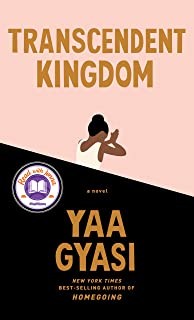
Check price of Transcendent Kingdom on Amazon
How to Structure Your Meeting
Start by asking which character from either family line each member would most like to meet. Then work through two or three questions from each theme above, saving the “big picture” questions for the end. If your group is large, split into pairs for one theme and report back.
A simple 90-minute plan:
- 0–15 minutes: food, catch-up and the opening question.
- 15–60 minutes: the discussion questions, theme by theme.
- 60–75 minutes: one of the book club ideas above, or a quick comparison with the adaptation if there is one.
- 75–90 minutes: everyone rates the book out of five in one sentence, then you pick next month’s read.
Related: Pachinko book club discussion questions and The Covenant of Water book club discussion questions.
Frequently Asked Questions
What is Homegoing about?
It follows the descendants of two half-sisters from Ghana, one married to a British slaver and one sold into slavery, across 300 years of history in Ghana and America.
Is Homegoing hard to follow?
There are many characters, but each chapter focuses on one person, and the family tree at the front makes it easy to keep track.
Is Homegoing good for book clubs?
Yes. It’s short, award-winning and full of connections and themes that groups love to trace together.
What does the ending of Homegoing mean?
The two family lines finally meet in the present day, suggesting reconnection with the past and the possibility of healing.