
Disclosure: As an Amazon Associate, Bookish Wisdom earns from qualifying purchases. This doesn't change our picks or your price.
Quick answer: The best quotes from The Great Gatsby by F. Scott Fitzgerald include “So we beat on, boats against the current, borne back ceaselessly into the past.” and “Whenever you feel like criticizing any one, just remember that all the people in this world haven't had the advantages that you've had.” Below are 6 of the most memorable lines, with who says them, where they come from and what they mean.
Quick facts
- Book: The Great Gatsby by F. Scott Fitzgerald
- First published: 1925
- Quotes covered: 6
- Best for: essays, captions, book club talks and rereads
Table of Contents
What The Great Gatsby Is About
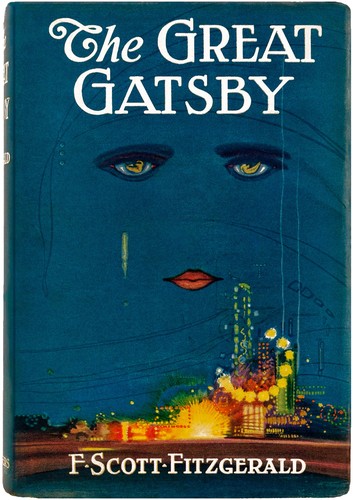
In the summer of 1922, Nick Carraway rents a small house on Long Island next door to the mansion of the mysterious millionaire Jay Gatsby, who throws enormous parties every weekend. Nick learns that Gatsby is still in love with Nick's cousin Daisy, who lives across the bay with her wealthy, careless husband, Tom Buchanan. Gatsby has built his whole fortune to win her back. Nick helps the two reunite, and the summer moves toward heat, betrayal and tragedy.
Check price of The Great Gatsby on Amazon
The Best Quotes from The Great Gatsby, Explained
1. “So we beat on, boats against the current, borne back ceaselessly into the past.”
The final line of the novel. This is one of the most quoted endings in American literature. It describes people rowing forward toward their dreams while time keeps pulling them backward. It sums up Gatsby, who tried to recreate a moment that was already gone.
2. “Whenever you feel like criticizing any one, just remember that all the people in this world haven't had the advantages that you've had.”
Advice from Nick's father, on the first page. Nick introduces himself with this advice, which seems to make him a fair narrator. Readers later notice that he judges people quite a lot, so the line also invites us to question how reliable he is.
3. “I hope she'll be a fool—that's the best thing a girl can be in this world, a beautiful little fool.”
Daisy, about her baby daughter. This is one of the saddest lines in the book. Daisy suggests that a woman who understands her limited choices will only be unhappy. It shows that Daisy is not as empty as she looks, but trapped.
4. “Can't repeat the past? Why of course you can!”
Gatsby, to Nick. This line shows Gatsby's great dream and great mistake. He believes that with enough money and will he can return to the moment he first loved Daisy. The rest of the novel proves him wrong.
5. “They were careless people, Tom and Daisy—they smashed up things and creatures and then retreated back into their money or their vast carelessness, or whatever it was that kept them together, and let other people clean up the mess they had made.”
Nick's final judgment of the Buchanans. Here Nick sees the rich clearly. Their wealth protects them from the results of their actions, while others pay the price. It is one of the novel's sharpest comments on class in America.
6. “Gatsby believed in the green light, the orgastic future that year by year recedes before us.”
Nick, near the end. The green light at the end of Daisy's dock stands for Gatsby's hope. Nick turns it into a symbol for everyone: we chase a future that keeps moving away, and the chase itself defines us.
Why These Lines Stay With Readers
Fitzgerald wrote in rich, rhythmic sentences that are easy to remember and full of images, from the green light to the boats against the current. The novel's questions about money, love and the American Dream feel new to every generation of readers.
How to Use These Quotes
- In an essay: introduce the quote, give its context in one sentence, then explain how it supports your point.
- For a book club: read one line aloud and ask whether everyone agrees with the speaker.
- For a caption or card: pick a short line and credit F. Scott Fitzgerald and The Great Gatsby.
- For a reread: look for the moment each line appears and notice what changes around it.
Discussion Questions
- Which quote above best sums up The Great Gatsby for you, and why?
- Do any of these lines mean something different once you know how the book ends?
- Which quote would you disagree with, and what would you say back?
If You Love the Writing in The Great Gatsby
- Tender Is the Night by F. Scott Fitzgerald
- The Sun Also Rises by Ernest Hemingway
Related: The Great Gatsby by F. Scott Fitzgerald: Summary and Key Takeaways · Themes in The Great Gatsby Explained
Frequently Asked Questions
What is the most famous quote from The Great Gatsby?
One of the best-known lines is “So we beat on, boats against the current, borne back ceaselessly into the past.” (the final line of the novel).
Who wrote The Great Gatsby?
The Great Gatsby was written by F. Scott Fitzgerald and first published in 1925.
Can I use quotes from The Great Gatsby in an essay?
Yes. Short quotations with clear credit to F. Scott Fitzgerald are standard in essays and reviews. Always explain the quote in your own words.
What should I read after The Great Gatsby?
Try Tender Is the Night by F. Scott Fitzgerald or The Sun Also Rises by Ernest Hemingway.