
Disclosure: As an Amazon Associate, Bookish Wisdom earns from qualifying purchases. This doesn't change our picks or your price.
TL;DR: In 1955, Frank and April Wheeler live in a Connecticut suburb and consider themselves special, too good for their dull neighbors and Frank's boring job. April proposes they move to Paris to start a more meaningful life. The plan brings them closer until Frank gets a promotion and April becomes pregnant, and their unraveling marriage leads to tragedy.
Table of Contents
Revolutionary Road at a Glance
| Author | Richard Yates |
| First published | 1961 |
| Type | Novel |
| Best for | readers who want a devastating classic about marriage and suburban life |
Revolutionary Road is the debut novel of Richard Yates, published in 1961. It is a sharp portrait of disappointment and self-deception in 1950s America. Below you will find a part-by-part summary, five key takeaways, ideas worth remembering and a note on who will enjoy it.
Content note: Includes an affair, a self-performed abortion and death.
Main Characters
- Frank Wheeler: A young man who considers himself an intellectual.
- April Wheeler: Frank's restless, intelligent wife.
- John Givings: A mentally ill man who speaks uncomfortable truths.
- Shep and Milly Campbell: The Wheelers' friends and neighbors.
- Helen Givings: A real estate agent and John's mother.
What Happens, Part by Part (Contains Spoilers)
A failed play
The novel opens with April's performance in an amateur play, which goes badly. On the drive home, Frank and April have a bitter fight. Both feel trapped in suburban life.
The Paris plan
April suggests moving to Paris. She will work as a secretary while Frank finds himself. Frank is inspired, and the couple feel close again. They tell their friends, who are shocked and secretly jealous.
Doubts
Frank's boss offers him a promotion, and he starts to have doubts. He has an affair with a secretary. When April discovers she is pregnant, Frank uses it to cancel the plan.
John Givings
The Wheelers are visited by John Givings, a mental patient who sees through their pretenses and says what others will not. He mocks Frank's cowardice and their failed dreams.
Tragedy
After a terrible fight, April attempts a self-induced abortion at home. She hemorrhages and dies in hospital. Frank is devastated, moves to the city and focuses on his children. The neighbors gossip and move on.
5 Key Takeaways
- Self-deception can destroy a marriage.
- Conformity can crush people's dreams.
- Fear of change keeps people trapped.
- Unspoken resentment grows dangerous.
- Dreams of escape can mask deeper problems.
Ideas Worth Remembering
These are paraphrased, not direct quotes:
- Believing you are special does not make you so.
- Comfort can become a cage.
- The truth sometimes comes from unlikely people.
Who Should Read Revolutionary Road?
Read Revolutionary Road if you enjoy powerful literary fiction about marriage and society. It suits adults.
Questions to Think About After Reading
These prompts work for solo reading, a book club or a classroom discussion of Revolutionary Road:
- Who is more to blame, Frank or April?
- Why does John Givings matter?
- What does the novel say about the suburbs?
How to Use This Summary
Use this page as a quick reference before a book club meeting, an exam, or a decision about whether Revolutionary Road is worth your time. The takeaways are written to stand on their own. If a point interests you, go back to the book for the author's full story, characters and style, which no short summary can replace.
A Note on Accuracy and Spoilers
This summary is based on the published text of Revolutionary Road, not on any film, series or stage adaptation, which often change the story. Details are kept at the level of the main events so that nothing is invented. Editions differ slightly in length and wording, so page numbers and small details may vary between copies.
Should You Read the Book?
Yes. It is devastating and beautifully written, one of the great American novels of the twentieth century.
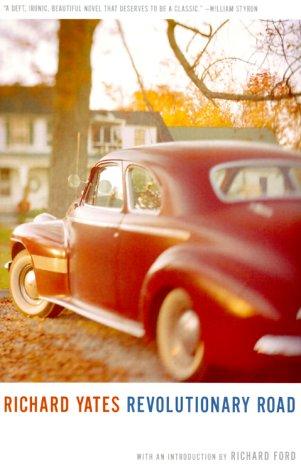
Check price of Revolutionary Road on Amazon
What to Read Next
- The Great Gatsby by F. Scott Fitzgerald: dreams and disillusion
- Babbitt by Sinclair Lewis: suburban conformity
- Stoner by John Williams: a quiet, disappointed life
Frequently Asked Questions
What is Revolutionary Road about?
A suburban couple's plan to escape to Paris collapses, leading to tragedy.
Who wrote it?
Richard Yates, in 1961.
What is April's plan?
To move the family to Paris for a more meaningful life.
How does April die?
After a self-performed abortion goes wrong.
Is there a film?
Yes, the 2008 film with Leonardo DiCaprio and Kate Winslet.
Who is John Givings?
A mentally ill man who speaks uncomfortable truths.
What age is it for?
Adults.
How long is it?
About 340 pages.
Where is it set?
In a Connecticut suburb in 1955.
Was it a finalist for awards?
Yes, for the 1962 National Book Award.
Why is the title ironic?
The couple talk of change but fail to escape their conformity.
Who are the Campbells?
The Wheelers' friends; Shep secretly loves April.
Does Frank go to Paris?
No. He takes the promotion instead.
What happens to Frank?
He moves to the city and raises the children, hollowed out by grief.
Who is Helen Givings?
The real estate agent who sold the Wheelers their house and John's mother.
What is the tone of the novel?
Precise, ironic and quietly devastating.
Who are the main characters in Revolutionary Road?
The main characters are Frank Wheeler, April Wheeler, John Givings, Shep and Milly Campbell and Helen Givings. Frank Wheeler: A young man who considers himself an intellectual. April Wheeler: Frank's restless, intelligent wife. John Givings: A mentally ill man who speaks uncomfortable truths.
Is Revolutionary Road worth reading?
It depends on what you want. The book is best for readers who want a devastating classic about marriage and suburban life. If that describes you, it is likely a good fit. If not, the titles under What to Read Next may suit you better.