
Disclosure: As an Amazon Associate, Bookish Wisdom earns from qualifying purchases. This doesn’t change our picks or your price.
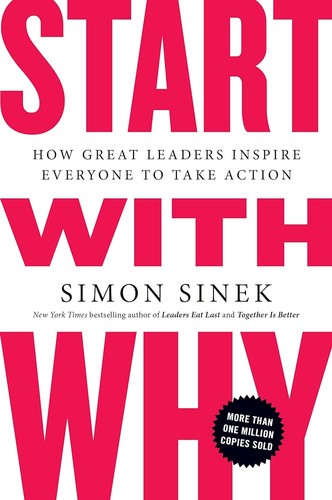
TL;DR: Start with Why: How Great Leaders Inspire Everyone to Take Action by Simon Sinek argues that the most successful leaders and companies communicate from the inside out. Using the Golden Circle of why, how and what, Sinek says people buy into the reason you do something, not just what you do, and that clarity of purpose builds loyalty, trust and lasting influence.
Why do some companies and leaders inspire fierce loyalty while others, offering similar products, struggle to be noticed? That question drives Start with Why, published in 2009 and based on a TED talk by Simon Sinek that became one of the most viewed of all time. Sinek is a British-born American author and speaker who writes about leadership. His message is simple and memorable: begin with your purpose. The book has been praised for its clarity and criticized for being repetitive and light on evidence. Here’s a summary of its main ideas.
Table of Contents
Start with Why at a Glance
| Detail | Info |
|---|---|
| Author | Simon Sinek |
| Published | 2009 |
| Genre | Leadership, business |
| Core idea | Great organizations start with why, then how, then what |
| Structure | Several parts covering the Golden Circle, biology, leadership and growth |
| Best for | Founders, managers, marketers and anyone building a team or brand |
What Is Start with Why About?
Sinek introduces the Golden Circle, three rings with why at the center, how in the middle and what on the outside. Every organization knows what it does, some know how they do it, but few can clearly say why they exist, which Sinek defines as the purpose, cause or belief behind their work, not simply making money.
He argues that most companies communicate from the outside in, starting with what they sell. Inspiring leaders do the reverse, starting with why. He says this works because it matches how the human brain makes decisions.
Key Ideas, Part by Part
The Golden Circle
Sinek uses Apple as the leading example. Instead of saying we make great computers, he suggests that Apple’s message is closer to we believe in challenging the status quo and thinking differently, and one of the ways we do that is by making beautifully designed products. People who share that belief buy not just a device but a statement about themselves.
He contrasts this with competitors who focus on features and price. Features can be copied, but a clear sense of purpose is harder to imitate, and it earns loyalty beyond the transaction.
Why Manipulation Works Only for a While
The book distinguishes between manipulation and inspiration. Manipulations such as discounts, promotions, fear and peer pressure can drive short-term sales, but they don’t build loyalty and often get more expensive. Inspiration builds an emotional bond that makes customers and employees stay.
Sinek points to Martin Luther King Jr., who gave the speech called I Have a Dream, not I Have a Plan. He argues that King attracted people who believed what he believed. He also compares the Wright brothers, driven by a belief in flight, with Samuel Langley, who had more funding and credentials but was motivated largely by fame.
The Biology Behind It
Sinek links the Golden Circle to the structure of the brain. He says the neocortex handles rational thought and language, which matches what, while the limbic brain handles feelings, trust and decisions, which matches why and how. This is a simplified account, and neuroscientists caution that the brain doesn’t divide so cleanly, but the point holds that decisions are often driven by emotion and then explained with logic.
This is why a message that starts with why can feel more persuasive: it speaks to the part of us that decides.
Spreading the Why
Sinek draws on the diffusion of innovations curve from Everett Rogers, which groups people into innovators, early adopters, early majority, late majority and laggards. He says that a tipping point comes at around 15 to 18 percent market share, and that early adopters are drawn by belief, not features. Companies must therefore find people who share their why.
He also warns that organizations can lose their way as they grow. He calls the moment when the gap opens between why and what the split, and says that when founders leave, leaders must keep telling the story. Southwest Airlines and Harley-Davidson serve as examples of firms that held on to their purpose, while others drifted toward chasing numbers.
6 Key Takeaways From Start with Why
- Start with why. People are moved by purpose before products.
- Know your Golden Circle. Be able to state why, how and what clearly.
- Inspire, don’t manipulate. Short-term tactics don’t build lasting loyalty.
- Find believers. Early supporters share your beliefs, not just your needs.
- Be consistent. Your actions, products and culture should prove your why.
- Guard your purpose as you grow. Keep telling the founding story and hiring for belief.
Ideas Worth Remembering
- People don’t buy what you do; they buy why you do it. (paraphrased)
- A clear belief is harder to copy than a feature. (paraphrased)
- Loyalty comes from shared values, not discounts. (paraphrased)
- Growth can blur purpose unless leaders protect it. (paraphrased)
How to Apply Start with Why in Real Life
- Write your why. Complete the sentence we believe…, then test it with colleagues.
- Check your message. Rewrite a pitch or website page so it begins with purpose.
- Hire for belief. Ask candidates what drives them, not just what they can do.
- Align your actions. Make sure policies and products reflect your stated why.
- Share stories. Tell customers and teammates why the work began.
Criticisms and Limits
Critics note that Sinek leans on a few stories, such as Apple, and that he overlooks other reasons for success, including timing, design and luck. The neuroscience is simplified, and some readers feel the book repeats the same idea across many chapters. Others point out that a stated why can become marketing language if the organization doesn’t live it.
Still, the book’s core question is valuable: why does your work matter to anyone beyond you? Use the framework as a thinking tool, and treat the big claims with a degree of skepticism.
Writing Your Own Why Statement
Many readers try to write a why statement after finishing the book. A useful format is: To contribute to X so that Y. For example, a bakery might say, To bring neighbors together so that everyone feels welcome. Sinek suggests discovering your why by looking at stories from your past that shaped you, and by asking people what they value about working with you. A good why is simple, actionable and focused on its effect on others.
Why It Matters for Small Businesses
A small shop can’t compete with large chains on price or reach, but it can compete on purpose. A local bookstore that says it exists to help people discover books they’ll love can build a loyal community that a discounter cannot. Sinek would say the key is to make sure the why shows up in every detail: the window display, the staff recommendations, the events and the way customers are treated.
Using the Golden Circle in Your Career
The model also works for individuals. Before a job interview, think about why you do your work and how you approach it, then explain what you can do. In your own planning, ask whether the roles you choose reflect your values. People who can describe their why clearly often find it easier to make decisions, set boundaries and attract colleagues who share their outlook.
Start with Why in One Minute
People are moved by purpose before products. The Golden Circle has three rings: why at the center, how around it and what on the outside. Inspiring leaders communicate from the inside out, attract people who share their beliefs and prove their why through consistent action. Manipulation can win a sale, but only belief earns loyalty. As organizations grow, they must protect their purpose and keep telling their story so that culture does not drift.
Spotting a Clear Why in the Wild
Once you know the framework, you can see it in many places. A coffee shop that says it exists to be a welcoming neighborhood living room will make different choices from one that only sells drinks. A nonprofit that says it exists to give every child a book will decide what to prioritize. When you evaluate a brand or workplace, ask whether its actions match its message. If they do, you’ll usually feel trust. If they don’t, the why is just a slogan.
A Short Exercise to Try This Week
Set aside thirty minutes and write down three moments when you felt proud of your work. Look for what they have in common, such as helping someone learn, solving a hard problem or bringing people together. Turn that pattern into a draft sentence beginning with I exist to. Share it with a trusted colleague and ask whether it sounds like you. Refine the wording until it feels true and simple, then use it when you make choices about your time.
Who Should Read Start with Why?
Read it if you lead a team, run a business, work in marketing or are trying to find direction in your career. It’s a short, clear introduction to purpose-driven leadership. If you want a deeper look at team culture, follow it with Leaders Eat Last.
What to Read Next
- Leaders Eat Last by Simon Sinek how trust and safety build strong teams
- Drive by Daniel H. Pink the science of motivation
- Good to Great by Jim Collins what makes companies endure
Related: The 7 Habits of Highly Effective People summary and key takeaways and The Tipping Point summary and key takeaways.
Frequently Asked Questions
What is the main idea of Start with Why?
That great leaders and organizations inspire others by communicating their purpose first, then how and what.
What is the Golden Circle?
A model with three rings: why (purpose), how (process) and what (products or services).
Is Start with Why only for businesses?
No, it also applies to nonprofits, teams, careers and personal goals.
What are the criticisms of the book?
It can be repetitive, relies on a few examples and simplifies the brain science.
What should I read after Start with Why?
Try Leaders Eat Last, Drive or Good to Great.