
Disclosure: As an Amazon Associate, Bookish Wisdom earns from qualifying purchases. This doesn’t change our picks or your price.
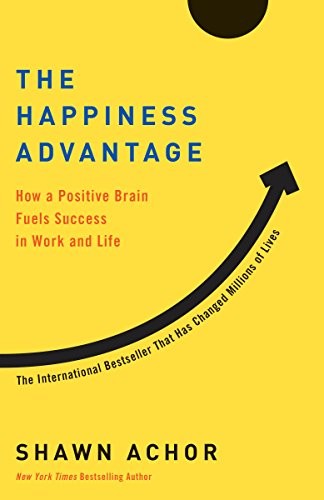
TL;DR: The Happiness Advantage: The Seven Principles of Positive Psychology That Fuel Success and Performance at Work by Shawn Achor argues that happiness is not the result of success but a driver of it. Drawing on research from positive psychology, Achor presents seven principles, including training your brain to scan for the positive, using small steps to build habits and investing in relationships, that can improve performance and well-being.
Most of us believe that if we work hard, we will be successful, and then we will be happy. Shawn Achor, who studied and taught positive psychology at Harvard, says that this formula is backward. In The Happiness Advantage, published in 2010, he explains that happy brains perform better, and that positivity can be trained. The book combines studies with stories from his consulting work and a famous TEDx talk. It’s easy to read and full of practical ideas. Here’s a summary of its main ideas.
Table of Contents
The Happiness Advantage at a Glance
| Detail | Info |
|---|---|
| Author | Shawn Achor |
| Published | 2010 |
| Genre | Positive psychology, self-help, business |
| Core idea | Happiness fuels success, and you can train your brain to be more positive |
| Structure | Seven principles with exercises |
| Best for | Professionals, teams and anyone who wants a more positive mindset backed by research |
What Is The Happiness Advantage About?
Achor begins with the Happiness Advantage itself: a positive brain has a biological advantage over a neutral or negative one. Research suggests that positive emotions broaden attention and build resources, as described by psychologist Barbara Fredrickson, and that happier people tend to be more productive, creative and resilient.
He then offers seven principles that put this into practice, each with research and exercises.
Key Ideas, Part by Part
Principles One and Two: The Happiness Advantage and the Fulcrum and the Lever
The first principle is that happiness precedes success. Achor cites studies in which people who were primed to feel positive did better on tests and tasks. He recommends small, regular boosts, such as meditation, exercise and acts of kindness.
The second principle uses the metaphor of a lever and fulcrum. The lever is your mindset, and the fulcrum is your potential. Changing your mindset can change how much you accomplish. He describes studies showing that people who viewed stress as helpful performed better, and that expectations can shape outcomes.
Principles Three and Four: The Tetris Effect and Falling Up
The third principle is the Tetris Effect. Players who spend hours on the game begin to see falling blocks in daily life. Achor argues that we can train our brains to scan for the positive in the same way. Simple practices include writing down three things you are grateful for each day, journaling about a positive experience, exercising, meditating and doing random acts of kindness.
The fourth principle, Falling Up, is about turning setbacks into opportunities. After a failure, people can see a path up as well as down. Achor suggests asking, what did I learn, and what is the next step? Those who find a positive path tend to recover and grow.
Principles Five and Six: The Zorro Circle and the 20-Second Rule
The fifth principle, the Zorro Circle, draws on a story about the fictional swordsman Zorro, who trained by beginning in a small circle and widening it as his skills grew. When you feel overwhelmed, Achor suggests starting with a small area you can control and expanding as you gain confidence.
The sixth principle is the 20-Second Rule. To build good habits, reduce the effort needed to start by about twenty seconds, and to break bad habits, add twenty seconds of friction. For example, Achor placed his guitar on a stand in the middle of the room, and he removed the batteries from the TV remote. Small barriers can have big effects.
Principle Seven: Social Investment
The final principle is Social Investment. Achor emphasizes that social support is a strong predictor of happiness and success. People who invest in relationships with friends, family and colleagues recover from stress faster and perform better. He recommends making time for connection, especially when under pressure, and not withdrawing.
He closes by encouraging readers to spread positivity through their teams and organizations. A positive culture, he says, can produce a ripple effect.
6 Key Takeaways From The Happiness Advantage
- Happiness comes first. It can fuel success.
- Mindset is a lever. How you see stress shapes performance.
- Train your brain. Practice gratitude and positive scanning.
- Fall up. Use setbacks to grow.
- Start small. Expand your sense of control gradually.
- Invest in people. Social support boosts resilience.
Ideas Worth Remembering
- Success doesn’t automatically bring happiness. (paraphrased)
- Small habits change how your brain scans the world. (paraphrased)
- Lower the barrier to good habits and raise it for bad ones. (paraphrased)
- Relationships are a key resource. (paraphrased)
How to Apply The Happiness Advantage in Real Life
- Write three gratitudes. Do it each night for three weeks.
- Exercise briefly. Walk or stretch for ten minutes daily.
- Reduce friction. Place tools for your habit within reach.
- Choose your Zorro circle. Pick one small area to master.
- Reach out. Send a note of thanks to someone each day.
Criticisms and Limits
Critics note that the book simplifies research, and that some cited studies have not replicated well, especially in priming. The focus on positive thinking can sound like toxic positivity if it ignores real problems, and the advice may be less useful to people dealing with depression, poverty or discrimination. Achor’s practices are modest, and the evidence for their long-term effects is mixed.
Still, simple habits like gratitude and social connection are widely supported. Use the book as a source of ideas for building a healthier mindset, and seek professional help when you need more.
The Happiness Advantage in One Minute
Happiness fuels success, not just the reverse. Use your mindset as a lever, train your brain with gratitude and positive scanning, turn setbacks into growth and start in a small Zorro circle. Lower the effort to start good habits by twenty seconds, and invest in relationships, especially under stress.
A Three-Week Positivity Challenge
For twenty-one days, try five small practices: write three new things you are grateful for, journal about one positive experience, exercise for ten minutes, meditate for two minutes and send one message of praise or thanks. Track them on a calendar. The experiment mirrors studies in which small daily practices raised optimism. Evaluate how you feel at the end and keep what helps.
Positive Psychology Context
Positive psychology, founded in the late 1990s by researchers such as Martin Seligman, studies what helps people flourish. Achor’s work draws on its findings. Some early studies have been challenged, and effects tend to be modest. The field is best seen as a set of tools to try, not guarantees. It does not replace treatment for depression or anxiety.
Using the Ideas in Teams
Managers can apply the principles by starting meetings with a positive note, recognizing wins publicly and encouraging small social gatherings. Teams can share gratitude or lessons learned. These practices can make workplaces warmer and more resilient, but they should be paired with fair workloads and honest communication, since positivity cannot fix a toxic environment.
A Morning Routine Based on the Book
A simple routine uses several principles at once. Begin with two minutes of quiet breathing or meditation. Write down three things you are grateful for. Spend ten minutes moving your body. Choose the one task you want to complete and place the materials you need in view, applying the 20-Second Rule. Send a short message of thanks to someone. The sequence takes under twenty minutes and sets a positive tone for the day.
Handling Bad Days
Achor does not ask readers to ignore negative feelings. On hard days, he suggests acknowledging the feeling, then looking for a small step you can control, which is the Zorro Circle. Reaching out to a friend is another way to use Social Investment. If sadness or stress lasts for weeks, interferes with daily life or includes thoughts of self-harm, talk to a doctor or therapist, and in the US call or text 988 for immediate support.
Who Should Read The Happiness Advantage?
Read it if you want a research-flavored introduction to positive psychology, a way to improve your team’s morale or simple habits for a better mindset. For a more skeptical view on happiness, compare it with The Subtle Art of Not Giving a F*ck.
What to Read Next
- Flourish by Martin E. P. Seligman a visionary new understanding of happiness
- Feel-Good Productivity by Ali Abdaal a joyful approach to getting things done
- Atomic Habits by James Clear small habits that compound
Related: Feel-Good Productivity summary and key takeaways and Atomic Habits summary and key takeaways.
Frequently Asked Questions
What is the main idea of The Happiness Advantage?
That happiness fuels success, and that positive habits can be trained.
What is the Tetris Effect?
When repeated focus trains your brain to see certain patterns, here used to scan for positives.
What is the Zorro Circle?
Starting with a small area of control and expanding as you build skill and confidence.
What is the 20-Second Rule?
Reducing the effort to start a good habit by about twenty seconds, or adding friction to a bad one.
Is the research solid?
Many ideas are supported, though some studies are debated.