
Disclosure: As an Amazon Associate, Bookish Wisdom earns from qualifying purchases. This doesn't change our picks or your price.
Spoiler warning: this analysis discusses the whole book, including the ending of Flesh.
Quick answer: The main themes in Flesh by David Szalay are masculinity, class and money, desire and the body, passivity and fate and trauma. Each is explained below with what it means, how it develops in the story and questions you can use for study or discussion.
Quick facts
- Book: Flesh by David Szalay
- First published: 2025
- Main themes: masculinity, class and money, desire and the body, passivity and fate and trauma
Table of Contents
About Flesh
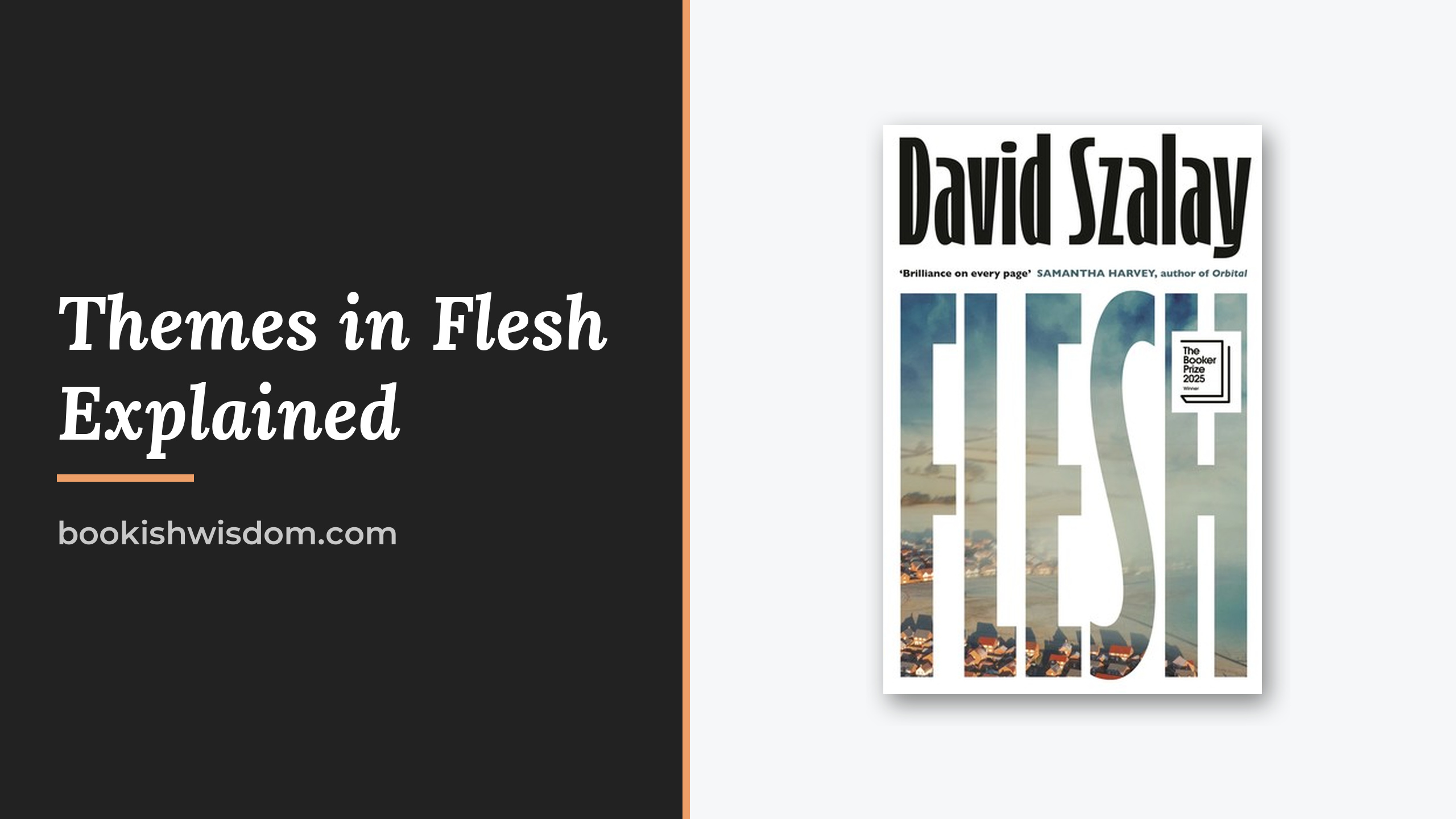
István, a quiet fifteen-year-old living with his mother on a housing estate in Hungary, has an affair with an older neighbour that ends in disaster and sends him to a youth detention centre. The novel follows him across decades: army service in Iraq, a move to London, work as a bodyguard and chauffeur for the very rich, and an unexpected rise into wealth through marriage. Told in spare, cool prose, the story tracks how one man drifts through power, desire and loss. It won the 2025 Booker Prize.
Check price of Flesh on Amazon
The Main Themes in Flesh
1. Masculinity
István rarely speaks about his feelings, often answering simply “Okay.” Szalay explores modern masculinity, showing a man shaped by silence, physical strength and an inability to express what he feels inside.
Question to consider: Where in Flesh does masculinity matter most to the characters, and what does David Szalay want readers to think about it?
2. Class and money
István moves from poverty in Hungary to the wealthy world of London's elite. The novel shows how money changes life on the surface while leaving deeper emptiness untouched.
Question to consider: Where in Flesh does class and money matter most to the characters, and what does David Szalay want readers to think about it?
3. Desire and the body
The title points to the body's power. István's life is driven by physical desire and physical work, and the novel shows the body as both strength and vulnerability.
Question to consider: Where in Flesh does desire and the body matter most to the characters, and what does David Szalay want readers to think about it?
4. Passivity and fate
István often lets life happen to him rather than making choices. Szalay asks how much control people really have over the direction of their lives.
Question to consider: Where in Flesh does passivity and fate matter most to the characters, and what does David Szalay want readers to think about it?
5. Trauma
Early events in István's youth and war echo through his life. The novel suggests that trauma can shape a person quietly, without ever being named.
Question to consider: Where in Flesh does trauma matter most to the characters, and what does David Szalay want readers to think about it?
Symbols and Motifs
- The word “Okay”. It represents emotional distance and acceptance.
- The housing estate. It symbolises István's roots and origins.
- The London mansion. It represents wealth and isolation.
- The body. It stands for desire, strength and decline.
How the Themes Connect
Masculinity and trauma explain István's silence, while class and money map his rise and fall. Desire and the body drive his choices, and passivity raises the question of how much of his life he actually chose. The themes together paint a cool, haunting portrait of a modern life.
How to Write About the Themes of Flesh
If you are writing an essay or preparing for class, these steps help:
- Pick one theme. A focused argument is stronger than a list of everything.
- Find evidence in the text. Point to specific scenes, characters and choices rather than general impressions.
- Explain, don't just describe. After each example, say what it shows about the theme.
- Connect to the ending. Ask how the final chapters resolve or complicate the theme.
- Consider other readings. A fair essay acknowledges that readers can disagree.
Discussion Questions
- Which of the themes above feels most relevant to your own life, and why?
- Do the characters in Flesh handle masculinity well or badly?
- How does the title relate to the themes of the book?
- Would the story change if it were set in a different time or place?
- What does David Szalay leave unresolved, and why might that be?
Books With Similar Themes
- Stoner by John Williams
- Normal People by Sally Rooney
Frequently Asked Questions
What is the main theme of Flesh?
The central theme is masculinity, supported by class and money and desire and the body.
How many themes does Flesh have?
This guide covers 5 main themes, but readers may find others.
Who wrote Flesh?
Flesh was written by David Szalay and first published in 2025.
Is Flesh a good book for studying themes?
Yes. Its themes are clear enough to follow and rich enough to support essays and group discussion.
What should I read after Flesh?
Try Stoner by John Williams or Normal People by Sally Rooney.