
Disclosure: As an Amazon Associate, Bookish Wisdom earns from qualifying purchases. This doesn't change our picks or your price.
TL;DR: Alice climbs through the mirror above her fireplace and enters a looking-glass world where everything is reversed. The land is laid out like a giant chessboard, and Alice joins the game as a pawn, hoping to reach the eighth square and become a queen. Along the way, she meets talking flowers, Tweedledum and Tweedledee, Humpty Dumpty and the White Knight.
Table of Contents
Through the Looking-Glass at a Glance
| Author | Lewis Carroll |
| First published | 1871 |
| Type | Children's fantasy |
| Best for | readers who want a playful, clever sequel full of wordplay and nonsense |
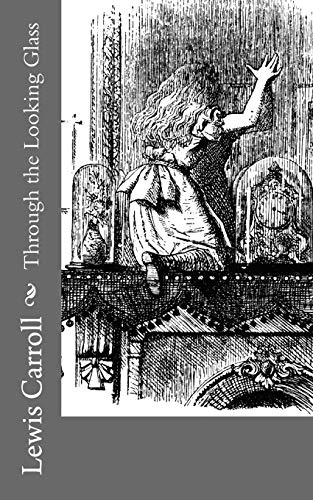
Through the Looking-Glass, and What Alice Found There is a children's novel by Lewis Carroll, published in 1871 as a sequel to Alice's Adventures in Wonderland. It was illustrated by John Tenniel. Below you will find a part-by-part summary, five key takeaways, ideas worth remembering and a note on who will enjoy it.
Content note: Includes mild peril and nonsense arguments.
Main Characters
- Alice: A curious, polite girl.
- The Red Queen: A strict chess queen who runs very fast.
- The White Queen: A muddled queen who lives backward.
- Humpty Dumpty: A proud egg who explains words.
- The White Knight: A gentle, clumsy knight who helps Alice.
What Happens, Part by Part (Contains Spoilers)
Through the mirror
On a winter day, Alice plays with her kittens and wonders what the world behind the mirror is like. She climbs through and finds a room where everything is reversed. She discovers a book with a poem called “Jabberwocky,” which she can only read in a mirror. The chess pieces in the room are alive.
The chessboard
Alice enters a garden of talking flowers and meets the Red Queen, who explains that the land is a giant chess game. To stay in one place, you must run as fast as you can. Alice can become a queen if she reaches the eighth square. She sets off, jumping across the brooks that mark each square.
Strange meetings
Alice meets the quarrelsome twins Tweedledum and Tweedledee, who recite “The Walrus and the Carpenter.” She meets the White Queen, who remembers the future and screams before she is hurt. In a shop, the Queen turns into a sheep. Alice meets Humpty Dumpty, who says words mean whatever he chooses, and explains “Jabberwocky.”
The White Knight
Alice sees the Lion and the Unicorn fighting for the crown. The kind White Knight rescues her from the Red Knight and escorts her to the last brook, often falling off his horse and showing her his odd inventions. He sings her a song before she crosses into the eighth square.
Queen Alice
Alice finds a crown on her head. She is now a queen and attends a strange feast with the Red and White Queens, where dishes and guests come alive. When the feast turns into chaos, Alice grabs the Red Queen and shakes her. The Red Queen turns into Alice's kitten, and Alice wakes up, wondering who dreamed the whole adventure.
5 Key Takeaways
- Imagination can turn the world upside down.
- Words can be played with in surprising ways.
- Growing up is a kind of journey.
- Logic can be twisted into nonsense.
- Kindness can appear in unexpected forms.
Ideas Worth Remembering
These are paraphrased, not direct quotes:
- Sometimes you must run just to stay in place.
- Meaning depends on who decides it.
- Dreams can feel more real than waking life.
Who Should Read Through the Looking-Glass?
Read Through the Looking-Glass if you enjoyed Alice's Adventures in Wonderland or love clever nonsense and wordplay. It suits ages 8 and up and adults.
About Lewis Carroll
Lewis Carroll was the pen name of Charles Lutwidge Dodgson (1832–1898), an English writer and mathematician who taught at the University of Oxford. He wrote Alice's Adventures in Wonderland for Alice Liddell, a young friend. He was also a pioneering photographer and wrote books on logic and puzzles.
Questions to Think About After Reading
These prompts work for solo reading, a book club or a classroom discussion of Through the Looking-Glass:
- How does the chess game shape Alice's journey?
- What does Humpty Dumpty say about words?
- Who dreamed the adventure, Alice or the Red King?
How to Use This Summary
Use this page as a quick reference before a book club meeting, an exam, or a decision about whether Through the Looking-Glass is worth your time. The takeaways are written to stand on their own. If a point interests you, go back to the book for the author's full story, characters and style, which no short summary can replace.
A Note on Accuracy and Spoilers
This summary is based on the published text of Through the Looking-Glass, not on any film, series or stage adaptation, which often change the story. Details are kept at the level of the main events so that nothing is invented. Editions differ slightly in length and wording, so page numbers and small details may vary between copies.
Should You Read the Book?
Yes. It is witty and inventive, with some of Carroll's most famous poems.
Check price of Through the Looking-Glass on Amazon
What to Read Next
- Alice's Adventures in Wonderland by Lewis Carroll: the first Alice adventure
- The Phantom Tollbooth by Norton Juster: a boy's journey through a land of words
- Peter Pan by J.M. Barrie: a magical classic adventure
Related: Alice’s Adventures in Wonderland by Lewis Carroll: Summary and Key Takeaways
Frequently Asked Questions
What is Through the Looking-Glass about?
Alice enters a mirror world shaped like a chessboard and tries to become a queen.
Who wrote it?
Lewis Carroll, in 1871.
Is it a sequel?
Yes, to Alice's Adventures in Wonderland.
What is “Jabberwocky”?
A famous nonsense poem Alice reads in a mirror.
Who are Tweedledum and Tweedledee?
Quarrelsome twin brothers.
Who is the Red Queen?
A chess queen who runs fast to stay in place.
Does Alice become a queen?
Yes, in the eighth square.
Who illustrated it?
John Tenniel.
What age is it for?
Ages 8 and up.
How long is it?
About 200 pages.
Is it often combined with Wonderland in films?
Yes, many adaptations mix the two books.
Is it harder than the first book?
It has more wordplay, which older readers enjoy.
Should I read Wonderland first?
It helps, but this book can also be enjoyed on its own.
Is Through the Looking-Glass worth reading?
It depends on what you want. The book is best for readers who want a playful, clever sequel full of wordplay and nonsense. If that describes you, it is likely a good fit. If not, the titles under What to Read Next may suit you better.