
Disclosure: As an Amazon Associate, Bookish Wisdom earns from qualifying purchases. This doesn't change our picks or your price.
TL;DR: Ernest Hemingway looks back on his years as a young, poor writer in Paris in the 1920s, living with his first wife, Hadley, and their son. He describes writing in cafés, eating little, walking the city and meeting famous figures such as Gertrude Stein, Ezra Pound and F. Scott Fitzgerald. The memoir ends with regret over the end of his first marriage.
Table of Contents
A Moveable Feast at a Glance
| Author | Ernest Hemingway |
| First published | 1964 |
| Type | Memoir |
| Best for | readers who love literary Paris and stories about writers |
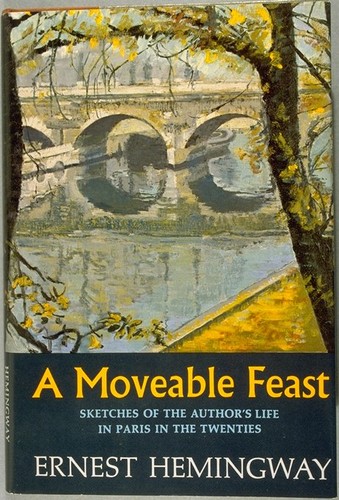
A Moveable Feast is a memoir by Ernest Hemingway, published after his death in 1964. It covers his years in Paris from 1921 to 1926. Below you will find a part-by-part summary of the main ideas, five key takeaways, ideas worth remembering and a note on who will enjoy it.
Content note: Includes drinking and an affair.
Key Concepts
- Paris in the 1920s: The city where many expatriate artists lived and worked.
- The Lost Generation: Gertrude Stein's phrase for the young people shaped by the First World War.
- Hadley Richardson: Hemingway's first wife.
- F. Scott Fitzgerald: A brilliant, troubled novelist and friend.
- Writing discipline: Hemingway's daily routine and craft.
The Main Ideas, Part by Part
A young writer
Hemingway describes living in a small apartment with Hadley and their son, Bumby. He writes in cafés, works hard at short, true sentences and walks the city. He says he often went hungry, which made him see more sharply.
Gertrude Stein
Hemingway visits Gertrude Stein's salon, where she advises him about writing and art. She calls his generation “a lost generation.” Their friendship later cools.
Shakespeare and Company
He borrows books from Sylvia Beach's bookshop, Shakespeare and Company, and reads Russian and French writers. He meets the poet Ezra Pound, who helps other writers generously.
Scott Fitzgerald
A long section describes Hemingway's friendship with F. Scott Fitzgerald. They take a comic trip to Lyon to retrieve Scott's car. Hemingway portrays Fitzgerald as talented but insecure and damaged by drinking and by his wife, Zelda.
The end of paradise
The memoir ends with Hemingway's affair with Pauline Pfeiffer, which ended his marriage to Hadley. He writes with regret that he wished he had died before he loved anyone but her, and remembers Paris as a time when he was very poor and very happy.
5 Key Takeaways
- Discipline and simplicity are keys to writing.
- A place can shape a person's creativity.
- Friendship among artists can inspire and wound.
- Memory turns the past into a “moveable feast.”
- Regret often follows betrayal.
Ideas Worth Remembering
These are paraphrased, not direct quotes:
- Write one true sentence.
- Hunger and poverty can sharpen the senses.
- Paris stays with you wherever you go.
Who Should Read A Moveable Feast?
Read A Moveable Feast if you love Paris, writers' lives or Hemingway's style. It suits older teens and adults.
Questions to Think About After Reading
These prompts work for solo reading, a book club or a classroom discussion of A Moveable Feast:
- How does Hemingway describe writing?
- Is his portrait of Fitzgerald fair?
- Why does he call Paris a moveable feast?
How to Use This Summary
Use this page as a quick reference before a book club meeting, an exam, or a decision about whether A Moveable Feast is worth your time. The takeaways are written to stand on their own. If a point interests you, go back to the book for the author's full argument, examples and evidence, which no short summary can replace.
A Note on Accuracy and Spoilers
This summary is based on the published text of A Moveable Feast, not on any film, series or stage adaptation, which often change the story. Details are kept at the level of the main arguments so that nothing is invented. Editions differ slightly in length and wording, so page numbers and small details may vary between copies.
Should You Read the Book?
Yes. It is short, beautifully written and full of famous figures, though Hemingway's portraits of others are often unkind and one-sided.
Check price of A Moveable Feast on Amazon
What to Read Next
- The Sun Also Rises by Ernest Hemingway: Hemingway's Paris novel
- The Paris Wife by Paula McLain: a novel about Hadley Hemingway
- Tender Is the Night by F. Scott Fitzgerald: Fitzgerald's novel of the Riviera
Related: To Have and Have Not by Ernest Hemingway: Summary and Key Takeaways · Hills Like White Elephants by Ernest Hemingway: Summary and Key Takeaways
Frequently Asked Questions
What is A Moveable Feast about?
Hemingway's memories of being a young writer in 1920s Paris.
Who wrote it?
Ernest Hemingway, published after his death in 1964.
Where does the title come from?
Hemingway said Paris is a moveable feast that stays with you all your life.
Who appears in it?
Gertrude Stein, Ezra Pound, F. Scott Fitzgerald and others.
Who was Hadley?
Hemingway's first wife.
Is it accurate?
It is a personal memory, and some portraits are biased.
What age is it for?
Older teens and adults.
How long is it?
About 200 pages.
Is there a restored edition?
Yes, a 2009 restored edition with extra material.
What is Shakespeare and Company?
A famous English-language bookshop in Paris.
Who was Ezra Pound?
An American poet in Paris who generously helped other writers.
What does Hemingway say about hunger?
That being hungry sharpened his senses and helped him see paintings and the city more clearly.
Who are the main ideas in A Moveable Feast?
The key concepts are Paris in the 1920s, the Lost Generation, Hadley Richardson, F. Scott Fitzgerald and Writing discipline. Paris in the 1920s: The city where many expatriate artists lived and worked. The Lost Generation: Gertrude Stein's phrase for the young people shaped by the First World War. Hadley Richardson: Hemingway's first wife.
Is A Moveable Feast worth reading?
It depends on what you want. The book is best for readers who love literary Paris and stories about writers. If that describes you, it is likely a good fit. If not, the titles under What to Read Next may suit you better.