
Disclosure: As an Amazon Associate, Bookish Wisdom earns from qualifying purchases. This doesn't change our picks or your price.
TL;DR: In this famous essay, based on lectures given at women's colleges at Cambridge, Virginia Woolf argues that a woman must have money and a room of her own if she is to write fiction. Through a playful fictional narrator, she shows how poverty, exclusion and lack of education kept women from writing, and imagines the tragic fate of Shakespeare's gifted sister.
Table of Contents
A Room of One's Own at a Glance
| Author | Virginia Woolf |
| First published | 1929 |
| Type | Essay |
| Best for | readers interested in feminism, writing and literary history |
A Room of One's Own is an extended essay by Virginia Woolf, published in 1929. It is one of the founding texts of feminist literary criticism. Below you will find a part-by-part summary of the main ideas, five key takeaways, ideas worth remembering and a note on who will enjoy it.
Content note: Mentions suicide in the imagined story of Judith Shakespeare.
Key Concepts
- A room of one's own: Private space and independence needed to think and write.
- Five hundred pounds a year: An income that gives freedom from economic dependence.
- Judith Shakespeare: Woolf's imagined sister of Shakespeare, as gifted but given no chance.
- Androgynous mind: Woolf's idea that great minds combine male and female qualities.
- The tradition of women writers: The history Woolf traces from Aphra Behn to the Brontës and Austen.
The Main Ideas, Part by Part
The central claim
Woolf opens by saying that a woman must have money and a room of her own if she is to write fiction. Instead of a lecture, she tells the story of a fictional narrator, “Mary Beton,” thinking about women and fiction while visiting a university town she calls Oxbridge.
Oxbridge and Fernham
The narrator is turned off the grass and refused entry to a library because she is a woman. She contrasts a rich lunch at a men's college with a plain dinner at a women's college, Fernham. She realizes that money, comfort and tradition shape thinking, and women have had little of all three.
The British Museum
Researching in the British Museum, the narrator finds countless books about women written by angry men. She notes that men have used women as a mirror to make themselves look larger. When an aunt leaves her an income, she feels freed from fear and bitterness.
Shakespeare's sister
Woolf imagines Judith, Shakespeare's equally gifted sister. Denied education, forced toward marriage, she runs away to London to act, is mocked, becomes pregnant and kills herself. Woolf argues that genius in women was crushed by circumstances, not lack of talent.
The future
Woolf surveys women writers such as Aphra Behn, Jane Austen and the Brontës, noting how anger and limitations shaped their work. She praises the androgynous mind and urges her audience to write, earn money and claim space, so that Shakespeare's sister may one day be born again.
5 Key Takeaways
- Creativity needs material freedom.
- Lack of opportunity, not lack of talent, silenced women.
- Tradition and history shape who gets to create.
- Anger can distort art.
- Women writers need a tradition to build on.
Ideas Worth Remembering
These are paraphrased, not direct quotes:
- Intellectual freedom depends on material things.
- Genius needs time, space and education to grow.
- Writing is an act that changes the future for others.
Who Should Read A Room of One's Own?
Read A Room of One's Own if you care about writing, feminism or literary history. It suits older teens and adults.
Questions to Think About After Reading
These prompts work for solo reading, a book club or a classroom discussion of A Room of One's Own:
- Why does Woolf focus on money and space?
- What does the story of Judith Shakespeare show?
- Is the argument still true today?
How to Use This Summary
Use this page as a quick reference before a book club meeting, an exam, or a decision about whether A Room of One's Own is worth your time. The takeaways are written to stand on their own. If a point interests you, go back to the book for the author's full argument, examples and evidence, which no short summary can replace.
A Note on Accuracy and Spoilers
This summary is based on the published text of A Room of One's Own, not on any film, series or stage adaptation, which often change the story. Details are kept at the level of the main arguments so that nothing is invented. Editions differ slightly in length and wording, so page numbers and small details may vary between copies.
Should You Read the Book?
Yes. It is short, witty and still deeply relevant to discussions of creativity and equality.
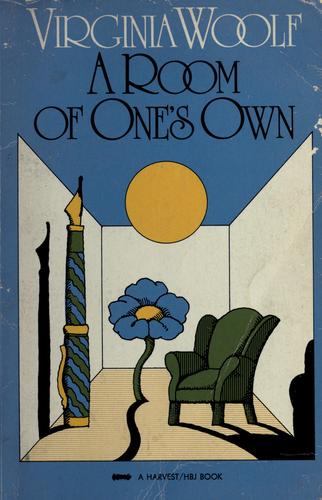
Check price of A Room of One's Own on Amazon
What to Read Next
- Mrs Dalloway by Virginia Woolf: Woolf's famous novel
- The Second Sex by Simone de Beauvoir: a landmark of feminist thought
- We Should All Be Feminists by Chimamanda Ngozi Adichie: a short modern feminist essay
Related: Mrs Dalloway by Virginia Woolf: Summary and Key Takeaways · To the Lighthouse by Virginia Woolf: Summary and Key Takeaways
Frequently Asked Questions
What is A Room of One's Own about?
An essay arguing that women need money and private space to write fiction.
Who wrote it?
Virginia Woolf, in 1929.
Who is Judith Shakespeare?
Woolf's imagined sister of William Shakespeare.
What is the famous quote?
A woman must have money and a room of her own if she is to write fiction.
Is it fiction or nonfiction?
Nonfiction, though it uses a fictional narrator.
Where did it come from?
Lectures Woolf gave at Newnham and Girton colleges in Cambridge in 1928.
How long is it?
About 110 pages.
What age is it for?
Older teens and adults.
What is Oxbridge?
Woolf's blend of Oxford and Cambridge.
Why is it important?
It helped found feminist literary criticism.
Is A Room of One's Own worth reading?
It depends on what you want. The book is best for readers interested in feminism, writing and literary history. If that describes you, it is likely a good fit. If not, the titles under What to Read Next may suit you better.