
Disclosure: As an Amazon Associate, Bookish Wisdom earns from qualifying purchases. This doesn't change our picks or your price.
TL;DR: Lyman Ward, a retired historian confined to a wheelchair and estranged from his wife, decides to write about his grandmother, Susan Burling Ward, a talented artist and writer from the East who married a mining engineer, Oliver Ward, and followed him across the American West. As he pieces together their troubled marriage, Lyman reflects on his own.
Table of Contents
Angle of Repose at a Glance
| Author | Wallace Stegner |
| First published | 1971 |
| Type | Novel |
| Best for | readers who want a rich, thoughtful novel about marriage and the American West |
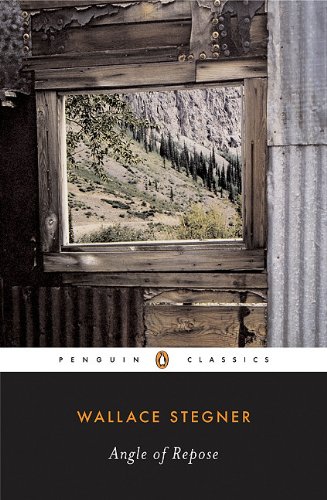
Angle of Repose is a novel by Wallace Stegner, published in 1971. It won the Pulitzer Prize for Fiction. It drew partly on the real letters of the artist Mary Hallock Foote, which caused controversy. Below you will find a part-by-part summary, five key takeaways, ideas worth remembering and a note on who will enjoy it.
Content note: Includes a child's death and an affair.
Main Characters
- Lyman Ward: A retired historian and the narrator.
- Susan Burling Ward: Lyman's grandmother, an artist and writer.
- Oliver Ward: Susan's husband, an engineer.
- Frank Sargent: Oliver's assistant, who admires Susan.
- Augusta: Susan's friend in the East.
What Happens, Part by Part (Contains Spoilers)
Lyman
Lyman lives in his grandparents' old house in Grass Valley, California. Disabled and abandoned by his wife, he decides to write about his grandmother's life using her letters.
Susan and Oliver
In the 1870s, Susan, a cultured woman from New York, marries Oliver Ward, a quiet engineer. She follows him to mining camps in California, Colorado and Mexico, writing and drawing about the West for Eastern magazines.
The West
Oliver's projects often fail due to bad luck and his own stubborn honesty. Susan feels isolated and longs for the East and her friend Augusta. They have children, and the family moves to Idaho, where Oliver tries to build an irrigation canal.
Tragedy
In Idaho, Susan grows close to Frank Sargent. One day, while Susan and Frank meet, her young daughter Agnes drowns in the canal. Frank kills himself. Oliver, believing Susan was unfaithful, cuts off part of his bond with her.
Angle of repose
Susan and Oliver stay married for decades but live in quiet distance. Lyman realizes their marriage reached an “angle of repose,” a stable but cold balance. He wonders whether he can forgive his own wife.
5 Key Takeaways
- Marriages can survive but be changed forever by betrayal.
- The American West was shaped by struggle and hope.
- Understanding the past can help us understand ourselves.
- Pride and silence can damage love.
- Forgiveness is difficult but important.
Ideas Worth Remembering
These are paraphrased, not direct quotes:
- Every relationship finds its own angle of repose.
- History is made by ordinary lives.
- We inherit our families' unfinished stories.
Who Should Read Angle of Repose?
Read Angle of Repose if you enjoy family sagas, historical fiction and the American West. It suits adults.
About Wallace Stegner
Wallace Stegner (1909–1993) was an American novelist, historian and environmentalist, often called “the dean of Western writers.” He founded the creative writing program at Stanford University, which trained many famous authors. He won the Pulitzer Prize for Angle of Repose and the National Book Award for The Spectator Bird. His novel Crossing to Safety is also widely loved.
Questions to Think About After Reading
These prompts work for solo reading, a book club or a classroom discussion of Angle of Repose:
- What does “angle of repose” mean for the marriage?
- Was Oliver right to withdraw from Susan?
- How does Lyman's story mirror his grandparents'?
How to Use This Summary
Use this page as a quick reference before a book club meeting, an exam, or a decision about whether Angle of Repose is worth your time. The takeaways are written to stand on their own. If a point interests you, go back to the book for the author's full story, characters and style, which no short summary can replace.
A Note on Accuracy and Spoilers
This summary is based on the published text of Angle of Repose, not on any film, series or stage adaptation, which often change the story. Details are kept at the level of the main events so that nothing is invented. Editions differ slightly in length and wording, so page numbers and small details may vary between copies.
Should You Read the Book?
Yes. It is long and reflective, but deeply rewarding and beautifully written. Its use of real letters is worth knowing about.
Check price of Angle of Repose on Amazon
What to Read Next
- Crossing to Safety by Wallace Stegner: friendship and marriage
- My Ántonia by Willa Cather: life on the frontier
- Lonesome Dove by Larry McMurtry: the American West
Frequently Asked Questions
What is Angle of Repose about?
A historian tells the story of his grandparents' marriage in the American West.
Who wrote it?
Wallace Stegner, in 1971.
Did it win the Pulitzer Prize?
Yes, in 1972.
What does “angle of repose” mean?
The steepest angle at which loose material stays stable.
Is it based on real people?
Susan is based partly on artist Mary Hallock Foote.
What happens to Agnes?
She drowns in the canal.
What age is it for?
Adults.
How long is it?
About 570 pages.
Where is it set?
In California, Colorado, Mexico and Idaho.
Who narrates?
Lyman Ward, Susan's grandson.
Who are the main characters in Angle of Repose?
The main characters are Lyman Ward, Susan Burling Ward, Oliver Ward, Frank Sargent and Augusta. Lyman Ward: A retired historian and the narrator. Susan Burling Ward: Lyman's grandmother, an artist and writer. Oliver Ward: Susan's husband, an engineer.
Is Angle of Repose worth reading?
It depends on what you want. The book is best for readers who want a rich, thoughtful novel about marriage and the American West. If that describes you, it is likely a good fit. If not, the titles under What to Read Next may suit you better.