
Disclosure: As an Amazon Associate, Bookish Wisdom earns from qualifying purchases. This doesn’t change our picks or your price.
TL;DR: In Atlas of the Heart, researcher Brené Brown maps 87 emotions and human experiences, grouped into 13 places we go, from uncertainty and comparison to joy and connection. Her argument: language gives us power. When we can name what we feel precisely, we can understand ourselves, make sense of our experiences and connect with others.
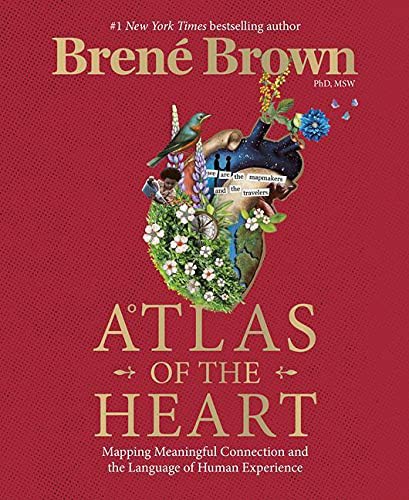
Published in 2021, Atlas of the Heart: Mapping Meaningful Connection and the Language of Human Experience is Brené Brown’s sixth number-one New York Times bestseller and was adapted into an HBO Max series. Brown, a research professor at the University of Houston known for her work on vulnerability, courage and shame, wrote it after her research showed that many people could name only a few emotions, most often happy, sad and angry.
Table of Contents
Atlas of the Heart at a Glance
| Detail | Info |
|---|---|
| Author | Brené Brown, PhD |
| Published | 2021 |
| Genre | Psychology / self-help / emotional intelligence |
| Structure | 13 chapters, each a place we go, exploring related emotions and experiences |
| Best for | Anyone wanting to understand emotions better, plus therapists, teachers, parents and leaders |
What Is Atlas of the Heart About?
Brown argues that without precise language for our emotions, we’re stuck: we can’t make sense of what we’re feeling, ask for help or offer real empathy. The book works like an atlas. Each chapter is a place we go in life, and within it, she defines related emotions, explains how they differ and shares research and personal stories.
The 13 Places We Go
The chapters cover the places we go when things are uncertain or too much, when we compare, when things don’t go as planned, when it’s beyond us, when things aren’t what they seem, when we’re hurting, with others, when we fall short, when we search for connection, when the heart is open, when life is good, when we feel wronged, and to self-assess. The book ends with a section on cultivating meaningful connection.
Key Ideas and Distinctions
Stress vs. Overwhelm
Stress is when we feel that demands exceed our ability to cope. Overwhelm is an extreme level of stress where we can’t function or think clearly. Recognizing the difference helps us know whether we need to slow down or completely stop.
Envy vs. Jealousy
Envy happens when we want something another person has. Jealousy happens when we fear losing a relationship or something we already have to someone else. People often use the words interchangeably, but they describe very different experiences.
Shame, Guilt, Humiliation and Embarrassment
Brown’s research distinguishes guilt (I did something bad), which can motivate positive change, from shame (I am bad), which tends to cause hiding or lashing out. Humiliation is feeling degraded by someone else in a way we don’t believe we deserve; embarrassment is a fleeting, often funny moment that others have also experienced.
Pity, Sympathy, Empathy and Compassion
Brown argues that pity and sympathy create distance, while empathy and compassion create connection. Empathy is a skill: understanding what someone is experiencing and reflecting that understanding back, without needing to have had the same experience.
Near Enemies
Borrowing a concept from Buddhist teacher Jack Kornfield, Brown describes near enemies: emotions that look like the real thing but undermine it. For example, pity can masquerade as compassion, and sentimentality can masquerade as love.
Grounded Confidence
The book closes by describing grounded confidence, a combination of curiosity, practice and willingness to be vulnerable, as the foundation for meaningful connection.
5 Key Takeaways From Atlas of the Heart
- Language is power. Naming emotions precisely helps you handle them.
- Similar emotions aren’t the same. Envy and jealousy, or shame and guilt, call for different responses.
- Empathy connects; pity divides. Real empathy means understanding, not feeling sorry for someone.
- Watch for near enemies. Some feelings look healthy but quietly damage connection.
- Connection requires vulnerability. Grounded confidence makes meaningful relationships possible.
Ideas Worth Remembering
- Language is a portal to meaning-making, connection and self-awareness. (paraphrased)
- We can’t share what we can’t name. (paraphrased)
- Empathy is not about fixing; it’s about being with someone in their experience. (paraphrased)
Who Should Read Atlas of the Heart?
It’s wonderful for anyone who wants a richer emotional vocabulary, including parents teaching kids about feelings, teachers, therapists, coaches and leaders. Its full-color design and short sections make it easy to dip into rather than read straight through.
What to Read Next
- Daring Greatly by Brené Brown on vulnerability and courage.
- Dare to Lead by Brené Brown on brave, empathetic leadership.
- Emotional Intelligence by Daniel Goleman on why emotional skills matter.
Related: Nonviolent Communication summary and best books on attachment theory in adults.
Frequently Asked Questions
How many emotions are in Atlas of the Heart?
Atlas of the Heart explores 87 emotions and experiences, organized into 13 categories Brené Brown calls places we go.
What is the main idea of Atlas of the Heart?
The main idea is that precise language for emotions helps us understand ourselves, make sense of our experiences and build meaningful connection with others.
What is the difference between envy and jealousy in Atlas of the Heart?
Envy is wanting something another person has. Jealousy is fearing that you’ll lose a relationship or something you value to someone else.