
Disclosure: As an Amazon Associate, Bookish Wisdom earns from qualifying purchases. This doesn't change our picks or your price.
TL;DR: A merchant loses his fortune and, on his way home, picks a rose from a strange palace garden. The furious Beast who owns it demands one of his daughters in exchange. His kind youngest daughter, Beauty, goes in his place. Living with the Beast, she comes to see his goodness, and her love breaks a spell.
Table of Contents
Beauty and the Beast at a Glance
| Author | Jeanne-Marie Leprince de Beaumont |
| First published | 1756 |
| Type | Fairy tale |
| Best for | readers of all ages who want a classic fairy tale about kindness and seeing beyond appearances |
Beauty and the Beast is a French fairy tale. The best-known version was written by Jeanne-Marie Leprince de Beaumont in 1756, abridged from a longer 1740 tale by Gabrielle-Suzanne de Villeneuve. It inspired many adaptations, including Disney's films. This summary follows Beaumont's version, with five key takeaways, ideas worth remembering and a note on who will enjoy it.
Main Characters
- Beauty: A kind, humble young woman who loves reading.
- The Beast: A frightening creature who is kind at heart.
- The merchant: Beauty's loving father.
- Beauty's sisters: Two vain, jealous older sisters.
- The fairy: A magical figure who rewards and punishes.
What Happens, Part by Part (Contains Spoilers)
The lost fortune
A rich merchant has three sons and three daughters. The youngest, Beauty, is kind and loves reading, while her two older sisters are proud and spoiled. When the merchant loses his fortune, the family moves to the country, and Beauty works hard without complaint.
The rose
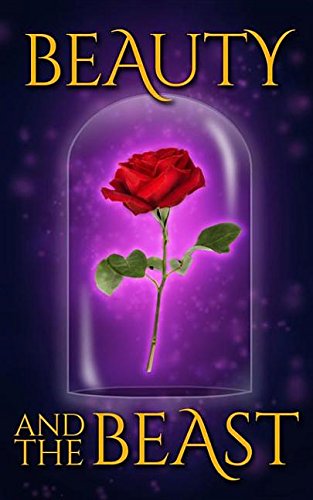
Hearing that one of his ships has arrived, the merchant travels to the city. His older daughters ask for fine clothes, but Beauty asks only for a rose. The trip is a failure. On the way home, he shelters in a magic palace and picks a rose. The Beast appears and demands his life, or one of his daughters.
Beauty at the palace
Beauty insists on going in her father's place. The Beast treats her kindly, giving her a beautiful room and every comfort. Each evening he asks her to marry him, and each time she says no, though she grows fond of him.
The visit home
Through a magic mirror, Beauty sees that her father is ill. The Beast lets her visit home for a week, giving her a ring to return. Her jealous sisters, now unhappily married, trick her into staying longer.
The ending
Beauty dreams that the Beast is dying of grief. She returns and finds him near death in the garden. She tells him she loves him and will marry him. The Beast turns into a handsome prince, freed from a curse. A fairy rewards Beauty for choosing virtue and turns her sisters into statues until they change their ways.
5 Key Takeaways
- Kindness matters more than appearance.
- True love sees the inner person.
- Gratitude and humility are virtues.
- Promises should be kept.
- Envy brings its own punishment.
Ideas Worth Remembering
These are paraphrased, not direct quotes:
- Do not judge by appearances.
- Goodness can be found in unlikely places.
- Love grows through kindness.
Who Should Read Beauty and the Beast?
Read Beauty and the Beast if you want a classic fairy tale about kindness. It suits children aged 5 and up and adults interested in fairy tale history.
Questions to Think About After Reading
These prompts work for solo reading, a book club or a classroom discussion of Beauty and the Beast:
- Why does Beauty go to the Beast?
- How is Beaumont's version different from Disney's?
- What does the rose symbolize?
How to Use This Summary
Use this page as a quick reference before a book club meeting, an exam, or a decision about whether Beauty and the Beast is worth your time. The takeaways are written to stand on their own. If a point interests you, go back to the book for the author's full story, characters and style, which no short summary can replace.
A Note on Accuracy and Spoilers
This summary is based on the published text of Beauty and the Beast, not on any film, series or stage adaptation, which often change the story. Details are kept at the level of the main events so that nothing is invented. Editions differ slightly in length and wording, so page numbers and small details may vary between copies.
Should You Read the Book?
Yes. Beaumont's version is short and easy to read aloud, and it differs in interesting ways from Disney's, with no Gaston and with Beauty's sisters as the villains. Comparing versions is a great way to discuss how stories change across cultures and eras.
Check price of Beauty and the Beast on Amazon
What to Read Next
- Cinderella by Charles Perrault: another classic French fairy tale
- Beauty by Robin McKinley: a novel retelling of the tale
- East of the Sun and West of the Moon by Peter Christen Asbjørnsen and Jørgen Moe: a Norwegian tale with a similar theme
Frequently Asked Questions
What is Beauty and the Beast about?
A kind girl lives with a beast and breaks his curse through love.
Who wrote Beauty and the Beast?
Jeanne-Marie Leprince de Beaumont wrote the best-known version in 1756.
Who wrote the original?
Gabrielle-Suzanne de Villeneuve, in 1740.
Why does Beauty ask for a rose?
She wants nothing expensive.
How is the spell broken?
Beauty agrees to marry the Beast.
Is there a Gaston?
No, Gaston was created for Disney's film.
What happens to the sisters?
They are turned into statues.
What age is it for?
About 5 and up.
Is it a French tale?
Yes, it was written in French.
Is Beauty and the Beast worth reading?
It depends on what you want. The book is best for readers of all ages who want a classic fairy tale about kindness and seeing beyond appearances. If that describes you, it is likely a good fit. If not, the titles under What to Read Next may suit you better.