
Disclosure: As an Amazon Associate, Bookish Wisdom earns from qualifying purchases. This doesn't change our picks or your price.
Quick answer: The best books on Lagrangian Mechanics include No-Nonsense Classical Mechanics by Jakob Schwichtenberg, A Student's Guide to Lagrangians and Hamiltonians by Patrick Hamill and The Theoretical Minimum by Leonard Susskind and George Hrabovsky, plus twelve more strong picks. Each one below has a short description and who it suits best, with a quick table to compare them.
Lagrangian mechanics reformulates Newton's laws using energy and the principle of least action. These books range from gentle introductions to classic graduate texts in analytical mechanics.
Each book below has a short description and a note on who it suits best. Use the quick table to compare the picks at a glance, then read the full entries for the titles that catch your eye.
Table of Contents
Quick Picks at a Glance
| Book | Author | Best for |
|---|---|---|
| No-Nonsense Classical Mechanics | Jakob Schwichtenberg | gentle |
| A Student's Guide to Lagrangians and Hamiltonians | Patrick Hamill | short |
| The Theoretical Minimum | Leonard Susskind and George Hrabovsky | popular |
| Classical Mechanics | John R. Taylor | undergraduate |
| Classical Dynamics of Particles and Systems | Stephen T. Thornton and Jerry B. Marion | undergraduate |
| Introduction to Classical Mechanics | David Morin | problems |
| Analytical Mechanics | Louis N. Hand and Janet D. Finch | analytical |
| Classical Mechanics, Third Edition | Herbert Goldstein, Charles Poole and John Safko | graduate |
| Mechanics | L. D. Landau and E. M. Lifshitz | classic |
| Classical Mechanics, Fifth Edition | Tom W. B. Kibble and Frank H. Berkshire | undergraduate |
| Mathematical Methods of Classical Mechanics | V. I. Arnold | mathematical |
| The Variational Principles of Mechanics | Cornelius Lanczos | classic |
| Structure and Interpretation of Classical Mechanics | Gerald Jay Sussman and Jack Wisdom | computational |
| Emmy Noether's Wonderful Theorem | Dwight E. Neuenschwander | symmetry |
| The Feynman Lectures on Physics, Volume II | Richard P. Feynman | least action |
1. No-Nonsense Classical Mechanics by Jakob Schwichtenberg
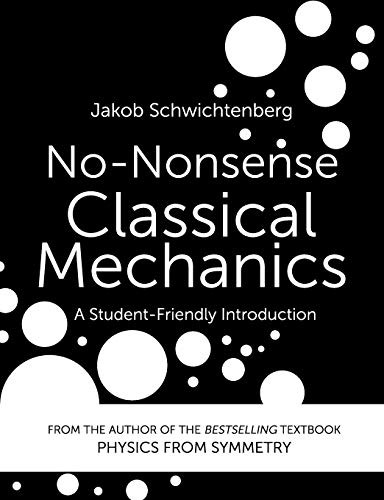
A student-friendly introduction.
2. A Student's Guide to Lagrangians and Hamiltonians by Patrick Hamill
A focused introduction.
3. The Theoretical Minimum by Leonard Susskind and George Hrabovsky
What you need to know to start doing physics.
4. Classical Mechanics by John R. Taylor
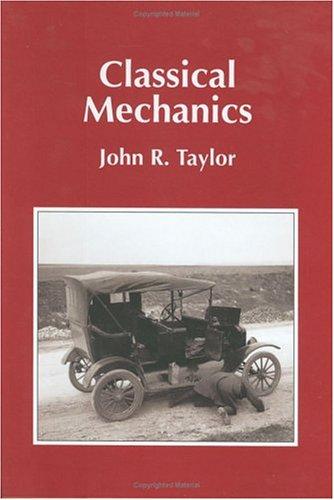
The popular undergraduate text.
5. Classical Dynamics of Particles and Systems by Stephen T. Thornton and Jerry B. Marion
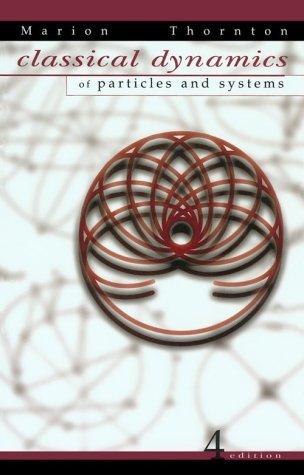
A standard text.
6. Introduction to Classical Mechanics by David Morin
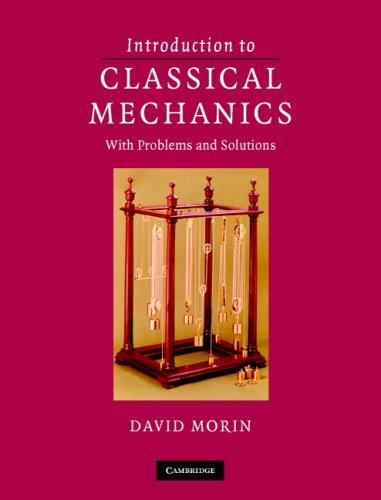
With problems and solutions.
7. Analytical Mechanics by Louis N. Hand and Janet D. Finch
A clear analytical text.
8. Classical Mechanics, Third Edition by Herbert Goldstein, Charles Poole and John Safko
The graduate classic.
9. Mechanics by L. D. Landau and E. M. Lifshitz
Volume 1 of the Course of Theoretical Physics.
10. Classical Mechanics, Fifth Edition by Tom W. B. Kibble and Frank H. Berkshire
A clear British text.
11. Mathematical Methods of Classical Mechanics by V. I. Arnold
A geometric approach.
12. The Variational Principles of Mechanics by Cornelius Lanczos
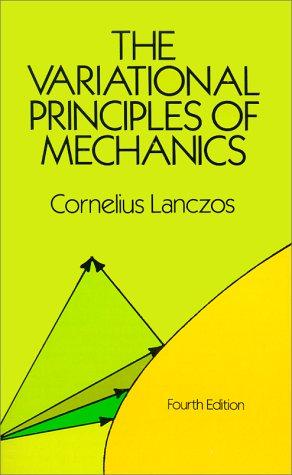
The principle of least action.
13. Structure and Interpretation of Classical Mechanics by Gerald Jay Sussman and Jack Wisdom
Mechanics with code.
14. Emmy Noether's Wonderful Theorem by Dwight E. Neuenschwander
Symmetry and conservation laws.
15. The Feynman Lectures on Physics, Volume II by Richard P. Feynman
Includes the famous least action lecture.
How to Choose
Start with No-Nonsense Classical Mechanics or Taylor. For graduate study, use Goldstein, and for symmetry, choose Emmy Noether's Wonderful Theorem.
How We Chose These Books
Every pick is a real, widely available book with strong reviews from readers, teachers or librarians. We mixed well-known favourites with a few less obvious titles and noted who each one suits best. Check the description and the table before you buy, and borrow a copy from the library first if you are unsure.
Tips for Getting the Most From These Books
- Start with one. Pick the title that matches your goal today, not the longest one on the list.
- Sample first. Read the opening chapter in a library copy or ebook preview before you buy.
- Try audio. Many of these work well as audiobooks on a commute or walk.
- Mix formats. Try an audiobook or ebook version of one pick to see which format clicks.
- Keep a list. Jot down the titles you finish so you can look for more by the same authors.
Frequently Asked Questions
Which book should I start with?
No-Nonsense Classical Mechanics by Jakob Schwichtenberg is a strong first pick, and every book on this list is worth a look.
Where can I find these books?
Most of these titles are easy to find at public libraries and bookshops, and many are also available as ebooks or audiobooks.