
Disclosure: As an Amazon Associate, Bookish Wisdom earns from qualifying purchases. This doesn't change our picks or your price.
Quick answer: The best books on Linear Algebra include Introduction to Linear Algebra by Gilbert Strang, Linear Algebra Done Right by Sheldon Axler and Linear Algebra and Its Applications by David C. Lay, Steven R. Lay and Judi J. McDonald, plus twelve more strong picks. Each one below has a short description and who it suits best, with a quick table to compare them.
Linear algebra powers computer graphics, machine learning, physics and engineering. These books range from friendly first courses to proof-based classics and applied texts for data science.
Table of Contents
Quick Picks at a Glance
| Book | Author | Best for |
|---|---|---|
| Introduction to Linear Algebra | Gilbert Strang | first course |
| Linear Algebra Done Right | Sheldon Axler | proof-based |
| Linear Algebra and Its Applications | David C. Lay, Steven R. Lay and Judi J. McDonald | applied |
| Elementary Linear Algebra | Howard Anton | first course |
| Linear Algebra: A Modern Introduction | David Poole | first course |
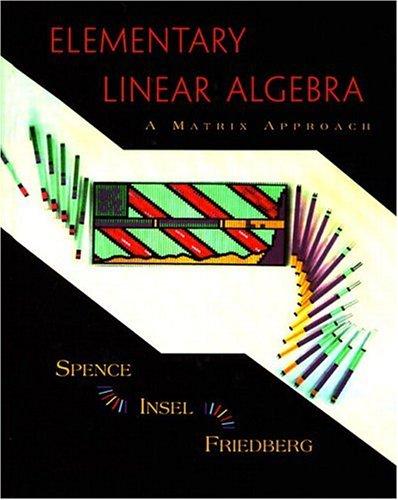
| Linear Algebra | Stephen H. Friedberg, Arnold J. Insel and Lawrence E. Spence | proof-based |
| Linear Algebra (Second Edition) | Kenneth Hoffman and Ray Kunze | classic |
| Finite-Dimensional Vector Spaces | Paul R. Halmos | classic |
| Introduction to Applied Linear Algebra | Stephen Boyd and Lieven Vandenberghe | applied |
| Linear Algebra and Learning from Data | Gilbert Strang | data science |
| Mathematics for Machine Learning | Marc Peter Deisenroth, A. Aldo Faisal and Cheng Soon Ong | machine learning |
| Coding the Matrix | Philip N. Klein | programming |
| Matrix Analysis | Roger A. Horn and Charles R. Johnson | advanced |
| Matrix Computations | Gene H. Golub and Charles F. Van Loan | numerical |
| Numerical Linear Algebra | Lloyd N. Trefethen and David Bau III | numerical |
1. Introduction to Linear Algebra by Gilbert Strang
The popular MIT text.
2. Linear Algebra Done Right by Sheldon Axler
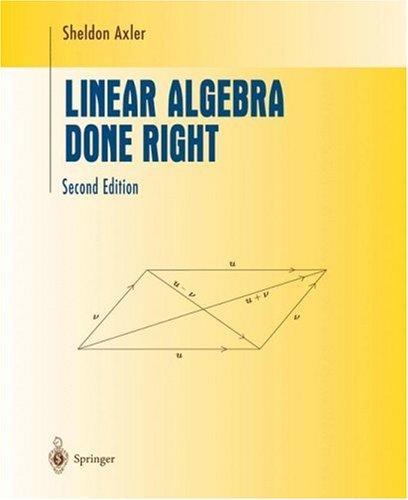
A clean abstract approach.
3. Linear Algebra and Its Applications by David C. Lay, Steven R. Lay and Judi J. McDonald
A widely used course text.
4. Elementary Linear Algebra by Howard Anton
A clear beginner text.
5. Linear Algebra: A Modern Introduction by David Poole
Concepts with applications.
6. Linear Algebra by Stephen H. Friedberg, Arnold J. Insel and Lawrence E. Spence
A rigorous standard.
7. Linear Algebra (Second Edition) by Kenneth Hoffman and Ray Kunze
A demanding classic.
8. Finite-Dimensional Vector Spaces by Paul R. Halmos
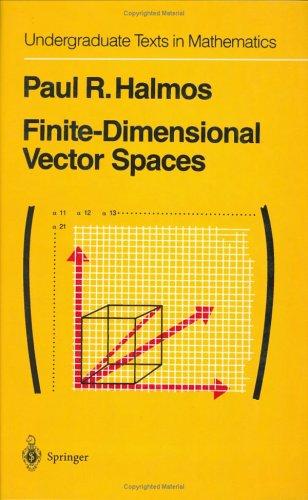
Elegant and concise.
9. Introduction to Applied Linear Algebra by Stephen Boyd and Lieven Vandenberghe
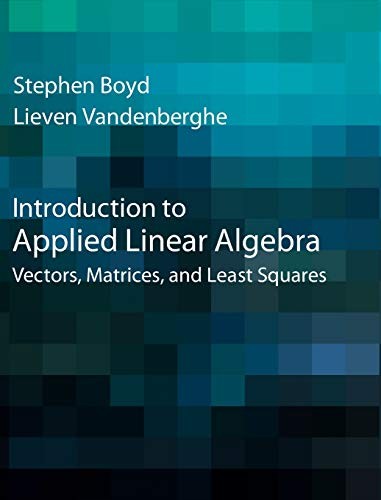
Vectors, matrices and least squares.
10. Linear Algebra and Learning from Data by Gilbert Strang
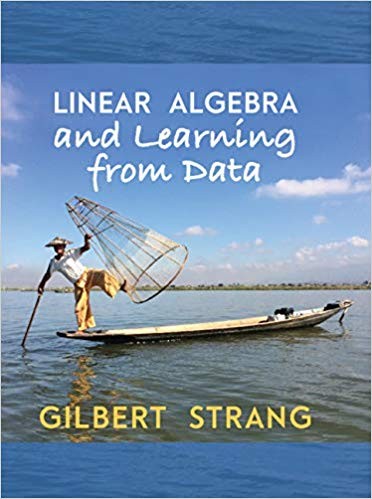
Linear algebra for deep learning.
11. Mathematics for Machine Learning by Marc Peter Deisenroth, A. Aldo Faisal and Cheng Soon Ong
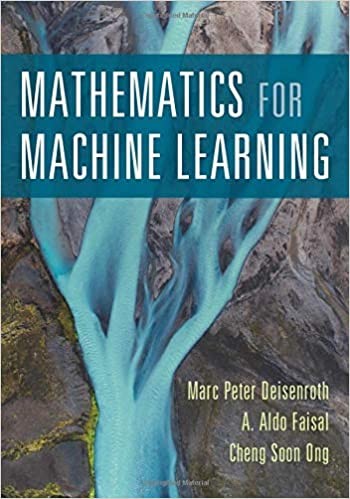
The math behind ML.
12. Coding the Matrix by Philip N. Klein
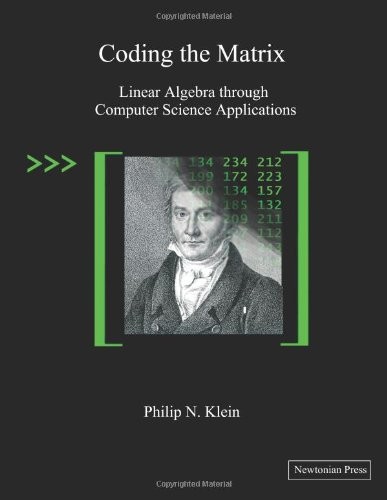
Linear algebra through computer science.
13. Matrix Analysis by Roger A. Horn and Charles R. Johnson
The standard reference.
14. Matrix Computations by Gene H. Golub and Charles F. Van Loan
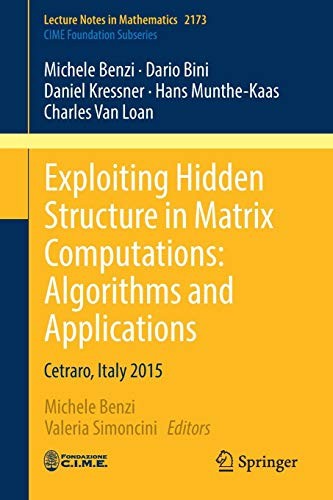
The numerical classic.
15. Numerical Linear Algebra by Lloyd N. Trefethen and David Bau III
A clear graduate text.
How to Choose
Start with Strang's Introduction to Linear Algebra. For proofs, read Linear Algebra Done Right, and for machine learning, choose Mathematics for Machine Learning.
How We Chose These Books
Every pick is a real, widely available book with strong reviews from readers, teachers or librarians. We mixed well-known favourites with a few less obvious titles and noted who each one suits best. Check the description and the table before you buy, and borrow a copy from the library first if you are unsure.
Tips for Getting the Most From These Books
- Start with one. Pick the title that matches your goal today, not the longest one on the list.
- Sample first. Read the opening chapter in a library copy or ebook preview before you buy.
- Try audio. Many of these work well as audiobooks on a commute or walk.
- Mix formats. Try an audiobook or ebook version of one pick to see which format clicks.
- Keep a list. Jot down the titles you finish so you can look for more by the same authors.
Frequently Asked Questions
Which book should I start with?
Introduction to Linear Algebra by Gilbert Strang is a strong first pick, and every book on this list is worth a look.
Where can I find these books?
Most of these titles are easy to find at public libraries and bookshops, and many are also available as ebooks or audiobooks.