
Disclosure: As an Amazon Associate, Bookish Wisdom earns from qualifying purchases. This doesn't change our picks or your price.
Quick answer: If you loved Gödel, Escher, Bach, read Douglas Hofstadter's I Am a Strange Loop and The Mind's I, then try Gödel's Proof, The Emperor's New Mind and Incompleteness. All explore logic, mind and self through puzzles, paradoxes and playful writing.
Hofstadter's 1979 Pulitzer winner weaves together mathematics, art and music to ask how a mind can arise from matter. It is long, playful and full of dialogues. The books below share its curiosity about logic, consciousness and strange loops. All are nonfiction unless noted, and all are real, in-print books.
Table of Contents
Quick Picks at a Glance
| Book | Author | Ages | Best For |
|---|---|---|---|
| I Am a Strange Loop | Douglas Hofstadter | Adult | the author's later book |
| Metamagical Themas | Douglas R. Hofstadter | Adult | short essays |
| The Mind's I | Douglas R. Hofstadter and Daniel C. Dennett (editors) | Adult | mind puzzles |
| Gödel's Proof | Ernest Nagel and James R. Newman | Adult | the logic behind GEB |
| The Emperor's New Mind | Roger Penrose | Adult | physics and mind |
| Incompleteness | Rebecca Goldstein | Adult | the man behind the theorem |
| Flatland | Edwin A. Abbott | Adult | short classics |
| Logicomix | Apostolos Doxiadis and Christos Papadimitriou | Adult | graphic novel fans |
| The Annotated Alice | Lewis Carroll and Martin Gardner | Adult | puzzles and wordplay |
| Consciousness Explained | Daniel C. Dennett | Adult | philosophy of mind |
| The Selfish Gene | Richard Dawkins | Adult | ideas about evolution |
| Surely You're Joking, Mr. Feynman! | Richard P. Feynman | Adult | curious scientists |
| How to Solve It | G. Pólya | Adult | problem solvers |
| Fermat's Enigma | Simon Singh | Adult | math history |
| The Man Who Mistook His Wife for a Hat | Oliver Sacks | Adult | brain stories |
1. I Am a Strange Loop by Douglas Hofstadter
Argues that the self is a pattern of self-reference in the brain. A more direct and personal follow-up.
Best for: the author's later book.
2. Metamagical Themas by Douglas R. Hofstadter
Collected essays on puzzles, language and thought. Short pieces for dipping into.
Best for: short essays.
3. The Mind's I by Douglas R. Hofstadter and Daniel C. Dennett (editors)
An anthology of stories and essays on mind and self, with commentary. Thought-provoking and varied.
Best for: mind puzzles.
4. Gödel's Proof by Ernest Nagel and James R. Newman
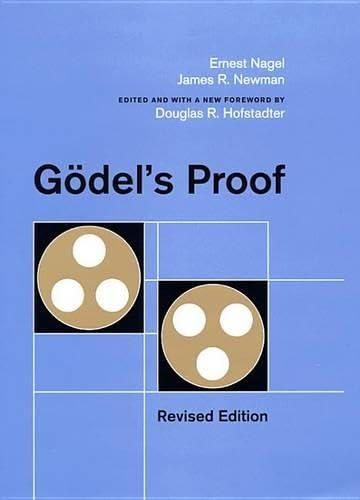
A short, clear explanation of Gödel's incompleteness theorems. Compact and classic.
Best for: the logic behind GEB.
5. The Emperor's New Mind by Roger Penrose
A physicist argues that minds are not computers. Dense and bold.
Best for: physics and mind.
6. Incompleteness by Rebecca Goldstein
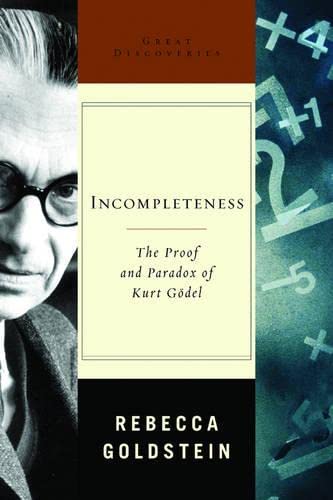
A short biography of Kurt Gödel and his ideas. Elegant and human.
Best for: the man behind the theorem.
7. Flatland by Edwin A. Abbott
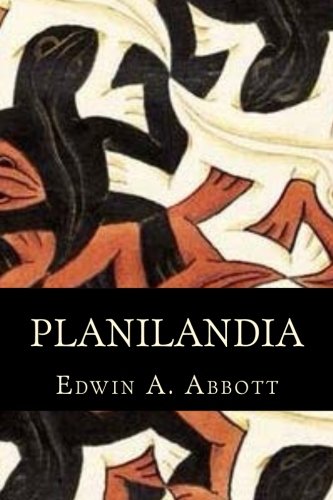
A square describes life in a two-dimensional world. A short classic of geometry and satire.
Best for: short classics.
8. Logicomix by Apostolos Doxiadis and Christos Papadimitriou

A graphic novel about the search for the foundations of mathematics. Fun and clear.
Best for: graphic novel fans.
9. The Annotated Alice by Lewis Carroll and Martin Gardner
Carroll's stories with notes on logic and wordplay. Delightful and full of facts.
Best for: puzzles and wordplay.
10. Consciousness Explained by Daniel C. Dennett
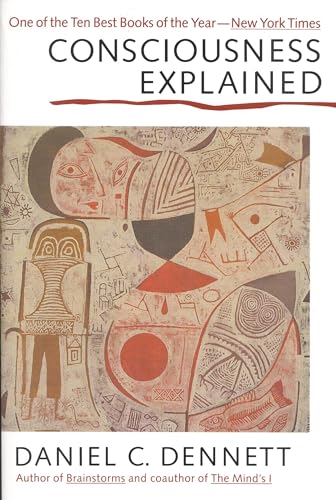
A philosopher argues that consciousness is a product of the brain's processes. Dense but famous.
Best for: philosophy of mind.
11. The Selfish Gene by Richard Dawkins

Explains evolution from the gene's point of view. Clear and influential.
Best for: ideas about evolution.
12. Surely You're Joking, Mr. Feynman! by Richard P. Feynman
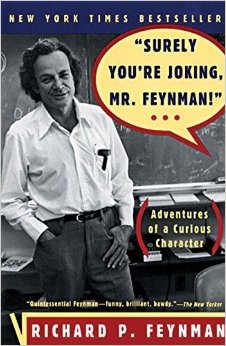
Funny stories from a Nobel physicist's life. Light and lively.
Best for: curious scientists.
13. How to Solve It by G. Pólya
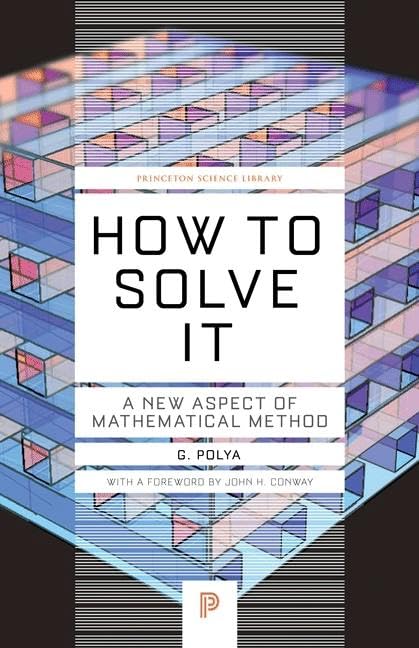
A classic guide to mathematical problem solving. Short and clever.
Best for: problem solvers.
14. Fermat's Enigma by Simon Singh
The story of the proof of Fermat's last theorem. Gripping and clear.
Best for: math history.
15. The Man Who Mistook His Wife for a Hat by Oliver Sacks
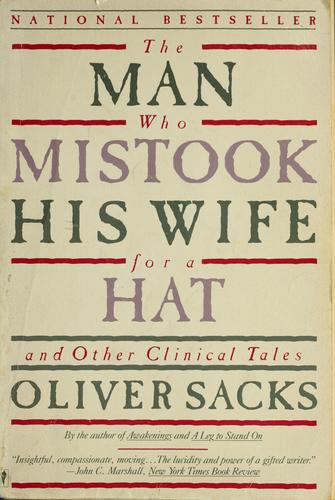
Case studies of neurological patients and what they reveal about the mind. Warm and curious.
Best for: brain stories.
How to Choose
For a shorter route, read I Am a Strange Loop or Gödel's Proof. For fun with logic, Flatland and The Annotated Alice. For mind and brain, The Mind's I and The Man Who Mistook His Wife for a Hat. GEB is long, so read a few chapters a week and enjoy the dialogues between them. Treat GEB as a book to play with. Skip chapters if you like, read a dialogue aloud with a friend and return to difficult parts later. Online study groups and lectures by Hofstadter can help you understand the ideas, and some readers keep notebooks of favorite puzzles.
Related: 15 Books Like Wings of Fire Kids Will Love: Dragons, Quests and Animal Adventures · 12 Dystopian Books Like the Hunger Games | Best Books to Read Like Hunger Games
Frequently Asked Questions
What is Gödel, Escher, Bach about?
It explores how self-reference and formal systems connect math, art and music, and what they suggest about mind and consciousness.
Is it hard to read?
It is long and layered, but the dialogues and puzzles make it playful.
Who is Douglas Hofstadter?
An American cognitive scientist who taught at Indiana University.
Do I need to know math?
No. The book explains the ideas from scratch, though some chapters are demanding.
What is a strange loop?
It is a paradoxical loop in which moving through levels of a system brings you back to where you started.
How long is GEB?
About 750 pages, with dialogues, puzzles and illustrations.
What do Gödel, Escher and Bach have in common?
Each of them used self-reference or strange loops in logic, art or music.
Is GEB a good gift?
Yes, for curious readers who love puzzles, math, music or art.
Is there a shorter version?
I Am a Strange Loop covers similar ideas in a more direct way.