
Disclosure: As an Amazon Associate, Bookish Wisdom earns from qualifying purchases. This doesn’t change our picks or your price.
Quick answer: Good discussion questions for Circe by Madeline Miller focus on a witch’s journey from outcast to her own power, gods versus mortals, motherhood, loneliness, transformation and retelling myths from a woman’s point of view. Below are 19 questions grouped by theme, plus a spoiler-free summary.
Quick facts
Author: Madeline Miller
Published: 2018
Setting: ancient Greek myth, mostly the island of Aiaia
Based on: the Odyssey and other Greek myths
Content note: sexual assault, violence and cruelty
Circe took a minor figure from the Odyssey, the witch who turns men into pigs, and gave her a full, powerful life story. Madeline Miller’s novel became a bestseller and a book club favorite because it works whether or not you know Greek mythology. It’s a story about loneliness, power and becoming yourself, told in gorgeous prose. This guide includes a spoiler-free summary, characters and themes, and 19 discussion questions grouped by theme. The questions contain spoilers.
Table of Contents
Spoiler-Free Summary
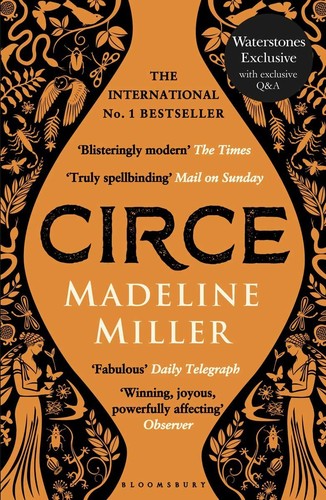
Circe is the daughter of Helios, god of the sun, and a nymph named Perse. In her father’s glittering halls she is mocked for her strange voice and plain looks, and she has none of the power of her divine relatives.
When she discovers she has a gift for witchcraft, the power to transform with herbs and spells, the gods see her as a threat. Zeus banishes her to the deserted island of Aiaia.
There, alone, Circe hones her craft, tames wild animals and crosses paths with some of the most famous figures of Greek myth, including Daedalus, the Minotaur and, eventually, Odysseus. Over centuries, she must decide whether she belongs with the gods or with mortals.
Check price of Circe on Amazon
Main Characters and Themes
| Character or Theme | What to Know |
|---|---|
| Circe | A daughter of the sun god who becomes a powerful witch |
| Helios | Circe’s proud, distant father |
| Glaucos | A fisherman Circe loves and transforms |
| Scylla | A nymph Circe turns into a monster |
| Daedalus | The inventor Circe meets on Crete |
| Hermes | A clever god who visits Circe |
| Odysseus | The wandering hero who stays on Aiaia |
| Telegonus | Circe’s son |
| Power | Who has it, who takes it and what it costs |
| Gods and mortals | Immortality versus the meaning of a human life |
Discussion Questions (Contains Spoilers)
Circe’s Family
- How does Circe’s childhood in Helios’s halls shape her?
- Why are the gods so threatened by witchcraft?
- How do Circe’s siblings, like Pasiphaë and Aeëtes, compare with her?
Exile and Power
- Circe’s exile becomes a kind of freedom. How?
- What does Circe’s witchcraft require from her, and why does that matter?
- How did you react to what Circe does to the men who come to her island?
- Why is Scylla a lifelong regret for Circe?
Love and Relationships
- How does Circe’s relationship with Daedalus differ from her feelings for Glaucos?
- What did you think of Odysseus as Circe sees him?
- How does Circe fight to protect her son, Telegonus?
- How does motherhood change Circe?
Retelling Myth
- How does seeing the Odyssey through Circe’s eyes change the story?
- Which mythological figure surprised you most in Miller’s version?
- Why do you think stories told from the women’s side of myth have become so popular?
The Ending and Big Picture
- Why does Circe choose the ending she chooses?
- What does the novel suggest makes a life meaningful?
- Is Circe a feminist novel? Why or why not?
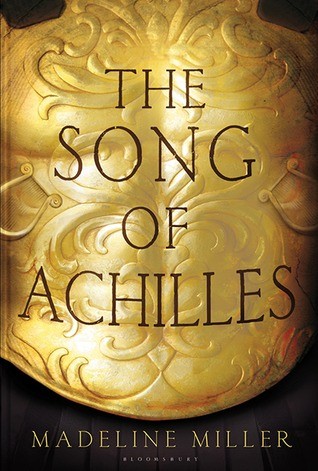
- If you’ve read The Song of Achilles, how does Circe compare?
- Which line or image from the book stayed with you most?
Is Circe a Good Book Club Pick?
Choose it if your group wants beautiful writing and big ideas in an accessible package. It’s about 390 pages and reads like a fable, so you don’t need any background in Greek myth. It’s a strong pick for mixed groups because fantasy fans, literary readers and mythology buffs all find something in it. If your group enjoys it, The Song of Achilles makes a natural follow-up a month or two later.
Book Club Ideas for Circe
- Serve a Greek spread, like olives, feta, figs, honey and bread, with a nod to Circe’s herbs.
- Bring a sprig of herbs like rosemary or thyme and talk about what transformation you’d choose.
- Read the Circe episode from Book 10 of the Odyssey aloud and compare it with Miller’s version.
- Look at classical paintings of Circe and talk about how artists have portrayed her.
Books Like Circe
If your group loved it, try The Song of Achilles by Madeline Miller for her first novel, The Silence of the Girls by Pat Barker for the Trojan War from a woman’s view, or Ariadne by Jennifer Saint for another myth retold.
Check price of The Song of Achilles on Amazon
How to Structure Your Meeting
Start by asking how much everyone knew about Circe before reading. Then work through two or three questions from each theme above, saving the “big picture” questions for the end. If your group is large, split into pairs for one theme and report back.
A simple 90-minute plan:
- 0–15 minutes: food, catch-up and the opening question.
- 15–60 minutes: the discussion questions, theme by theme.
- 60–75 minutes: one of the book club ideas above, or a quick comparison with the adaptation if there is one.
- 75–90 minutes: everyone rates the book out of five in one sentence, then you pick next month’s read.
Frequently Asked Questions
What is Circe about?
It retells the life of Circe, a daughter of the Greek sun god who is exiled to an island for her witchcraft and grows into her own power over centuries.
Do you need to know Greek mythology to enjoy Circe?
No. Miller explains everything you need, though fans of the Odyssey will enjoy spotting familiar stories.
Is Circe good for book clubs?
Yes. It’s beautifully written and raises big questions about power, gender, motherhood and what makes a life meaningful.
Is Circe appropriate for all book clubs?
It includes a sexual assault and mythological violence, so share a content note before reading.