

Disclosure: As an Amazon Associate, Bookish Wisdom earns from qualifying purchases. This doesn't change our picks or your price.
TL;DR: Carl Sagan takes readers on a journey through space and time, from the Big Bang and the birth of stars to the history of science and the search for life beyond Earth. He shows how humans learned their place in the universe and warns that our survival depends on wisdom and cooperation.
Table of Contents
Cosmos at a Glance
| Author | Carl Sagan |
| First published | 1980 |
| Type | Popular science |
| Best for | curious readers who want an inspiring, poetic introduction to astronomy and science |
Cosmos is a popular science book by astronomer Carl Sagan, published in 1980 as a companion to his landmark TV series Cosmos: A Personal Voyage. It became one of the best-selling science books ever written in English. Below you will find a part-by-part summary, five key takeaways, ideas worth remembering and a note on who will enjoy it.
Key Concepts
- The cosmic perspective: Seeing Earth as a tiny part of a vast universe.
- Star stuff: The idea that the atoms in our bodies were made in stars.
- The scientific method: Testing ideas against evidence.
- The search for life: Exploring whether we are alone.
- Human survival: The danger of nuclear war and the need for cooperation.
The Main Ideas, Part by Part
The shores of the cosmic ocean
Sagan begins with the vastness of the universe and the ancient scholar Eratosthenes, who measured Earth's circumference using shadows. He describes the great Library of Alexandria as a center of early science.
Life and evolution
Sagan explains evolution by natural selection, using the example of Heike crabs in Japan, whose shells look like samurai faces because fishermen threw them back. He describes how life arose from simple chemistry.
The planets
He tells the story of Johannes Kepler, who discovered the laws of planetary motion, and describes Venus's runaway greenhouse effect, Mars and the Viking landers and the Voyager missions to the outer planets.
Stars and the universe
Sagan explains how stars are born and die, and how heavy elements are forged in them. “We are made of star stuff.” He discusses Einstein's relativity, galaxies, black holes and the Big Bang.
Our future
Sagan considers the search for extraterrestrial intelligence, including the Drake equation. He ends by warning about nuclear weapons and asks “Who speaks for Earth?”, urging humanity to use science wisely and protect our fragile planet.
5 Key Takeaways
- Science is a way of thinking, not just facts.
- We are connected to the universe at the atomic level.
- Curiosity is a human birthright.
- Our planet is small and fragile.
- The future depends on our choices.
Ideas Worth Remembering
These are paraphrased, not direct quotes:
- We are made of star stuff.
- Extraordinary claims require extraordinary evidence.
- Somewhere, something incredible is waiting to be known.
Who Should Read Cosmos?
Read Cosmos if you want a beautiful, accessible journey through science. It suits teens and adults.
Questions to Think About After Reading
These prompts work for solo reading, a book club or a classroom discussion of Cosmos:
- What does Sagan mean by “star stuff”?
- Is there life elsewhere in the universe?
- Why does Sagan worry about nuclear war?
How to Use This Summary
Use this page as a quick reference before a book club meeting, an exam, or a decision about whether Cosmos is worth your time. The takeaways are written to stand on their own. If a point interests you, go back to the book for the author's full argument, examples and evidence, which no short summary can replace.
A Note on Accuracy and Spoilers
This summary is based on the published text of Cosmos, not on any film, series or stage adaptation, which often change the story. Details are kept at the level of the main arguments so that nothing is invented. Editions differ slightly in length and wording, so page numbers and small details may vary between copies.
Should You Read the Book?
Yes. Sagan writes with wonder and clarity, and the book's big ideas still feel fresh. Some details, especially about planets and space missions, are now dated, and the Cold War sections reflect their time. Pair it with the TV series or the 2014 reboot hosted by Neil deGrasse Tyson.
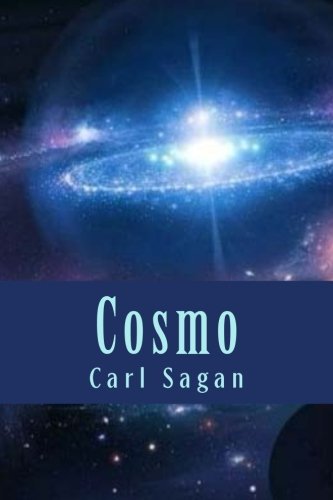
Check price of Cosmos on Amazon
What to Read Next
- Pale Blue Dot by Carl Sagan: Sagan's reflections on humanity's future
- A Brief History of Time by Stephen Hawking: an introduction to cosmology
- Astrophysics for People in a Hurry by Neil deGrasse Tyson: a quick guide to the universe
Related: 15 Books Like Cosmos You’ll Love
Frequently Asked Questions
What is Cosmos about?
A journey through the universe and the history of science.
Who wrote Cosmos?
Carl Sagan.
Is it connected to a TV show?
Yes, the 1980 series Cosmos: A Personal Voyage.
What does “star stuff” mean?
The elements in our bodies were made inside stars.
Who was Eratosthenes?
An ancient Greek scholar who measured Earth's size.
What is the Drake equation?
A formula for estimating the number of civilizations in our galaxy.
Is Cosmos still accurate?
Its core ideas are, though some facts are dated.
How long is it?
About 370 to 400 pages.
Is there a newer series?
Yes, Cosmos: A Spacetime Odyssey (2014), hosted by Neil deGrasse Tyson.
What age is it for?
Teens and adults.
Who are the main ideas in Cosmos?
The key concepts are the cosmic perspective, Star stuff, the scientific method, the search for life and Human survival. The cosmic perspective: Seeing Earth as a tiny part of a vast universe. Star stuff: The idea that the atoms in our bodies were made in stars. The scientific method: Testing ideas against evidence.
Is Cosmos worth reading?
It depends on what you want. The book is best for curious readers who want an inspiring, poetic introduction to astronomy and science. If that describes you, it is likely a good fit. If not, the titles under What to Read Next may suit you better.