
Disclosure: As an Amazon Associate, Bookish Wisdom earns from qualifying purchases. This doesn't change our picks or your price.
TL;DR: J. Campbell Bruce recounts the history of Alcatraz federal penitentiary, the island prison in San Francisco Bay that housed some of America's most notorious criminals, and describes the escape attempts, culminating in the 1962 escape of Frank Morris and the Anglin brothers.
Table of Contents
Escape from Alcatraz at a Glance
| Author | J. Campbell Bruce |
| First published | 1963 |
| Type | Narrative nonfiction |
| Best for | readers who like true-crime and prison-escape history |
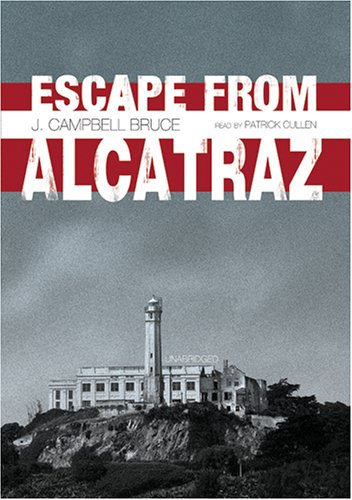
Escape from Alcatraz is a nonfiction book by J. Campbell Bruce, first published in 1963. The book was the basis for the 1979 Clint Eastwood film. The fate of the 1962 escapees remains uncertain. Below you will find a part-by-part summary, five key takeaways, a few ideas worth remembering and a note on who will enjoy it most. The summary paraphrases the author's ideas rather than quoting them at length, so it works as a refresher or a preview, not a replacement for the book.
Content note: Contains prison violence.
Key Ideas, Part by Part
The Rock
Alcatraz's history.
Famous inmates
Al Capone and others.
Security
The prison was thought escape-proof.
Attempts
Many tried to escape.
June 1962
Three inmates escape.
Fate unknown
The men were never found.
The Summary at a Glance
| Part | In one line |
|---|---|
| The Rock | Alcatraz's history. |
| Famous inmates | Al Capone and others. |
| Security | The prison was thought escape-proof. |
| Attempts | Many tried to escape. |
| June 1962 | Three inmates escape. |
| Fate unknown | The men were never found. |
5 Key Takeaways
- Escape-proof prisons have limits.
- Ingenuity can defy security.
- The truth may never be known.
- Prison life is hard.
- Legends grow.
Ideas Worth Remembering
These are paraphrased, not direct quotes:
- The writing is journalistic.
- The escape is the highlight.
- The mystery remains.
Who Should Read Escape from Alcatraz?
Read it if you like prison history. It is fast.
Questions to Think About After Reading
These prompts work for solo reading, a book club or a classroom discussion of Escape from Alcatraz:
- Which idea could you use this week, and what would the first step be?
- Where do you disagree with the author, and what evidence would change your mind?
- Who in your life would benefit most from this book, and why?
Quick Facts to Remember
- Book: Escape from Alcatraz by J. Campbell Bruce (1963)
- Type: Narrative nonfiction
- Best for: readers who like true-crime and prison-escape history
- Main idea in one line: Escape-proof prisons have limits.
Reading Time and Format
Nonfiction is easy to read in pieces. Many readers like an audiobook for the commute and a print or e-book copy for notes and highlights. Check the page count of your edition before you plan your reading time. Whichever format you choose, a library copy is a low-cost way to try the book before you buy, and used or digital editions are often cheaper than new print copies.
How to Use This Summary
Use this page as a quick reference before a book club meeting, an exam, or a decision about whether Escape from Alcatraz is worth your time. The takeaways are written to stand on their own. If a point interests you, go back to the book for the author's full argument, examples and style, which no short summary can carry.
A simple way to get the most from it: first read the TL;DR and the takeaways to decide if the book fits your interests, then read the part-by-part section for the structure, and finally write down one idea you want to remember or one question you want answered by the full text.
A Note on Accuracy and Spoilers
This summary is based on the published text of Escape from Alcatraz, not on any film, series or stage adaptation, which often change the story. Details are kept at the level of the main events so that nothing is invented. Editions differ slightly in length and wording, so page numbers and small details may vary from your copy.
Should You Read the Book?
If you decide to read it, skim the contents page first and read the sections that match your goal. Take notes in your own words, because ideas stick better when you rephrase them. If you are still unsure, read a free sample or the first chapter, because the opening pages usually show whether the voice and subject suit you. Reviews from readers with tastes like yours can help too, but your own reaction to a few pages is the best test.
Check price of Escape from Alcatraz on Amazon
What to Read Next
- Alcatraz from Inside by Jim Quillen: an inmate's account
- Papillon by Henri Charriere: a famous escape memoir
- The Great Escape by Paul Brickhill: a WWII escape
Frequently Asked Questions
Did the Alcatraz escapees survive?
Their fate is unknown.
Is there a movie?
Yes, 1979.
What age is it for?
Roughly 14 and up.
Is Escape from Alcatraz worth reading?
It depends on what you want. The book is best for readers who like true-crime and prison-escape history. If that describes you, it is likely a good fit. If not, the titles under What to Read Next may suit you better.
Can this summary replace reading Escape from Alcatraz?
No. A summary covers the main events and ideas, but it cannot carry the author's voice, detail or pacing. Use it to decide whether to read the book, to refresh your memory or to prepare for a discussion.
What are the main themes of Escape from Alcatraz?
Escape from Alcatraz returns again and again to a few big ideas. Escape-proof prisons have limits. Ingenuity can defy security. The truth may never be known. Prison life is hard. Legends grow. The part-by-part summary above shows where each of these ideas appears in the story.
What ideas from Escape from Alcatraz are worth remembering?
Readers often come away with these points in mind: The writing is journalistic. The escape is the highlight. The mystery remains.