
Disclosure: As an Amazon Associate, Bookish Wisdom earns from qualifying purchases. This doesn't change our picks or your price.
TL;DR: In 1933, three young anthropologists meet in New Guinea. Nell Stone, already famous, and her moody husband Fen are studying local tribes. Andrew Bankson, a lonely English researcher close to despair, finds new life in their company. As the three develop a new theory about cultures, they become caught in a dangerous triangle of love, rivalry and ambition.
Table of Contents
Euphoria at a Glance
| Author | Lily King |
| First published | 2014 |
| Type | Historical fiction |
| Best for | readers who want a short, intense historical novel about science, love and ambition |
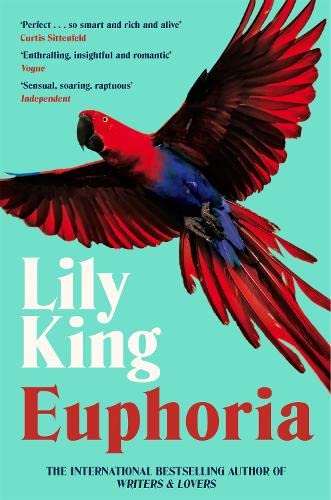
Euphoria is a novel by Lily King, published in 2014. It was inspired by the life of the anthropologist Margaret Mead. Below you will find a part-by-part summary, five key takeaways, ideas worth remembering and a note on who will enjoy it.
Content note: Includes violence, death, suicidal thoughts and a miscarriage.
Main Characters
- Nell Stone: A famous American anthropologist.
- Fen: Nell's Australian husband, also an anthropologist.
- Andrew Bankson: An English anthropologist.
- The Tam: A local people the three study.
- The Kiona and Mumbanyo: Other local peoples.
What Happens, Part by Part (Contains Spoilers)
Meeting
Nell and Fen have just left the Mumbanyo people, whose violence disturbed Nell. Bankson, who has been studying the Kiona and feeling lonely and hopeless, meets them and is thrilled to have company. He guides them to the Tam people, who live near the Sepik River.
The Tam
The Tam are a people in which women hold much of the economic power and men create art and decoration. Nell is fascinated and works closely with them. Fen is restless and less interested in careful study. Bankson visits often and falls in love with Nell's intelligence and warmth.
The Grid
Together, the three develop a “Grid,” a theory that sorts cultures and personalities into types. The intense intellectual excitement of their work feels like euphoria. But tensions grow. Fen is jealous of Nell's fame and of Bankson. Nell and Bankson become closer, and they share a brief, passionate affair.
Fen's actions
Fen becomes obsessed with an object of great importance to the Kiona, a traditional flute, and steals it, causing violence and loss. Bankson is horrified. Nell is pregnant again after earlier miscarriages. She and Fen leave New Guinea for another research trip, and the triangle breaks apart.
Afterward
Nell dies at sea soon after, and the circumstances suggest that Fen may have been responsible. Bankson is devastated. Years later, he reflects on their brief time together and on how it changed his life. The novel ends with a sense of how love, knowledge and loss shaped him.
5 Key Takeaways
- Scientific discovery can feel like euphoria.
- Ambition can damage relationships.
- Studying others reveals our own biases.
- Love can grow in unexpected places.
- Western researchers can harm the people they study.
Ideas Worth Remembering
These are paraphrased, not direct quotes:
- Understanding other cultures requires humility.
- Intellectual connection can be as intense as romance.
- The most important moments can be brief.
Who Should Read Euphoria?
Read Euphoria if you enjoy literary historical fiction, science stories and complex love triangles. It suits adults.
About Lily King
Lily King (born 1963) is an American novelist. Euphoria won the Kirkus Prize and the New England Book Award, and it was named one of The New York Times's best books of 2014. Her other novels include Father of the Rain, Writers & Lovers and Heart the Lover. She was inspired by Margaret Mead's real fieldwork in New Guinea with her husbands.
Questions to Think About After Reading
These prompts work for solo reading, a book club or a classroom discussion of Euphoria:
- How does the Grid reflect the characters' own personalities?
- Was Fen's theft of the flute a turning point?
- What does the novel say about Western researchers?
How to Use This Summary
Use this page as a quick reference before a book club meeting, an exam, or a decision about whether Euphoria is worth your time. The takeaways are written to stand on their own. If a point interests you, go back to the book for the author's full story, characters and style, which no short summary can replace.
A Note on Accuracy and Spoilers
This summary is based on the published text of Euphoria, not on any film, series or stage adaptation, which often change the story. Details are kept at the level of the main events so that nothing is invented. Editions differ slightly in length and wording, so page numbers and small details may vary between copies.
Should You Read the Book?
Yes. It is short, intense and beautifully written.
Check price of Euphoria on Amazon
What to Read Next
- Writers & Lovers by Lily King: another novel about love and ambition
- State of Wonder by Ann Patchett: a scientist in the Amazon
- The Signature of All Things by Elizabeth Gilbert: a woman scientist's life of discovery
Related: 15 Books Like Euphoria You’ll Love
Frequently Asked Questions
What is Euphoria about?
Three anthropologists in 1930s New Guinea, caught in love and rivalry.
Who wrote it?
Lily King, in 2014.
Is it based on real people?
It is inspired by Margaret Mead and her colleagues.
Who is Nell Stone?
A famous anthropologist, based loosely on Mead.
What is the Grid?
A theory that sorts cultures into types.
Where is it set?
New Guinea, near the Sepik River.
What happens to Nell?
She dies at sea, in suspicious circumstances.
Did it win awards?
Yes, the Kirkus Prize.
What age is it for?
Adults.
How long is it?
About 260 pages.
Is it a love story?
Yes, partly.
Is it based on true events?
Loosely, with many changes.
Is Euphoria a good book club pick?
Yes. Its short length and big questions about science and love spark discussion.
Is Euphoria worth reading?
It depends on what you want. The book is best for readers who want a short, intense historical novel about science, love and ambition. If that describes you, it is likely a good fit. If not, the titles under What to Read Next may suit you better.