
Disclosure: As an Amazon Associate, Bookish Wisdom earns from qualifying purchases. This doesn't change our picks or your price.
TL;DR: A journalist and his attorney drive to Las Vegas with a trunk full of drugs to cover a motorcycle race and a police conference. What begins as a work assignment becomes a hallucinatory road trip that mocks American excess and the collapse of 1960s ideals.
Table of Contents
Fear and Loathing in Las Vegas at a Glance
| Author | Hunter S. Thompson |
| First published | 1971 |
| Type | Gonzo journalism / satirical novel |
| Best for | readers who like wild satire and counterculture writing |
Fear and Loathing in Las Vegas is a nonfiction book by Hunter S. Thompson, first published in 1971. The book first appeared in Rolling Stone and is the best-known example of “gonzo” journalism, where the writer is part of the story. It is presented as a novel, though it draws on real events. Below you will find a part-by-part summary, five key takeaways, a few ideas worth remembering and a note on who will enjoy it most. The summary paraphrases the author's ideas rather than quoting them at length, so it works as a refresher or a preview, not a replacement for the book.
Content note: Contains heavy drug use, strong language and offensive content.
Key Ideas, Part by Part
The road to Vegas
Raoul Duke, a journalist, and his attorney, Dr. Gonzo, set out for Las Vegas in a rented car stocked with drugs. The assignment is to cover the Mint 400 desert race.
The race and the hotels
The race is chaotic and hard to follow, and the pair spend more time on their drug-fueled adventures in hotels and casinos than on reporting.
Paranoia and chaos
Their behavior leads to trouble with hotel staff and people they meet. The prose shifts between sharp humor and frantic confusion.
The district attorneys' conference
Duke is next sent to cover a convention on narcotics for prosecutors. The contrast between the official anti-drug message and what he has been doing is part of the satire.
Reflection
Between the jokes, Duke muses on the failure of the 1960s counterculture and the American Dream. The book is as much about disillusionment as about drugs.
Leaving Vegas
The trip ends in a rush of exhaustion, leaving Duke with a sense of emptiness. The final lines question what the experience has meant.
5 Key Takeaways
- The American Dream can be a hollow promise.
- Excess does not fix a lost sense of purpose.
- Satire can tell a truth that straight reporting cannot.
- A journalist's point of view is never neutral, and Thompson makes that the point.
- Ideals can fade, and a generation can feel lost.
Ideas Worth Remembering
These are paraphrased, not direct quotes:
- The book is both a comedy and a lament.
- Thompson blurs fact and fiction on purpose.
- The drug use is a device for looking at society, not a recommendation.
Who Should Read Fear and Loathing in Las Vegas?
Read it if you like satire, counterculture history and unusual prose styles. It is not a book for readers who dislike crude content.
Questions to Think About After Reading
These prompts work for solo reading, a book club or a classroom discussion of Fear and Loathing in Las Vegas:
- Which idea could you use this week, and what would the first step be?
- Where do you disagree with the author, and what evidence would change your mind?
- Who in your life would benefit most from this book, and why?
Quick Facts to Remember
- Book: Fear and Loathing in Las Vegas by Hunter S. Thompson (1971)
- Type: Gonzo journalism / satirical novel
- Best for: readers who like wild satire and counterculture writing
- Main idea in one line: The American Dream can be a hollow promise.
Reading Time and Format
Nonfiction is easy to read in pieces. Many readers like an audiobook for the commute and a print or e-book copy for notes and highlights. Check the page count of your edition before you plan your reading time. Whichever format you choose, a library copy is a low-cost way to try the book before you buy, and used or digital editions are often cheaper than new print copies.
How to Use This Summary
Use this page as a quick reference before a book club meeting, an exam, or a decision about whether Fear and Loathing in Las Vegas is worth your time. The takeaways are written to stand on their own. If a point interests you, go back to the book for the author's full argument, examples and style, which no short summary can carry.
A simple way to get the most from it: first read the TL;DR and the takeaways to decide if the book fits your interests, then read the part-by-part section for the structure, and finally write down one idea you want to remember or one question you want answered by the full text.
A Note on Accuracy and Spoilers
This summary is based on the published text of Fear and Loathing in Las Vegas, not on any film, series or stage adaptation, which often change the story. Details are kept at the level of the main events so that nothing is invented. Editions differ slightly in length and wording, so page numbers and small details may vary from your copy.
Should You Read the Book?
If you decide to read it, skim the contents page first and read the sections that match your goal. Take notes in your own words, because ideas stick better when you rephrase them. If you are still unsure, read a free sample or the first chapter, because the opening pages usually show whether the voice and subject suit you. Reviews from readers with tastes like yours can help too, but your own reaction to a few pages is the best test.
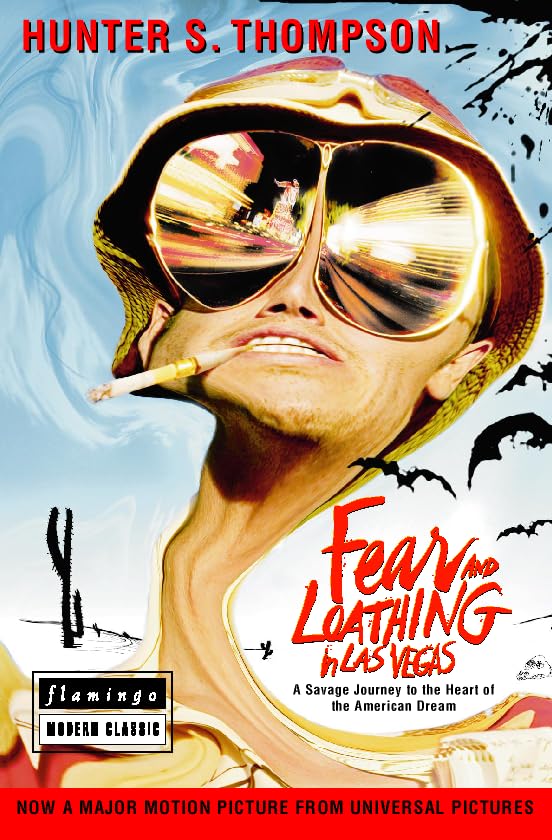
Check price of Fear and Loathing in Las Vegas on Amazon
What to Read Next
- The Electric Kool-Aid Acid Test by Tom Wolfe: a classic of New Journalism
- On the Road by Jack Kerouac: a Beat Generation road novel
- Hell's Angels by Hunter S. Thompson: the author's earlier book on a motorcycle gang
Related: 15 Books Like Fear and Loathing in Las Vegas You’ll Love
Frequently Asked Questions
Is Fear and Loathing in Las Vegas a true story?
It is based on real events, but Thompson presents it as a novel and exaggerates many details.
What is gonzo journalism?
A style where the reporter is part of the story and the writing is subjective and often humorous.
Is there a movie?
Yes. A 1998 film starring Johnny Depp.
Is Fear and Loathing in Las Vegas worth reading?
It depends on what you want. The book is best for readers who like wild satire and counterculture writing. If that describes you, it is likely a good fit. If not, the titles under What to Read Next may suit you better.
Can this summary replace reading Fear and Loathing in Las Vegas?
No. A summary covers the main events and ideas, but it cannot carry the author's voice, detail or pacing. Use it to decide whether to read the book, to refresh your memory or to prepare for a discussion.