
Disclosure: As an Amazon Associate, Bookish Wisdom earns from qualifying purchases. This doesn't change our picks or your price.
TL;DR: Forest ecologist Suzanne Simard describes her life in the forests of British Columbia and the research that showed trees communicate and share resources through underground fungal networks. She links her scientific work to her personal story, including family, loss and illness.
Table of Contents
Finding the Mother Tree at a Glance
| Author | Suzanne Simard |
| First published | 2021 |
| Type | Science memoir |
| Best for | readers who like nature writing, forest science and personal stories |
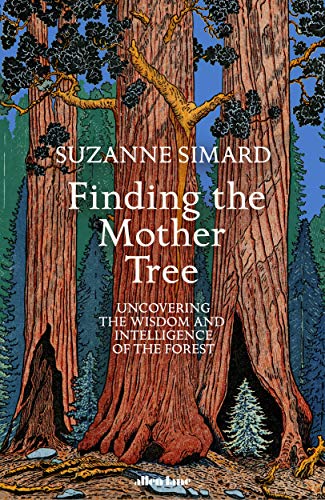
Finding the Mother Tree is a memoir by Suzanne Simard, first published in 2021. The book is part memoir and part science. It popularized the idea of “mother trees,” older trees that support younger ones. Below you will find a part-by-part summary, five key takeaways, a few ideas worth remembering and a note on who will enjoy it most. The summary paraphrases the author's ideas rather than quoting them at length, so it works as a refresher or a preview, not a replacement for the book.
Content note: Includes the author's cancer diagnosis and family loss.
The Story, Part by Part
Roots in the forest
Simard grows up in a logging family in British Columbia. She spends her childhood in the woods and later studies forestry.
Clearcutting
She sees the damage of industrial forestry and starts to ask why replanted trees often fail. This leads her to research how forests work.
The networks
Her experiments show that trees can exchange carbon and other resources through fungal networks in the soil. This challenges the idea that trees only compete.
Mother trees
She finds that large, old trees act as hubs that support seedlings. Removing them harms the forest's ability to regenerate.
Resistance
Simard faces skepticism from the forestry industry and some scientists. She continues her research and publishes her results.
Personal trials
The book also covers her personal life, including losses and a battle with cancer. These events shape her view of connection and care.
5 Key Takeaways
- Forests are communities with relationships, not just collections of trees.
- Old trees play a key role in forest health.
- Cooperation can be as important as competition in nature.
- Science can be shaped by personal experience.
- Preserving old-growth forests matters for climate and biodiversity.
Ideas Worth Remembering
These are paraphrased, not direct quotes:
- The writing mixes scientific explanation with feeling.
- Some of her claims have been debated by other scientists.
- The book argues for forestry methods that protect networks.
Who Should Read Finding the Mother Tree?
Read it if you love nature, ecology or memoirs by scientists. It is accessible to non-experts.
Questions to Think About After Reading
These prompts work for solo reading, a book club or a classroom discussion of Finding the Mother Tree:
- Which moment in the author's life stayed with you longest?
- How does the author's voice shape the way you judge the people in the story?
- What would you want to ask the author if you could?
Quick Facts to Remember
- Book: Finding the Mother Tree by Suzanne Simard (2021)
- Type: Science memoir
- Best for: readers who like nature writing, forest science and personal stories
- Main idea in one line: Forests are communities with relationships, not just collections of trees.
Reading Time and Format
A memoir is often best in one or two long sittings so the voice stays consistent. An audiobook read by the author, where one exists, can add a lot. Whichever format you choose, a library copy is a low-cost way to try the book before you buy, and used or digital editions are often cheaper than new print copies.
How to Use This Summary
Use this page as a quick reference before a book club meeting, an exam, or a decision about whether Finding the Mother Tree is worth your time. The takeaways are written to stand on their own. If a point interests you, go back to the book for the author's full argument, examples and style, which no short summary can carry.
A simple way to get the most from it: first read the TL;DR and the takeaways to decide if the book fits your interests, then read the part-by-part section for the structure, and finally write down one idea you want to remember or one question you want answered by the full text.
A Note on Accuracy and Spoilers
This summary is based on the published text of Finding the Mother Tree, not on any film, series or stage adaptation, which often change the story. Details are kept at the level of the main events so that nothing is invented. Editions differ slightly in length and wording, so page numbers and small details may vary from your copy.
Should You Read the Book?
If you decide to read it, give the first chapters time. A memoir depends on voice, and the details of a life land harder in the author's own telling than in any summary. If you are still unsure, read a free sample or the first chapter, because the opening pages usually show whether the voice and subject suit you. Reviews from readers with tastes like yours can help too, but your own reaction to a few pages is the best test.
Check price of Finding the Mother Tree on Amazon
What to Read Next
- The Hidden Life of Trees by Peter Wohlleben: a popular book on how trees live
- Entangled Life by Merlin Sheldrake: a book on fungi
- Braiding Sweetgrass by Robin Wall Kimmerer: a book on plants and indigenous knowledge
Related: 15 Books Like Finding the Mother Tree You’ll Love
Frequently Asked Questions
What is a mother tree?
A large, old tree that connects to many others through fungal networks and supports younger trees.
Is the science settled?
Parts are debated by other researchers, so the book is best read as one scientist's account.
Is it a memoir?
Yes, it blends memoir with science.
Is Finding the Mother Tree worth reading?
It depends on what you want. The book is best for readers who like nature writing, forest science and personal stories. If that describes you, it is likely a good fit. If not, the titles under What to Read Next may suit you better.
Can this summary replace reading Finding the Mother Tree?
No. A summary covers the main events and ideas, but it cannot carry the author's voice, detail or pacing. Use it to decide whether to read the book, to refresh your memory or to prepare for a discussion.