
Disclosure: As an Amazon Associate, Bookish Wisdom earns from qualifying purchases. This doesn't change our picks or your price.
TL;DR: Mathematician Hari Seldon uses “psychohistory,” a science of predicting mass human behavior, to foresee the fall of the Galactic Empire and 30,000 years of chaos. To shorten the dark age to 1,000 years, he creates the Foundation on the distant planet Terminus. Over generations, its leaders face crises that Seldon predicted.
Table of Contents
Foundation at a Glance
| Author | Isaac Asimov |
| First published | 1951 |
| Type | Novel |
| Best for | readers who want a big-idea science fiction classic about history and civilization |
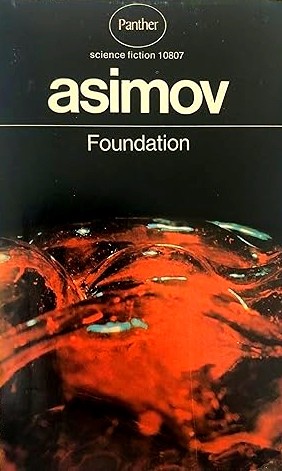
Foundation is a science fiction novel by Isaac Asimov, published as a book in 1951 from stories written in the 1940s. The Foundation series won a special Hugo Award for Best All-Time Series and inspired an Apple TV+ show. Below you will find a part-by-part summary, five key takeaways, ideas worth remembering and a note on who will enjoy it.
Main Characters
- Hari Seldon: The creator of psychohistory.
- Gaal Dornick: A young mathematician who meets Seldon.
- Salvor Hardin: The first mayor of Terminus.
- Hober Mallow: A shrewd trader who becomes a leader.
- Psychohistory: A science that predicts the behavior of large populations.
What Happens, Part by Part (Contains Spoilers)
The Psychohistorians
Gaal Dornick arrives on Trantor, the Empire's capital, to work with Hari Seldon. Seldon is on trial for predicting the Empire's fall. He persuades the authorities to exile his followers to Terminus, at the edge of the galaxy, to compile an Encyclopedia Galactica.
The Encyclopedists
Fifty years later, Terminus is threatened by the breakaway kingdom of Anacreon. The Encyclopedists are powerless. Salvor Hardin takes control. A recorded hologram of Seldon reveals that the encyclopedia was a cover and that the Foundation's true purpose is to rebuild civilization.
The Mayors
Thirty years later, Hardin keeps the surrounding kingdoms in check by giving them advanced technology but wrapping it in mystical ritual, so that they depend on the Foundation's trained technicians. When Anacreon attacks, the technicians refuse to obey, and the threat collapses.
The Traders
Foundation traders spread technology and influence through commerce. A trader named Limmar Ponyets uses clever trade to free a captured colleague.
The Merchant Princes
Hober Mallow faces the Republic of Korell, which has advanced weapons from the remains of the Empire. He builds economic dependence on Foundation gadgets and wins without a battle, because when trade stops, Korell's people demand peace. Mallow becomes the Foundation's leader.
5 Key Takeaways
- History can be shaped by large forces.
- Knowledge is power.
- Clever leaders solve crises without force.
- Trade and economics can be more powerful than weapons.
- Leaders must adapt to new challenges.
Ideas Worth Remembering
These are paraphrased, not direct quotes:
- Violence is the last refuge of the incompetent.
- Never let your sense of morals prevent you from doing what is right.
- The fall of empires can be softened by planning.
Who Should Read Foundation?
Read Foundation if you want a classic of ideas-driven science fiction. It suits teens and adults who enjoy politics and strategy.
Questions to Think About After Reading
These prompts work for solo reading, a book club or a classroom discussion of Foundation:
- Can history really be predicted?
- Is Salvor Hardin's approach ethical?
- Why does trade succeed where weapons fail?
How to Use This Summary
Use this page as a quick reference before a book club meeting, an exam, or a decision about whether Foundation is worth your time. The takeaways are written to stand on their own. If a point interests you, go back to the book for the author's full story, characters and style, which no short summary can replace.
A Note on Accuracy and Spoilers
This summary is based on the published text of Foundation, not on any film, series or stage adaptation, which often change the story. Details are kept at the level of the main events so that nothing is invented. Editions differ slightly in length and wording, so page numbers and small details may vary between copies.
Should You Read the Book?
Yes, if you like big ideas more than action. The book is a series of linked stories with new characters in each part, mostly solving problems through conversation and cleverness. Some readers find the characters thin and the dialogue dated, but its influence on science fiction is enormous.
Check price of Foundation on Amazon
What to Read Next
- Foundation and Empire by Isaac Asimov: the second book
- I, Robot by Isaac Asimov: Asimov's robot stories
- Dune by Frank Herbert: another epic of empires
Related: 15 Books Like Foundation You’ll Love
Frequently Asked Questions
What is Foundation about?
A mathematician predicts an empire's fall and creates a group to shorten the dark age.
What is psychohistory?
A science that predicts the behavior of large populations.
What is a Seldon Crisis?
A turning point predicted by Seldon where only one path is possible.
Where is Terminus?
At the edge of the galaxy.
Is there a TV show?
Yes, Apple TV+'s Foundation, which changes much of the story.
How many books are there?
Seven in the main series.
How long is it?
About 250 pages.
Was it inspired by history?
Yes, partly by Gibbon's The History of the Decline and Fall of the Roman Empire.
Is Foundation hard to read?
No. The prose is plain and the chapters are short, though the many characters and time jumps take some getting used to.
What is the Encyclopedia Galactica?
A vast collection of human knowledge that the Foundation is supposedly compiling, though it turns out to be a cover for Seldon's real plan.
Is Foundation worth reading?
It depends on what you want. The book is best for readers who want a big-idea science fiction classic about history and civilization. If that describes you, it is likely a good fit. If not, the titles under What to Read Next may suit you better.