
Disclosure: As an Amazon Associate, Bookish Wisdom earns from qualifying purchases. This doesn't change our picks or your price.
TL;DR: Ten-year-old Mia Tang and her parents move from China to California, where they manage a run-down motel for a harsh owner. Mia works the front desk, makes friends with the guests and starts to stand up for her family and for other immigrants.
Table of Contents
Front Desk at a Glance
| Author | Kelly Yang |
| First published | 2018 |
| Type | Middle-grade realistic fiction |
| Best for | children and parents who want a warm, honest story about immigrant families |
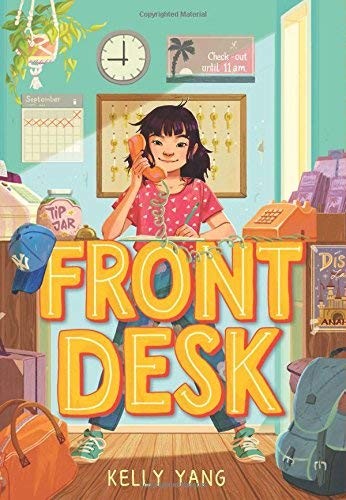
Front Desk is a novel by Kelly Yang, first published in 2018. The author drew on her own childhood in a family that managed a motel after moving from China. Below you will find a part-by-part summary, five key takeaways, a few ideas worth remembering and a note on who will enjoy it most. The part-by-part section gives away the plot, including the ending, so skip it if you have not read the book yet.
Content note: Includes racism, money stress and an episode of a robbery.
What Happens, Part by Part (Contains Spoilers)
Arrival and the job
The Tangs take a job as managers of the Calivista Motel, owned by Mr. Yao. The pay is low, the hours are long, and the family lives in a small room. Mia answers the phone and checks guests in.
The weekly guests
The motel hosts weekly residents, including a man named Hank who becomes a friend to Mia, and other Chinese immigrants who are struggling like her family.
Dreams of writing
Mia loves writing and wants to be a writer, but she struggles with English. A teacher encourages her, and her mother is unsure of her passion.
Mr. Yao's unfairness
The owner is quick to cut pay and shows little kindness. His son Jason goes to Mia's school, and the two have a complicated relationship.
Hiding people
Mia and her parents secretly help immigrants who need a place to stay, which puts the whole family at risk.
A bigger step
Mia learns the value of her voice, writes letters for others and, in the end, her family and friends find a way to take charge of their own future.
5 Key Takeaways
- Words can be a way to help others and ourselves.
- Kindness often comes from people who have little.
- Prejudice hurts, and speaking up is a form of courage.
- Family support is stronger than money.
- Community can be built from people who share a hard moment.
Ideas Worth Remembering
These are paraphrased, not direct quotes:
- The motel is a small stage that shows large social problems.
- Mia is a first-person narrator, so the reader feels her fears and hopes.
- The book handles hard subjects at a level suitable for children.
Who Should Read Front Desk?
Read it with kids ages 8 to 12, in a classroom or as a family. It is a gentle introduction to immigration, money stress and discrimination.
Questions to Think About After Reading
These prompts work for solo reading, a book club or a classroom discussion of Front Desk:
- Which character did you understand best, and what did the author do to make you feel that way?
- Which scene would you change, and what would that do to the ending?
- What does the book say about its main theme that you agree or disagree with?
Quick Facts to Remember
- Book: Front Desk by Kelly Yang (2018)
- Type: Middle-grade realistic fiction
- Best for: children and parents who want a warm, honest story about immigrant families
- Main idea in one line: Words can be a way to help others and ourselves.
Reading Time and Format
Novels differ a lot in length and pace, so check the page count of your edition before you start. If you prefer to listen, many public libraries lend audiobooks through free apps, and a narrated edition can suit a long novel well.
How to Use This Summary
Use this page as a quick reference before a book club meeting, an exam, or a decision about whether Front Desk is worth your time. The takeaways are written to stand on their own. If a point interests you, go back to the book for the author's full argument, examples and style, which no short summary can carry.
A Note on Accuracy and Spoilers
This summary is based on the published text of Front Desk, not on any film, series or stage adaptation, which often change the story. Details are kept at the level of the main events so that nothing is invented. Editions differ slightly in length and wording, so page numbers and small details may vary from your copy.
Should You Read the Book?
If you plan to read it, set aside a few evenings and read the opening chapters before you decide. A summary tells you what happens, but the voice and pacing are what make a novel work or not.
Check price of Front Desk on Amazon
What to Read Next
- Three Keys by Kelly Yang: the sequel to Front Desk
- Other Words for Home by Jasmine Warga: a girl moves from Syria to the U.S.
- American Born Chinese by Gene Luen Yang: a graphic novel about identity
Related: 15 Books Like Front Desk You’ll Love
Frequently Asked Questions
Is Front Desk based on a true story?
It is a novel, but it draws on the author's own childhood.
Is it part of a series?
Yes. The Front Desk series continues with Three Keys and Room to Dream.
What age is it for?
It is usually read by ages 8 to 12.
Is Front Desk worth reading?
It depends on what you want. The book is best for children and parents who want a warm, honest story about immigrant families. If that describes you, it is likely a good fit. If not, the titles under What to Read Next may suit you better.
Can this summary replace reading Front Desk?
No. A summary covers the main events and ideas, but it cannot carry the author's voice, detail or pacing. Use it to decide whether to read the book, to refresh your memory or to prepare for a discussion.