

Disclosure: As an Amazon Associate, Bookish Wisdom earns from qualifying purchases. This doesn't change our picks or your price.
TL;DR: Mary Roach explores what happens when wild animals get in trouble with humans: a bear that breaks into houses, a monkey that steals, a leopard that wanders into a village. She talks with wildlife officers, scientists and others who deal with animal conflict.
Table of Contents
Fuzz at a Glance
| Author | Mary Roach |
| First published | 2021 |
| Type | Popular science |
| Best for | readers who like funny, curious science writing |
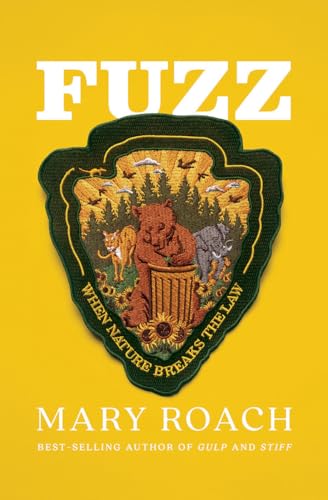
Fuzz is a nonfiction book by Mary Roach, first published in 2021. The subtitle is “When Nature Breaks the Law.” Roach blends humor with research. Below you will find a part-by-part summary, five key takeaways, a few ideas worth remembering and a note on who will enjoy it most. The summary paraphrases the author's ideas rather than quoting them at length, so it works as a refresher or a preview, not a replacement for the book.
Key Ideas, Part by Part
Animals and the law
Roach asks if animals can be held responsible. She looks at historical cases.
Bears
She visits a bear management program and learns why bears become nuisances.
Predators
She looks at cougars, wolves and others that threaten livestock or people.
Monkeys and primates
She visits places where monkeys steal and behave aggressively.
Solutions
She explores new approaches to coexistence, such as fencing and education.
Reflection
The book asks how we can share space with wildlife.
The Summary at a Glance
| Part | In one line |
|---|---|
| Animals and the law | Roach asks if animals can be held responsible. |
| Bears | She visits a bear management program and learns why bears become nuisances. |
| Predators | She looks at cougars, wolves and others that threaten livestock or people. |
| Monkeys and primates | She visits places where monkeys steal and behave aggressively. |
| Solutions | She explores new approaches to coexistence, such as fencing and education. |
| Reflection | The book asks how we can share space with wildlife. |
5 Key Takeaways
- Human activity creates conflict with animals.
- Animal behavior is often misunderstood.
- Management requires trade-offs.
- Science can inform solutions.
- Humor can make science accessible.
Ideas Worth Remembering
These are paraphrased, not direct quotes:
- The book is a mix of reporting and comedy.
- Roach does her research firsthand.
- It raises ethical questions.
Who Should Read Fuzz?
Read it if you like popular science. It is funny.
Questions to Think About After Reading
These prompts work for solo reading, a book club or a classroom discussion of Fuzz:
- Which idea could you use this week, and what would the first step be?
- Where do you disagree with the author, and what evidence would change your mind?
- Who in your life would benefit most from this book, and why?
Quick Facts to Remember
- Book: Fuzz by Mary Roach (2021)
- Type: Popular science
- Best for: readers who like funny, curious science writing
- Main idea in one line: Human activity creates conflict with animals.
Reading Time and Format
Nonfiction is easy to read in pieces. Many readers like an audiobook for the commute and a print or e-book copy for notes and highlights. Check the page count of your edition before you plan your reading time. Whichever format you choose, a library copy is a low-cost way to try the book before you buy, and used or digital editions are often cheaper than new print copies.
How to Use This Summary
Use this page as a quick reference before a book club meeting, an exam, or a decision about whether Fuzz is worth your time. The takeaways are written to stand on their own. If a point interests you, go back to the book for the author's full argument, examples and style, which no short summary can carry.
A simple way to get the most from it: first read the TL;DR and the takeaways to decide if the book fits your interests, then read the part-by-part section for the structure, and finally write down one idea you want to remember or one question you want answered by the full text.
A Note on Accuracy and Spoilers
This summary is based on the published text of Fuzz, not on any film, series or stage adaptation, which often change the story. Details are kept at the level of the main events so that nothing is invented. Editions differ slightly in length and wording, so page numbers and small details may vary from your copy.
Should You Read the Book?
If you decide to read it, skim the contents page first and read the sections that match your goal. Take notes in your own words, because ideas stick better when you rephrase them. If you are still unsure, read a free sample or the first chapter, because the opening pages usually show whether the voice and subject suit you. Reviews from readers with tastes like yours can help too, but your own reaction to a few pages is the best test.
What to Read Next
- Stiff by Mary Roach: Roach's book on cadavers
- Gulp by Mary Roach: a tour of the digestive system
- Rabid by Bill Wasik and Monica Murphy: the history of rabies
Frequently Asked Questions
Is Fuzz about animals breaking the law?
Yes, in a playful sense.
Who wrote it?
Mary Roach.
Is it funny?
Yes.
Is Fuzz worth reading?
It depends on what you want. The book is best for readers who like funny, curious science writing. If that describes you, it is likely a good fit. If not, the titles under What to Read Next may suit you better.
Can this summary replace reading Fuzz?
No. A summary covers the main events and ideas, but it cannot carry the author's voice, detail or pacing. Use it to decide whether to read the book, to refresh your memory or to prepare for a discussion.