
Disclosure: As an Amazon Associate, Bookish Wisdom earns from qualifying purchases. This doesn't change our picks or your price.
TL;DR: Eight-year-old George Kranky is left alone at the farmhouse with his grandma, a grumpy, mean old woman who frightens him. When it is time for her medicine, George decides to make a new, magic medicine of his own. He mixes everything he can find in the house and barn, and when Grandma drinks it, the results are astonishing.
Table of Contents
George's Marvellous Medicine at a Glance
| Author | Roald Dahl |
| First published | 1981 |
| Type | Children's novel |
| Best for | young readers who want a wildly funny, mischievous story with lots of chaos |
George's Marvellous Medicine is a children's novel by Roald Dahl, published in 1981 with illustrations by Quentin Blake. It is one of Dahl's shortest and funniest books. Below you will find a part-by-part summary, five key takeaways, ideas worth remembering and a note on who will enjoy it.
Content note: Includes dangerous household chemicals (not to be copied) and a character who disappears.
Main Characters
- George Kranky: A bored, clever eight-year-old boy.
- Grandma: George's grumpy, nasty grandmother.
- Mr. Killy Kranky: George's father, a farmer.
- Mrs. Kranky: George's mother.
- The farm animals: A chicken, pigs, cows and sheep who drink the medicine.
What Happens, Part by Part (Contains Spoilers)
A horrid grandma
George lives on a farm with his parents and his grandma. She is selfish and mean, with a small puckered mouth like a dog's bottom. She tells George frightening things and enjoys scaring him. When his mother goes shopping, George must give Grandma her medicine at eleven o'clock.
The medicine
George decides to make a new medicine that will either cure Grandma or blow her up. He goes around the house and farm collecting ingredients: shampoo, toothpaste, deodorant, floor polish, flea powder, animal pills, engine oil, antifreeze and more. He boils it all in a big pot. It turns bright brown and foams.
Grandma grows
Grandma drinks a spoonful. She shoots up through the roof of the house, growing taller and taller until her head sticks out of the top. George gives some to a chicken, which grows huge. When his father comes home, he is thrilled. He imagines giant animals that could feed the world.
More medicine
George and his father try to make more medicine, but George cannot remember all the ingredients. Medicine Number Two makes a chicken grow very long legs. Number Three gives a chicken a very long neck. Number Four shrinks a chicken until it is tiny. The family's plan to make giant animals fails.
Grandma vanishes
Grandma, angry and demanding her tea, drinks Medicine Number Four by mistake. She shrinks smaller and smaller until she disappears completely. George's mother is surprised but not too upset. George is left thinking about how close he came to touching a magic world.
5 Key Takeaways
- Curiosity can lead to big surprises.
- Mean behavior can backfire.
- Experiments are hard to repeat.
- Imagination can create wild stories.
- Not everything should be tried at home.
Ideas Worth Remembering
These are paraphrased, not direct quotes:
- Kids can be clever problem-solvers.
- Even adults get carried away by big dreams.
- A funny story can include a warning.
Who Should Read George's Marvellous Medicine?
Read George's Marvellous Medicine if you are a young reader who loves silly, chaotic stories. It suits ages 6 to 10.
About Roald Dahl
Roald Dahl (1916–1990) was a British author whose children's books include The Twits, Matilda, The BFG and Charlie and the Chocolate Factory. Later editions of George's Marvellous Medicine include a warning not to try making George's medicine at home. Dahl dedicated the book to doctors everywhere.
Questions to Think About After Reading
These prompts work for solo reading, a book club or a classroom discussion of George's Marvellous Medicine:
- Why does George want to change Grandma?
- Why can George not make the medicine again?
- Was George's experiment a good idea?
How to Use This Summary
Use this page as a quick reference before a book club meeting, an exam, or a decision about whether George's Marvellous Medicine is worth your time. The takeaways are written to stand on their own. If a point interests you, go back to the book for the author's full story, characters and style, which no short summary can replace.
A Note on Accuracy and Spoilers
This summary is based on the published text of George's Marvellous Medicine, not on any film, series or stage adaptation, which often change the story. Details are kept at the level of the main events so that nothing is invented. Editions differ slightly in length and wording, so page numbers and small details may vary between copies.
Should You Read the Book?
Yes. It is short, fast and very funny.
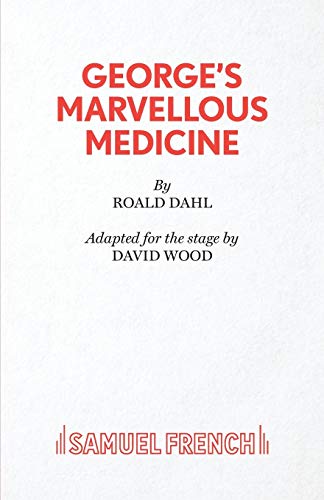
Check price of George's Marvellous Medicine on Amazon
What to Read Next
- The Twits by Roald Dahl: a nasty couple get what they deserve
- The Enormous Crocodile by Roald Dahl: a short, funny Dahl story
- Matilda by Roald Dahl: a clever girl takes on cruel adults
Related: Charlie and the Chocolate Factory by Roald Dahl: Summary and Key Takeaways · The Twits by Roald Dahl: Summary and Key Takeaways
Frequently Asked Questions
What is George's Marvellous Medicine about?
A boy makes a strange medicine for his mean grandma.
Who wrote it?
Roald Dahl, in 1981.
Who illustrated it?
Quentin Blake.
What happens to Grandma?
She grows huge, then later shrinks and disappears.
What ingredients does George use?
Household and farm items like shampoo, floor polish and animal pills.
Should kids try this?
No. The book warns readers not to make the medicine.
How many medicines does George make?
Four in total.
What age is it for?
About 6 to 10.
How long is it?
About 90 pages.
Is it funny?
Yes, very.
Is there a play?
Yes, there are stage adaptations.
Is it a good bedtime story?
Yes, for children who love silly humor.
Is it suitable for new readers?
Yes. It is short, simple and full of action, so it suits children starting chapter books.
Is George's Marvellous Medicine worth reading?
It depends on what you want. The book is best for young readers who want a wildly funny, mischievous story with lots of chaos. If that describes you, it is likely a good fit. If not, the titles under What to Read Next may suit you better.