
Disclosure: As an Amazon Associate, Bookish Wisdom earns from qualifying purchases. This doesn't change our picks or your price.
TL;DR: Poet and scholar Clint Smith visits historic sites across the United States and in Africa to see how different places remember, or avoid, the history of slavery. He talks with guides, descendants and visitors, and reflects on how history shapes the present.
Table of Contents
How the Word Is Passed at a Glance
| Author | Clint Smith |
| First published | 2021 |
| Type | History and travel writing |
| Best for | readers who want a thoughtful, human look at how America remembers slavery |
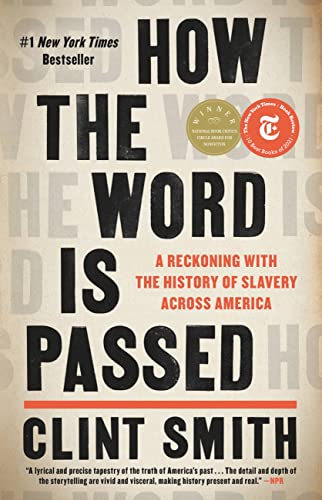
How the Word Is Passed is a nonfiction book by Clint Smith, first published in 2021. The book won several awards and was a bestseller. Each chapter is set at one site. Below you will find a part-by-part summary, five key takeaways, a few ideas worth remembering and a note on who will enjoy it most. The summary paraphrases the author's ideas rather than quoting them at length, so it works as a refresher or a preview, not a replacement for the book.
Content note: Discusses slavery and racial violence.
Key Ideas, Part by Part
Monticello
Smith visits Thomas Jefferson's plantation in Virginia. He watches how guides talk about Jefferson and the people he enslaved.
Whitney Plantation
In Louisiana, he visits a site that tells the story of slavery through enslaved people. The museum centers their voices.
Angola prison
He visits a former plantation that is now a state prison. This shows how the legacy of slavery continues.
Blandford Cemetery
In Virginia, he visits a cemetery dedicated to Confederate soldiers. Visitors there remember the Lost Cause.
New York and Galveston
He considers the role of the North and Juneteenth. These visits widen the story.
Gorée Island
He ends at an island in Senegal that is linked to the slave trade. He reflects on memory and truth.
5 Key Takeaways
- History is told differently in different places.
- Honest memory is necessary for justice.
- Slavery is part of American history, not a footnote.
- Descendants have their own stories.
- Learning history is an ongoing process.
Ideas Worth Remembering
These are paraphrased, not direct quotes:
- The book is part travelogue and part history.
- Smith is both a guide and a participant.
- Visiting places makes the past concrete.
Who Should Read How the Word Is Passed?
Read it if you want an accessible, thoughtful book about history. It is serious.
Questions to Think About After Reading
These prompts work for solo reading, a book club or a classroom discussion of How the Word Is Passed:
- Which idea could you use this week, and what would the first step be?
- Where do you disagree with the author, and what evidence would change your mind?
- Who in your life would benefit most from this book, and why?
Quick Facts to Remember
- Book: How the Word Is Passed by Clint Smith (2021)
- Type: History and travel writing
- Best for: readers who want a thoughtful, human look at how America remembers slavery
- Main idea in one line: History is told differently in different places.
Reading Time and Format
Nonfiction is easy to read in pieces. Many readers like an audiobook for the commute and a print or e-book copy for notes and highlights. Check the page count of your edition before you plan your reading time. Whichever format you choose, a library copy is a low-cost way to try the book before you buy, and used or digital editions are often cheaper than new print copies.
How to Use This Summary
Use this page as a quick reference before a book club meeting, an exam, or a decision about whether How the Word Is Passed is worth your time. The takeaways are written to stand on their own. If a point interests you, go back to the book for the author's full argument, examples and style, which no short summary can carry.
A simple way to get the most from it: first read the TL;DR and the takeaways to decide if the book fits your interests, then read the part-by-part section for the structure, and finally write down one idea you want to remember or one question you want answered by the full text.
A Note on Accuracy and Spoilers
This summary is based on the published text of How the Word Is Passed, not on any film, series or stage adaptation, which often change the story. Details are kept at the level of the main events so that nothing is invented. Editions differ slightly in length and wording, so page numbers and small details may vary from your copy.
Should You Read the Book?
If you decide to read it, skim the contents page first and read the sections that match your goal. Take notes in your own words, because ideas stick better when you rephrase them. If you are still unsure, read a free sample or the first chapter, because the opening pages usually show whether the voice and subject suit you. Reviews from readers with tastes like yours can help too, but your own reaction to a few pages is the best test.
Check price of How the Word Is Passed on Amazon
What to Read Next
- Stamped from the Beginning by Ibram X. Kendi: a history of racist ideas
- The Warmth of Other Suns by Isabel Wilkerson: the Great Migration
- Caste by Isabel Wilkerson: a book on social hierarchy
Frequently Asked Questions
Where does the book take place?
At several historic sites in the U.S. and one in Senegal.
Who wrote it?
Clint Smith.
Is it academic?
No. It is written for general readers.
Is How the Word Is Passed worth reading?
It depends on what you want. The book is best for readers who want a thoughtful, human look at how America remembers slavery. If that describes you, it is likely a good fit. If not, the titles under What to Read Next may suit you better.
Can this summary replace reading How the Word Is Passed?
No. A summary covers the main events and ideas, but it cannot carry the author's voice, detail or pacing. Use it to decide whether to read the book, to refresh your memory or to prepare for a discussion.