
Disclosure: As an Amazon Associate, Bookish Wisdom earns from qualifying purchases. This doesn't change our picks or your price.
Quick answer: To write a book of quotes, choose a clear theme, collect quotations from reliable sources, check each one carefully for accuracy and attribution, organize them into sections and add your own introductions or commentary. You must also handle copyright: quotes from works in the public domain are free to use, while modern quotations may need permission, especially in large numbers. Many authors also write their own original sayings, which avoids permission issues.
Table of Contents
Key Facts
| Item | Detail |
|---|---|
| Main steps | Theme, collect, verify, organize, add commentary |
| Free to quote | Public domain works |
| May need permission | Modern copyrighted works |
| Common formats | Themed collections, daily quotes |
| Key risk | Misattributed quotes |
How to Write a Book of Quotes Step by Step
1. Choose a theme
Pick a focus, such as courage, leadership, love or a single author.
2. Collect from primary sources
Find quotes in original books, speeches and letters rather than quote websites.
3. Verify attribution
Many famous quotes are misattributed, so check the original source.
4. Handle permissions
Check copyright status and ask publishers for permission when needed.
5. Organize and comment
Group quotes into chapters and add short introductions or reflections.
6. Design and publish
Choose a format, such as a gift book or daily calendar, and publish traditionally or independently.
Mistakes When Compiling Quotes
- Using unverified quotes. Check sources.
- Ignoring copyright. Seek permissions when needed.
- No clear theme. Focus the collection.
- Overloading pages. Leave white space.
- Forgetting citations. Credit every quote.
Building a Writing Habit That Lasts
Most books are finished by people who write regularly, not by people who wait for inspiration. Pick a time you can protect, even if it is only twenty minutes, and treat it like an appointment. Keep a running document of ideas so you never start from a blank page. Set a small, measurable goal, such as three hundred words a session, and track it. When you get stuck, skip ahead to a scene or section you are excited about and come back later. Finally, separate drafting from editing: write the rough version first, and fix it afterward, because trying to do both at once slows most writers down.
It also helps to know who the book is for. Write a one-sentence description of your reader and keep it beside your desk. Every time you are unsure about a scene, a word or a chapter, ask whether it serves that reader. This simple check keeps a draft focused and makes later editing much easier.
Finally, ask for feedback early. A trusted reader, writing group or teacher can spot problems you are too close to see, and fixing them in an early draft is much easier than in a finished one.
Keep every draft. Saving old versions lets you experiment freely, because you can always go back if a change does not work.
Most importantly, enjoy the process. Writing a book is a long project, and the writers who finish are usually the ones who find something to love in the daily work.
Reading widely in the form you are writing is one of the best teachers. Notice how other writers open, structure and end their work, and borrow techniques that suit your own voice.
Set a realistic deadline for each stage, such as finishing the draft, completing revisions and getting feedback. Deadlines turn a large, vague goal into a series of manageable steps, and they make it easier to notice when you need to adjust your plan.
Finally, protect your work. Back up every draft in at least two places, such as a cloud folder and an external drive, and keep a simple log of what you changed in each version. If anything goes wrong, you will lose a few minutes rather than months of writing.
Helpful Books and Resources
-
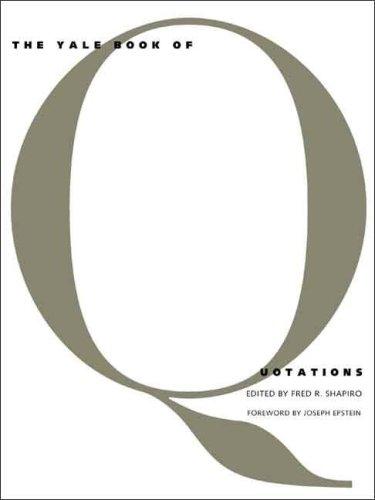
The Yale Book of Quotations by Fred R. Shapiro
- Bartlett's Familiar Quotations by John Bartlett
- Hemingway Didn't Say That by Garson O'Toole
Related: How to Write a Book Review · How To Write A Book in 7 Days | The Ultimate Guide
Frequently Asked Questions
Can I publish a book of quotes?
Yes, if you respect copyright and attribution.
Do I need permission to use quotes?
Often for modern copyrighted works, especially many quotes.
What is public domain?
Works whose copyright has expired.
How do I check if a quote is real?
Find it in the original source.
What is a misattributed quote?
A quote credited to the wrong person.
Can I write my own quotes?
Yes, original sayings avoid permission issues.
How long is a quote book?
Many are 100 to 200 pages.
Can I self-publish a quote book?
Yes, through print-on-demand services.
Should I add commentary?
Commentary makes the book more original.
What is fair use?
A legal idea allowing limited quoting in some cases, which varies by country.
Where can I find public domain quotes?
Older classic books and historical speeches.
How do I organize quotes?
By theme, author or date.
What makes a good quote book?
Accuracy, a clear theme and good design.
Are quote books popular gifts?
Yes, especially themed collections.
Should I include sources?
Yes, always.
Can I use song lyrics?
Lyrics usually require permission.
Can I quote speeches?
Many historical speeches are public domain, but check modern ones.
Do quote websites help?
Use them for ideas, but verify sources.