
Disclosure: As an Amazon Associate, Bookish Wisdom earns from qualifying purchases. This doesn't change our picks or your price.
TL;DR: A boy gives a mouse a cookie, and the mouse asks for a glass of milk, then a straw, then a napkin, and on and on. Each request leads to another until the story circles back to the cookie. It is a funny circular tale about how one thing leads to another.
Table of Contents
If You Give a Mouse a Cookie at a Glance
| Author | Laura Numeroff |
| First published | 1985 |
| Type | Picture book (illustrated by Felicia Bond) |
| Best for | ages 2 to 6 and read-aloud time |
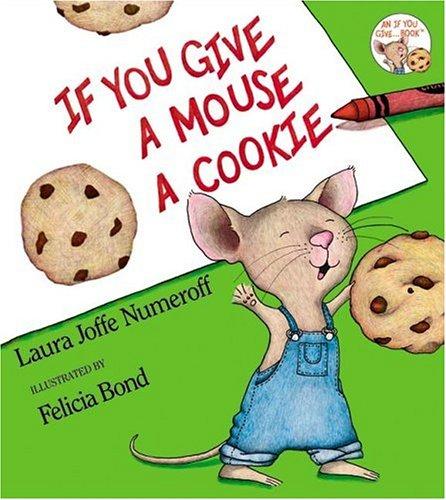
If You Give a Mouse a Cookie is a picture book by Laura Numeroff, first published in 1985. The book has spawned a whole series of “If You Give” books. Below you will find a part-by-part summary, five key takeaways, a few ideas worth remembering and a note on who will enjoy it most. The part-by-part section gives away the plot, including the ending, so skip it if you have not read the book yet.
What Happens, Page by Page (Contains Spoilers)
The cookie
A boy meets a mouse and gives it a cookie. The mouse says thank you, and then asks for a glass of milk.
Milk and a straw
The mouse drinks milk, then asks for a straw. He then needs a napkin and wipes his face.
Cleaning up
Next, the mouse sees his reflection and notices his hair needs a trim, and he asks for scissors. This starts a long chain of activity as he trims and sweeps.
A busy mouse
Each request creates a new problem. The mouse sweeps, mops, gets tired and wants a story and a nap, and the boy ends up doing a lot of work.
Back to the start
After the mouse wakes, he draws a picture, and wants to hang it on the fridge. When he reaches the fridge, he sees the milk and wants a glass.
The circle
Having a glass of milk, he of course wants a cookie. The book ends where it began.
Why children love it
The pattern is predictable, so children can guess what comes next and say the lines with the reader. The illustrations carry extra jokes, such as the mouse's busy routines and the boy's tired face, so each reading shows something new.
5 Key Takeaways
- One small action can lead to a long chain of events.
- Being generous can be tiring, and boundaries matter.
- Circular stories help young children learn how stories are built.
- Humor and repetition make reading fun and help beginning readers.
- Cause and effect is a big idea that children understand through play.
Ideas Worth Remembering
These are paraphrased, not direct quotes:
- The story is built on repetition, which is why children want to read it again.
- The ending loops back to the beginning on purpose.
- It shows how a small request can grow, which children recognize from daily life.
Who Should Read If You Give a Mouse a Cookie?
Read it if you are a parent, teacher or librarian looking for a funny read-aloud for toddlers and early readers. It is also a good way to teach sequencing.
Questions to Think About After Reading
These prompts work for solo reading, a book club or a classroom discussion of If You Give a Mouse a Cookie:
- What do you notice in the pictures that the words do not say?
- How would you change the ending, and why?
- Which line would a child most like to repeat?
How to Use This Summary
Use this page as a quick reference before a book club meeting, an exam, or a decision about whether If You Give a Mouse a Cookie is worth your time. The takeaways are written to stand on their own. If a point interests you, go back to the book for the author's full argument, examples and style, which no short summary can carry.
A Note on Accuracy and Spoilers
This summary is based on the published text of If You Give a Mouse a Cookie, not on any film, series or stage adaptation, which often change the story. Details are kept at the level of the main events so that nothing is invented. Editions differ slightly in length and wording, so page numbers and small details may vary from your copy.
Should You Read the Book?
This is a short book, so it takes only a few minutes to read aloud. Read it once for the story, then again slowly so children can spot details in the pictures and join in on repeated lines.
Check price of If You Give a Mouse a Cookie on Amazon
What to Read Next
- If You Give a Pig a Pancake by Laura Numeroff: another book in the series
- The Very Hungry Caterpillar by Eric Carle: a classic about food and growth
- Pete the Cat: I Love My White Shoes by Eric Litwin: a simple, funny read-aloud
Related: 15 Books Like If You Give a Mouse a Cookie You’ll Love
Frequently Asked Questions
Who wrote and illustrated the book?
Laura Numeroff wrote it and Felicia Bond illustrated it.
What age is it for?
It is usually read to children ages 2 to 6.
What is the lesson of the book?
There is no strict moral, but it shows how one small action can lead to another.
Are there other books in the series?
Yes. The series includes If You Give a Moose a Muffin and If You Give a Pig a Pancake.
Is If You Give a Mouse a Cookie worth reading?
It depends on what you want. The book is best for ages 2 to 6 and read-aloud time. If that describes you, it is likely a good fit. If not, the titles under What to Read Next may suit you better.
Can this summary replace reading If You Give a Mouse a Cookie?
No. A summary covers the main events and ideas, but it cannot carry the author's voice, detail or pacing. Use it to decide whether to read the book, to refresh your memory or to prepare for a discussion.