
Disclosure: As an Amazon Associate, Bookish Wisdom earns from qualifying purchases. This doesn't change our picks or your price.
TL;DR: In 1933, William E. Dodd, a mild-mannered American professor, becomes the U.S. ambassador to Nazi Germany, bringing his wife and adult children, including daughter Martha. Erik Larson shows how the family's early enthusiasm faded as they witnessed the Nazi regime's rise to power.
Table of Contents
In the Garden of Beasts at a Glance
| Author | Erik Larson |
| First published | 2011 |
| Type | Narrative history |
| Best for | readers who like history that reads like a thriller |
In the Garden of Beasts is a nonfiction book by Erik Larson, first published in 2011. The book is based on Dodd's diaries, letters and other sources. It is a narrative history rather than a novel. Below you will find a part-by-part summary, five key takeaways, a few ideas worth remembering and a note on who will enjoy it most. The summary paraphrases the author's ideas rather than quoting them at length, so it works as a refresher or a preview, not a replacement for the book.
Content note: Contains Nazi violence and persecution.
Key Ideas, Part by Part
A reluctant ambassador
Dodd is offered the job after others turn it down.
Berlin
The family arrives in a city that seems vibrant.
Martha
Martha, a social butterfly, dates Nazi officials and others.
Growing alarm
Dodd sees violence against Jews and warns Washington.
The Night of the Long Knives
In 1934, Hitler purges the SA, and Dodd understands the danger.
Recall
Dodd is recalled in 1937.
The Summary at a Glance
| Part | In one line |
|---|---|
| A reluctant ambassador | Dodd is offered the job after others turn it down. |
| Berlin | The family arrives in a city that seems vibrant. |
| Martha | Martha, a social butterfly, dates Nazi officials and others. |
| Growing alarm | Dodd sees violence against Jews and warns Washington. |
| The Night of the Long Knives | In 1934, Hitler purges the SA, and Dodd understands the danger. |
| Recall | Dodd is recalled in 1937. |
5 Key Takeaways
- Warning signs can be ignored.
- Diplomacy has limits.
- Individuals can see differently over time.
- Personal stories reveal history.
- Early optimism can blind.
Ideas Worth Remembering
These are paraphrased, not direct quotes:
- The tone is novelistic.
- Martha's story is intriguing.
- The book is based on real documents.
Who Should Read In the Garden of Beasts?
Read it if you like narrative history. It is gripping.
Questions to Think About After Reading
These prompts work for solo reading, a book club or a classroom discussion of In the Garden of Beasts:
- Which idea could you use this week, and what would the first step be?
- Where do you disagree with the author, and what evidence would change your mind?
- Who in your life would benefit most from this book, and why?
Quick Facts to Remember
- Book: In the Garden of Beasts by Erik Larson (2011)
- Type: Narrative history
- Best for: readers who like history that reads like a thriller
- Main idea in one line: Warning signs can be ignored.
Reading Time and Format
Nonfiction is easy to read in pieces. Many readers like an audiobook for the commute and a print or e-book copy for notes and highlights. Check the page count of your edition before you plan your reading time. Whichever format you choose, a library copy is a low-cost way to try the book before you buy, and used or digital editions are often cheaper than new print copies.
How to Use This Summary
Use this page as a quick reference before a book club meeting, an exam, or a decision about whether In the Garden of Beasts is worth your time. The takeaways are written to stand on their own. If a point interests you, go back to the book for the author's full argument, examples and style, which no short summary can carry.
A simple way to get the most from it: first read the TL;DR and the takeaways to decide if the book fits your interests, then read the part-by-part section for the structure, and finally write down one idea you want to remember or one question you want answered by the full text.
A Note on Accuracy and Spoilers
This summary is based on the published text of In the Garden of Beasts, not on any film, series or stage adaptation, which often change the story. Details are kept at the level of the main events so that nothing is invented. Editions differ slightly in length and wording, so page numbers and small details may vary from your copy.
Should You Read the Book?
If you decide to read it, skim the contents page first and read the sections that match your goal. Take notes in your own words, because ideas stick better when you rephrase them. If you are still unsure, read a free sample or the first chapter, because the opening pages usually show whether the voice and subject suit you. Reviews from readers with tastes like yours can help too, but your own reaction to a few pages is the best test.
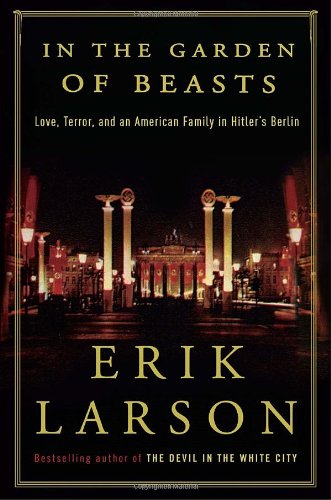
Check price of In the Garden of Beasts on Amazon
What to Read Next
- The Devil in the White City by Erik Larson: Larson's best-known book
- Dead Wake by Erik Larson: the sinking of the Lusitania
- The Rise and Fall of the Third Reich by William L. Shirer: a classic history
Frequently Asked Questions
Is In the Garden of Beasts true?
Yes, nonfiction.
Who is William Dodd?
The U.S. ambassador to Germany.
What age is it for?
Adults.
Is In the Garden of Beasts worth reading?
It depends on what you want. The book is best for readers who like history that reads like a thriller. If that describes you, it is likely a good fit. If not, the titles under What to Read Next may suit you better.
Can this summary replace reading In the Garden of Beasts?
No. A summary covers the main events and ideas, but it cannot carry the author's voice, detail or pacing. Use it to decide whether to read the book, to refresh your memory or to prepare for a discussion.