

Disclosure: As an Amazon Associate, Bookish Wisdom earns from qualifying purchases. This doesn't change our picks or your price.
TL;DR: Professor Otto Lidenbrock decodes a runic note left by a sixteenth-century Icelandic alchemist and sets off with his nephew Axel and the guide Hans to climb down the crater of Snæfellsjökull. Deep underground they find a vast sea, giant mushrooms, prehistoric creatures and signs of ancient humans before a volcanic eruption blasts them back to the surface in Italy.
Table of Contents
Journey to the Center of the Earth at a Glance
| Author | Jules Verne |
| First published | 1864 |
| Type | Novel |
| Best for | readers who want a classic adventure full of wonder, science and danger |
Journey to the Center of the Earth is a science fiction adventure by the French writer Jules Verne, first published in 1864. It is one of his “Extraordinary Voyages,” which mix real science of the day with daring imagination. Below you will find a part-by-part summary, five key takeaways, ideas worth remembering and a note on who will enjoy it.
Content note: Includes peril, thirst and a near-death fall, but no graphic violence.
Main Characters
- Axel: The narrator, a nervous young student and the professor's nephew.
- Professor Otto Lidenbrock: A brilliant, impatient geologist in Hamburg who never gives up.
- Hans Bjelke: A calm, practical Icelandic eider-duck hunter who serves as guide.
- Gräuben: Axel's fiancée and the professor's goddaughter, who urges him to be brave.
- Arne Saknussemm: The alchemist whose coded message starts the journey.
What Happens, Part by Part (Contains Spoilers)
The coded message
In Hamburg, Professor Lidenbrock finds a slip of parchment written in runes inside an old Icelandic saga. Axel accidentally discovers that the message reads backwards in Latin. It says that the alchemist Arne Saknussemm reached the center of the Earth by going down the crater of Snæfellsjökull, where the shadow of the peak Scartaris falls at the end of June.
Iceland and the descent
The professor and a reluctant Axel travel to Iceland and hire the quiet guide Hans. On the right day, the shadow points to the correct chimney, and the three men climb down into the extinct volcano. They follow lava tunnels and stone passages deeper and deeper, measuring heat and pressure as they go.
Thirst and getting lost
Their water runs out in a dry passage, and Axel nearly dies before Hans finds an underground stream, which they name the Hansbach. Later Axel takes a wrong turn and becomes lost alone in the dark. By a strange effect of sound in the tunnels, he hears the others' voices, and after a fall he wakes up safe with them.
The underground sea
The explorers reach an enormous cavern lit by an electric glow, with a sea they call the Lidenbrock Sea. They build a raft and cross it, passing forests of giant mushrooms. They see two sea monsters fight, survive a storm, and later find a field of bones and a giant prehistoric herdsman watching a herd of mastodons. They also find Saknussemm's initials carved in the rock.
The eruption and return
A boulder blocks the path, so they blast it with gunpowder. The explosion opens a chasm, and the sea rushes down, carrying the raft into a volcanic shaft. They are pushed upward on a rising column of lava and water, and are finally thrown out of Stromboli in southern Italy. They return to Hamburg as heroes, and Axel marries Gräuben.
5 Key Takeaways
- Curiosity can drive people to astonishing achievements.
- Courage is often a choice made while afraid.
- Calm, practical skill can matter as much as brilliance.
- Science advances by testing bold ideas against reality.
- The natural world holds more wonders than we expect.
Ideas Worth Remembering
These are paraphrased, not direct quotes:
- Persistence turns impossible plans into real journeys.
- Fear shrinks when it is shared with steady companions.
- Every discovery raises new questions.
Who Should Read Journey to the Center of the Earth?
Read Journey to the Center of the Earth if you love classic adventure, exploration and early science fiction. It suits confident readers from about 11 up and adults who enjoy Victorian-era storytelling.
Questions to Think About After Reading
These prompts work for solo reading, a book club or a classroom discussion of Journey to the Center of the Earth:
- Is Professor Lidenbrock brave or reckless?
- Why does Axel change during the journey?
- Which discovery underground did you find most surprising, and why?
How to Use This Summary
Use this page as a quick reference before a book club meeting, an exam, or a decision about whether Journey to the Center of the Earth is worth your time. The takeaways are written to stand on their own. If a point interests you, go back to the book for the author's full story, characters and style, which no short summary can replace.
A Note on Accuracy and Spoilers
This summary is based on the published text of Journey to the Center of the Earth, not on any film, series or stage adaptation, which often change the story. Details are kept at the level of the main events so that nothing is invented. Editions differ slightly in length and wording, so page numbers and small details may vary between copies.
Should You Read the Book?
Yes, if you enjoy slow-building adventure. The middle includes long scientific passages, but the sense of wonder, the underground sea and the wild escape make it a rewarding classic, and a good modern translation reads easily.
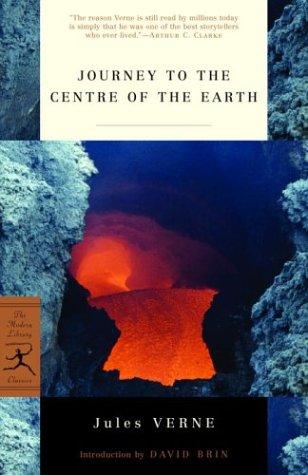
Check price of Journey to the Center of the Earth on Amazon
What to Read Next
- Twenty Thousand Leagues Under the Seas by Jules Verne: another extraordinary voyage, this time under the ocean
- The Lost World by Arthur Conan Doyle: explorers discover living dinosaurs
- At the Earth's Core by Edgar Rice Burroughs: a pulp adventure in a hidden inner world
Related: Twenty Thousand Leagues Under the Seas by Jules Verne: Summary and Key Takeaways · Around the World in Eighty Days by Jules Verne: Summary and Key Takeaways
Frequently Asked Questions
What is Journey to the Center of the Earth about?
A professor, his nephew and a guide climb down a volcano and explore a hidden world beneath the Earth's surface.
Who wrote it?
Jules Verne, the French author of many classic adventure novels.
Where do they enter the Earth?
Through the crater of Snæfellsjökull, a volcano in Iceland.
Where do they come out?
From the volcano Stromboli, in southern Italy.
Do they reach the center of the Earth?
No. They travel very deep, but an eruption forces them back to the surface.
Who narrates the story?
Axel, the professor's young nephew.
Who is Hans?
Their Icelandic guide, calm and loyal, who saves them more than once.
Is it scientifically accurate?
No. It used some real geology of the 1860s, but the hollow, cool interior is pure imagination.
What age is it for?
Most readers from about 11 up, especially in a modern translation.
Are there films?
Yes, including a 1959 film and a 2008 film starring Brendan Fraser.
Is Journey to the Center of the Earth worth reading?
It depends on what you want. The book is best for readers who want a classic adventure full of wonder, science and danger. If that describes you, it is likely a good fit. If not, the titles under What to Read Next may suit you better.