
Disclosure: As an Amazon Associate, Bookish Wisdom earns from qualifying purchases. This doesn't change our picks or your price.
TL;DR: The aging King Lear divides his kingdom among his daughters according to how much they say they love him. He banishes his honest daughter Cordelia and gives power to the flattering Goneril and Regan, who betray him. Lear descends into madness on a stormy heath, and the play ends in devastating loss.
Table of Contents
King Lear at a Glance
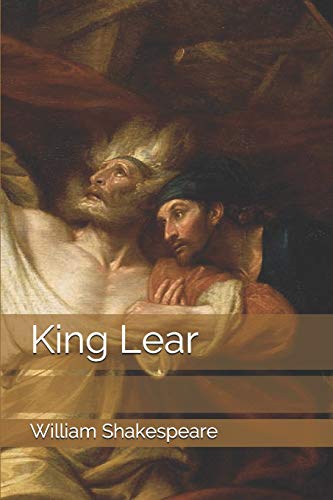
| Author | William Shakespeare |
| First published | c. 1606 |
| Type | Tragedy (play) |
| Best for | readers who want Shakespeare's darkest, most powerful tragedy about family and power |
King Lear is a tragedy by William Shakespeare, written around 1606. Many critics consider it his greatest work. It runs a parallel subplot in which the Earl of Gloucester is betrayed by his son Edmund. Below you will find an act-by-act summary, five key takeaways, ideas worth remembering and a note on who will enjoy it.
Content note: Includes violence, including a blinding, and many deaths.
Main Characters
- King Lear: An old king whose pride leads to disaster.
- Cordelia: Lear's honest youngest daughter.
- Goneril and Regan: Lear's flattering, cruel elder daughters.
- Earl of Gloucester: A loyal nobleman betrayed by his son.
- Edmund: Gloucester's scheming illegitimate son.
What Happens, Part by Part (Contains Spoilers)
The love test
Lear decides to divide Britain among his three daughters, asking each to say how much she loves him. Goneril and Regan flatter him lavishly. Cordelia refuses to exaggerate, saying she loves him as a daughter should. Furious, Lear disowns her, and she marries the King of France. Lear also banishes the loyal Earl of Kent, who returns in disguise to serve him.
The subplot
Edmund, Gloucester's illegitimate son, tricks his father into believing that his legitimate son Edgar is plotting against him. Edgar flees and disguises himself as a madman called Poor Tom.
The storm
Goneril and Regan strip Lear of his followers and shut him out. Raging, Lear wanders onto a heath in a terrible storm with his Fool and the disguised Kent, and he begins to lose his mind. Gloucester helps Lear, and Regan's husband Cornwall gouges out Gloucester's eyes as punishment.
Reunion
The blinded Gloucester is guided by Edgar, still in disguise, who saves him from despair. Cordelia returns with a French army and is tenderly reunited with her father, who asks her forgiveness. But the French are defeated, and Lear and Cordelia are captured.
The ending
Goneril poisons Regan out of jealousy over Edmund, then kills herself. Edgar defeats Edmund in a duel, but Edmund's order to execute Cordelia is carried out too late to stop. Lear enters carrying Cordelia's body and dies of grief. Gloucester has also died, and the survivors are left to rule a broken kingdom.
5 Key Takeaways
- Flattery can blind the powerful to the truth.
- Honesty is not always rewarded, but it is valuable.
- Old age and loss of power can bring humility.
- Family betrayal can be the deepest wound.
- Suffering can bring insight, but sometimes too late.
Ideas Worth Remembering
These are paraphrased, not direct quotes:
- Nothing will come of nothing.
- Sight is not the same as insight.
- Love that is quiet may be the truest.
Who Should Read King Lear?
Read King Lear if you want Shakespeare's most profound tragedy. It is dark and challenging, best for older students and adults.
Questions to Think About After Reading
These prompts work for solo reading, a book club or a classroom discussion of King Lear:
- Why does Lear misjudge his daughters?
- How do the Lear and Gloucester plots mirror each other?
- What does Lear learn in the storm?
How to Use This Summary
Use this page as a quick reference before a book club meeting, an exam, or a decision about whether King Lear is worth your time. The takeaways are written to stand on their own. If a point interests you, go back to the book for the author's full story, characters and style, which no short summary can replace.
A Note on Accuracy and Spoilers
This summary is based on the published text of King Lear, not on any film, series or stage adaptation, which often change the story. Details are kept at the level of the main events so that nothing is invented. Editions differ slightly in length and wording, so page numbers and small details may vary between copies.
Should You Read the Book?
If the summary caught your interest, read the opening chapters before you decide. A summary tells you what happens, but the voice and pacing are what make a book work or not.
Check price of King Lear on Amazon
What to Read Next
- A Thousand Acres by Jane Smiley: a Pulitzer-winning retelling on an Iowa farm
- Hamlet by William Shakespeare: Shakespeare's most famous tragedy
- Père Goriot by Honoré de Balzac: a father betrayed by his daughters
Related: 15 Books Like King Lear You’ll Love · Romeo and Juliet by William Shakespeare: Summary and Key Takeaways
Frequently Asked Questions
What is King Lear about?
An old king divides his kingdom among his daughters and is betrayed.
Who is Cordelia?
Lear's honest youngest daughter.
How does King Lear end?
Cordelia is executed, and Lear dies of grief.
Who is Edmund?
Gloucester's illegitimate son, who schemes for power.
What happens to Gloucester?
He is blinded and later dies of mixed joy and grief.
Who is the Fool?
Lear's jester, who speaks truth through jokes.
Is King Lear Shakespeare's greatest play?
Many critics think so.
Is it hard to read?
It is long and dark, but performances help.
Who are the main characters in King Lear?
The main characters are King Lear, Cordelia, Goneril and Regan, Earl of Gloucester and Edmund. King Lear: An old king whose pride leads to disaster. Cordelia: Lear's honest youngest daughter. Goneril and Regan: Lear's flattering, cruel elder daughters.
Is King Lear worth reading?
It depends on what you want. The book is best for readers who want Shakespeare's darkest, most powerful tragedy about family and power. If that describes you, it is likely a good fit. If not, the titles under What to Read Next may suit you better.