
Disclosure: As an Amazon Associate, Bookish Wisdom earns from qualifying purchases. This doesn't change our picks or your price.
TL;DR: Big-game hunter Allan Quatermain agrees to help Sir Henry Curtis find his lost brother, who vanished searching for the legendary diamond mines of King Solomon. With Captain Good and the mysterious servant Umbopa, they cross a deadly desert and mountains into the hidden land of Kukuanaland, help overthrow a cruel king and escape the treasure cave alive.
Table of Contents
King Solomon's Mines at a Glance
| Author | H. Rider Haggard |
| First published | 1885 |
| Type | Novel |
| Best for | readers who love classic lost-world adventure |
King Solomon's Mines is an adventure novel by H. Rider Haggard, published in 1885. It created the “lost world” genre and introduced the hunter Allan Quatermain. Below you will find a part-by-part summary, five key takeaways, ideas worth remembering and a note on who will enjoy it. Like many Victorian adventure stories, it reflects colonial attitudes of its time.
Content note: Includes large battles, executions and colonial-era attitudes about Africa.
Main Characters
- Allan Quatermain: The narrator, an experienced, cautious elephant hunter.
- Sir Henry Curtis: A tall, brave English aristocrat searching for his brother.
- Captain John Good: A retired naval officer with a monocle and a sense of humor.
- Umbopa (Ignosi): A dignified servant who turns out to be the rightful king of Kukuanaland.
- Gagool: An ancient, sinister witch-finder who serves the tyrant king.
What Happens, Part by Part (Contains Spoilers)
The quest
In southern Africa, Allan Quatermain meets Sir Henry Curtis and Captain Good. Sir Henry's brother George went north to find King Solomon's legendary mines and never returned. Quatermain owns an old map drawn in blood by a Portuguese explorer, José da Silvestra. He agrees to guide them in exchange for a share of any treasure.
Desert and mountains
With the servant Umbopa and a few others, they cross a burning desert where they nearly die of thirst, then climb snowy mountains called Sheba's Breasts. In a cave near the top, they find the frozen body of da Silvestra. They descend into a green, hidden valley and reach Kukuanaland.
The tyrant Twala
The Kukuanas are ruled by the cruel King Twala, his son Scragga and the witch Gagool, who orders mass executions. Umbopa reveals that he is Ignosi, the rightful king, whose father Twala murdered. The travelers use their knowledge of a lunar eclipse to convince warriors that they have magical power and side with Ignosi.
The great battle
Ignosi's supporters fight a huge battle against Twala's army. Sir Henry fights heroically and kills Twala in single combat. Ignosi becomes king and promises to rule justly. Captain Good is wounded and nursed by Foulata, a Kukuana woman who loves him.
The treasure cave
Gagool leads the travelers into the mines, a vast cave full of diamonds and gold. She tricks them, and a stone door closes, killing Foulata and crushing Gagool. The three men escape through tunnels, carrying a few diamonds. On the way home they find Sir Henry's brother George, injured and stranded, and bring him back.
5 Key Takeaways
- Loyalty and courage carry people through impossible journeys.
- Rightful leadership is earned by justice, not fear.
- Greed can be deadly.
- Knowledge can be power, as the eclipse scene shows.
- Friendship can form across very different backgrounds.
Ideas Worth Remembering
These are paraphrased, not direct quotes:
- Treasure matters less than the people we find along the way.
- Tyrants rule through fear, but fear is fragile.
- Courage often looks like simply refusing to give up.
Who Should Read King Solomon's Mines?
Read King Solomon's Mines if you enjoy classic adventure and want to see where Indiana Jones-style stories began. It suits teens and adults who can read it with an awareness of its colonial outlook.
Questions to Think About After Reading
These prompts work for solo reading, a book club or a classroom discussion of King Solomon's Mines:
- Why is Umbopa's true identity so important?
- How does the book reflect its colonial era?
- Was the treasure worth the cost?
How to Use This Summary
Use this page as a quick reference before a book club meeting, an exam, or a decision about whether King Solomon's Mines is worth your time. The takeaways are written to stand on their own. If a point interests you, go back to the book for the author's full story, characters and style, which no short summary can replace.
A Note on Accuracy and Spoilers
This summary is based on the published text of King Solomon's Mines, not on any film, series or stage adaptation, which often change the story. Details are kept at the level of the main events so that nothing is invented. Editions differ slightly in length and wording, so page numbers and small details may vary between copies.
Should You Read the Book?
Yes, as a historically important and exciting adventure. Its colonial attitudes are dated and worth discussing, but the pace, battles and treasure cave remain thrilling.
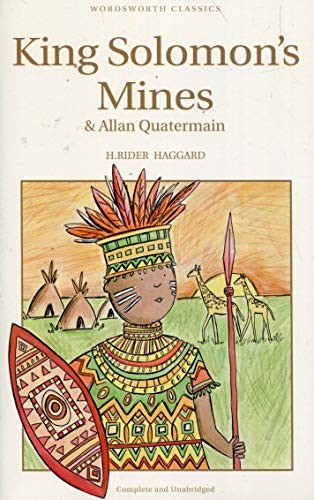
Check price of King Solomon's Mines on Amazon
What to Read Next
- Allan Quatermain by H. Rider Haggard: the sequel
- She by H. Rider Haggard: another lost-kingdom adventure
- The Lost World by Arthur Conan Doyle: explorers find dinosaurs on a plateau
Frequently Asked Questions
What is King Solomon's Mines about?
A hunter and two Englishmen search for a lost brother and a legendary diamond mine in Africa.
Who wrote it?
H. Rider Haggard, in 1885.
Who is Allan Quatermain?
The hunter and narrator, who appears in many later Haggard novels.
Who is Umbopa?
Ignosi, the rightful king of Kukuanaland.
Do they find the brother?
Yes, on the way home.
Do they get rich?
Yes, from the few diamonds they carry out.
What age is it for?
About 12 and up, with discussion of its colonial views.
Are there films?
Yes, several, including 1937, 1950 and 1985 versions.
Why is it important?
It began the lost-world adventure genre.
Is King Solomon's Mines worth reading?
It depends on what you want. The book is best for readers who love classic lost-world adventure. If that describes you, it is likely a good fit. If not, the titles under What to Read Next may suit you better.