
Disclosure: As an Amazon Associate, Bookish Wisdom earns from qualifying purchases. This doesn't change our picks or your price.
TL;DR: Jean Valjean, a former convict who served nineteen years for stealing bread, is transformed by a bishop's mercy. He becomes an honest mayor and factory owner, rescues the orphan Cosette and raises her as his daughter, all while hunted by the relentless Inspector Javert. The story climaxes in the Paris uprising of 1832.
Table of Contents
Les Misérables at a Glance
| Author | Victor Hugo |
| First published | 1862 |
| Type | Novel |
| Best for | readers who want a sweeping classic about mercy, justice and redemption |
Les Misérables is a novel by Victor Hugo, first published in 1862. It is one of the longest and most loved novels of the nineteenth century and inspired one of the most successful musicals ever staged. Below you will find a part-by-part summary, five key takeaways, ideas worth remembering and a note on who will enjoy it.
Content note: Includes poverty, violence, death and suicide.
Main Characters
- Jean Valjean: A former convict who devotes his life to goodness.
- Inspector Javert: A rigid police officer obsessed with catching Valjean.
- Fantine: A poor young mother who sacrifices everything for her daughter.
- Cosette: Fantine's daughter, raised by Valjean.
- Marius Pontmercy: A young student who falls in love with Cosette.
What Happens, Part by Part (Contains Spoilers)
Fantine
In 1815, Jean Valjean is released from prison after nineteen years. Shunned everywhere, he is welcomed by Bishop Myriel. Valjean steals the bishop's silver, but when the police catch him, the bishop says it was a gift and gives him candlesticks too, urging him to become an honest man. Years later, as “Monsieur Madeleine,” Valjean is a mayor and factory owner. One of his workers, Fantine, is dismissed and falls into poverty to support her daughter Cosette. Valjean helps her too late, and she dies.
Cosette
Javert discovers Valjean's identity, and Valjean confesses in court to save an innocent man mistaken for him. He escapes and rescues Cosette from the cruel innkeepers, the Thénardiers. They hide in a Paris convent for years.
Marius
Marius, a poor young law student, joins a group of idealistic revolutionaries led by Enjolras. He falls in love with Cosette in the Luxembourg Gardens. Éponine, the Thénardiers' daughter, loves Marius in vain.
The barricade
During the June 1832 uprising, the students build a barricade. Éponine dies shielding Marius. Valjean joins the barricade to protect Marius, and when Javert is captured as a spy, Valjean lets him go. As the barricade falls, Valjean carries the wounded Marius through the sewers of Paris.
Valjean's end
Javert, unable to reconcile mercy with his idea of law, throws himself into the Seine. Marius marries Cosette. Valjean confesses his past to Marius, who distances him from Cosette. When Marius learns that Valjean saved his life, the couple rush to him. Valjean dies in peace, with Cosette at his side and the bishop's candlesticks nearby.
5 Key Takeaways
- Mercy can transform a person more than punishment.
- Rigid law without compassion can become injustice.
- Poverty crushes the vulnerable, especially women and children.
- Love and sacrifice give life meaning.
- Social change is often born from idealism and loss.
Ideas Worth Remembering
These are paraphrased, not direct quotes:
- Even the lowest people deserve dignity and a second chance.
- Kindness at the right moment can change a whole life.
- Justice must include mercy.
Who Should Read Les Misérables?
Read Les Misérables if you want an epic, emotional story about redemption and justice. It is very long, so an abridged edition may suit some readers.
Questions to Think About After Reading
These prompts work for solo reading, a book club or a classroom discussion of Les Misérables:
- Why does the bishop's mercy change Valjean?
- Is Javert a villain?
- What does Hugo say about poverty?
How to Use This Summary
Use this page as a quick reference before a book club meeting, an exam, or a decision about whether Les Misérables is worth your time. The takeaways are written to stand on their own. If a point interests you, go back to the book for the author's full story, characters and style, which no short summary can replace.
A Note on Accuracy and Spoilers
This summary is based on the published text of Les Misérables, not on any film, series or stage adaptation, which often change the story. Details are kept at the level of the main events so that nothing is invented. Editions differ slightly in length and wording, so page numbers and small details may vary between copies.
Should You Read the Book?
If the summary caught your interest, read the opening chapters before you decide. A summary tells you what happens, but the voice and pacing are what make a book work or not.
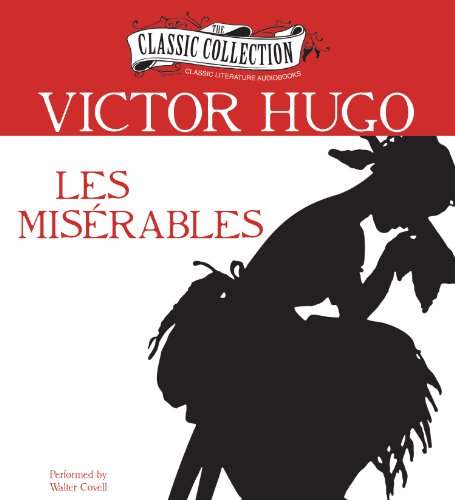
Check price of Les Misérables on Amazon
What to Read Next
- The Count of Monte Cristo by Alexandre Dumas: another epic of prison and fate
- The Hunchback of Notre-Dame by Victor Hugo: Hugo's other great novel
- A Tale of Two Cities by Charles Dickens: revolution and sacrifice
Frequently Asked Questions
What is Les Misérables about?
A former convict seeks redemption while being pursued by a relentless inspector.
Why was Valjean imprisoned?
For stealing bread, with extra years added for escape attempts.
How does Javert die?
He throws himself into the Seine.
Is it about the French Revolution?
No. It covers the 1832 June Rebellion in Paris.
How long is it?
Over 1,400 pages unabridged.
Is it worth reading unabridged?
Yes for patient readers, though Hugo's long digressions can be skimmed.
Is the musical faithful?
It follows the main plot closely but cuts much.
Who are the Thénardiers?
Greedy innkeepers who mistreat Cosette.
Is Les Misérables worth reading?
It depends on what you want. The book is best for readers who want a sweeping classic about mercy, justice and redemption. If that describes you, it is likely a good fit. If not, the titles under What to Read Next may suit you better.