
Disclosure: As an Amazon Associate, Bookish Wisdom earns from qualifying purchases. This doesn't change our picks or your price.
TL;DR: Donald Zinkoff is cheerful, clumsy and completely himself. He laughs too loudly, trips over his own feet and loses at almost everything. As he moves from first grade to sixth, his classmates decide he is a loser. But one snowy night, when a little girl goes missing, Zinkoff shows a kind of courage and goodness that no one expected.
Table of Contents
Loser at a Glance
| Author | Jerry Spinelli |
| First published | 2002 |
| Type | Children's novel |
| Best for | young readers who want a warm, funny story about being different and being kind |
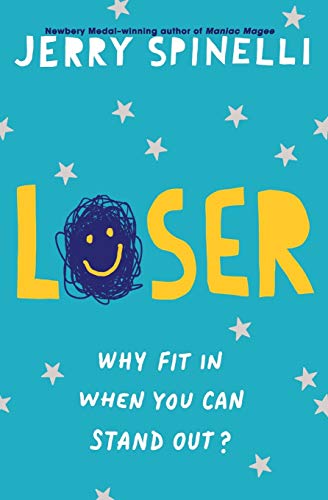
Loser is a children's novel by Jerry Spinelli, published in 2002. It follows one boy's school years and celebrates people who do not fit in. Below you will find a part-by-part summary, five key takeaways, ideas worth remembering and a note on who will enjoy it.
Content note: Includes bullying and a missing child.
Main Characters
- Donald Zinkoff: A cheerful, clumsy boy.
- Mr. Zinkoff: Donald's loving father, a mailman.
- Mrs. Zinkoff: Donald's supportive mother.
- Claudia: A young girl who goes missing.
- His classmates: The kids who judge Zinkoff as he grows up.
What Happens, Part by Part (Contains Spoilers)
First grade
Zinkoff starts school excited about everything. He loves his giraffe hat, his teacher and his classmates. He raises his hand all the time and laughs at almost everything. His classmates think he is strange, but he does not notice. He tells everyone he wants to be a mailman like his father.
Growing up
Through the early grades, Zinkoff makes mistakes and does things his own way. He throws up in class, cannot catch a ball and gets lost. His handwriting is terrible. One teacher understands him and lets him be himself. His parents love him exactly as he is and never call him a failure.
Field Day
On Field Day, Zinkoff's team loses the race because of him. His classmates blame him and call him a loser. For the first time, he begins to understand how others see him. Still, he keeps trying, with the same cheerful spirit.
The missing girl
In sixth grade, during a snowstorm, a little girl named Claudia goes missing in the neighborhood. Zinkoff joins the search. Long after others give up, he keeps looking through the night, house by house, until he collapses from cold and exhaustion. He does not find her, but he gives everything he can.
Recognition
Claudia is found safe. Many people do not notice Zinkoff's effort, but a few do. At the end, during a football game, a group of children calls out “Zinkoff!” and asks him to play on their team. The book ends with his name echoing through the neighborhood, a sign that he belongs.
5 Key Takeaways
- Being yourself is a gift.
- Kindness matters more than winning.
- Labels can hurt and are often wrong.
- Loving parents give children strength.
- Courage can look ordinary.
Ideas Worth Remembering
These are paraphrased, not direct quotes:
- Everyone has value, even if others do not see it.
- Trying hard is its own kind of success.
- Small acts of recognition can change a life.
Who Should Read Loser?
Read Loser if you are a young reader who has ever felt different. It suits ages 8 to 12.
About Jerry Spinelli
Jerry Spinelli (born 1941) is an American author of novels for young readers. He won the Newbery Medal for Maniac Magee and a Newbery Honor for Wringer. His other books include Stargirl and Milkweed. He often writes about kids who are outsiders. He lives in Pennsylvania with his wife, the author Eileen Spinelli.
Questions to Think About After Reading
These prompts work for solo reading, a book club or a classroom discussion of Loser:
- Why do Zinkoff's classmates call him a loser?
- What makes Zinkoff a hero?
- How do his parents help him?
How to Use This Summary
Use this page as a quick reference before a book club meeting, an exam, or a decision about whether Loser is worth your time. The takeaways are written to stand on their own. If a point interests you, go back to the book for the author's full story, characters and style, which no short summary can replace.
A Note on Accuracy and Spoilers
This summary is based on the published text of Loser, not on any film, series or stage adaptation, which often change the story. Details are kept at the level of the main events so that nothing is invented. Editions differ slightly in length and wording, so page numbers and small details may vary between copies.
Should You Read the Book?
Yes. It is funny, gentle and quietly powerful.
Check price of Loser on Amazon
What to Read Next
- Stargirl by Jerry Spinelli: a girl who refuses to fit in
- Wonder by R.J. Palacio: a boy who is different learns to belong
- Maniac Magee by Jerry Spinelli: a legendary boy who brings a town together
Related: Maniac Magee by Jerry Spinelli: Summary and Key Takeaways · Stargirl by Jerry Spinelli: Summary and Key Takeaways
Frequently Asked Questions
What is Loser about?
A cheerful, clumsy boy grows up being called a loser but proves his worth.
Who wrote it?
Jerry Spinelli, in 2002.
Who is Donald Zinkoff?
The main character, a kind and quirky boy.
What happens on Field Day?
Zinkoff's team loses, and classmates blame him.
What does Zinkoff do in the snowstorm?
He searches all night for a missing girl.
Is he called a hero at the end?
Not officially, but other kids finally accept him.
What age is it for?
About 8 to 12.
How long is it?
About 220 pages.
Is it funny?
Yes, it has many funny moments.
Is it sad?
It has sad moments, but it ends hopefully.
What does Zinkoff want to be?
A mailman, like his father.
Is it good for classrooms?
Yes, especially for discussions about bullying.
Is Loser similar to Stargirl?
Yes. Both celebrate a young person who stays true to themselves.
Is Loser worth reading?
It depends on what you want. The book is best for young readers who want a warm, funny story about being different and being kind. If that describes you, it is likely a good fit. If not, the titles under What to Read Next may suit you better.