
Disclosure: As an Amazon Associate, Bookish Wisdom earns from qualifying purchases. This doesn't change our picks or your price.
TL;DR: Rupi Kaur's debut collection is divided into four chapters: the hurting, the loving, the breaking and the healing. It covers abuse, love, loss and self-worth in short poems and simple drawings. It became a bestseller and a defining book of Instapoem culture.
Table of Contents
Milk and Honey at a Glance
| Author | Rupi Kaur |
| First published | 2014 |
| Type | Poetry collection |
| Best for | readers new to poetry and fans of short, direct verse |
Milk and Honey is a poem by Rupi Kaur, first published in 2014. Below you will find a part-by-part summary, five key takeaways, a few ideas worth remembering and a note on who will enjoy it most. The part-by-part section gives away the plot, including the ending, so skip it if you have not read the book yet.
Content note: Contains references to sexual abuse and trauma.
The Poem, Stanza by Stanza
The hurting
The first chapter deals with pain, including abuse, trauma and the experience of being a woman who has been harmed. The poems are brief and blunt.
The loving
The second chapter shifts to desire and romantic love. The poems are tender and sensual, and they celebrate closeness.
The breaking
In the third chapter, a relationship ends, and the poems follow heartbreak and the loss of trust. The tone is raw, and the lines are plain.
The healing
The final chapter turns to recovery and self-love. The poems speak of family, community and the work of rebuilding.
Style and form
The poems are written in lowercase with little punctuation, and each is accompanied by a simple line drawing. The style is intentionally minimal and personal.
Why it spread
The short form fits social media, and many readers shared the poems online. Critics argue about its depth, while fans say its directness is the point.
Reading it as a whole
The four chapters work like a story told in fragments. Early poems mention family and cultural expectations, later ones return to the body and desire, and the last poems speak directly to the reader. Many readers find the tone shifts from anger to tenderness as the pages go on.
Criticism and praise
Some critics have said the poems are too simple and resemble social-media captions, while others see the simplicity as the point. Whatever your view, the book is a useful way to see why short, shareable verse became popular in the 2010s.
5 Key Takeaways
- Healing is a process that moves through pain, love and loss.
- Simple language can express deep feeling.
- Self-love is presented as a form of strength.
- A poem does not need to be long to be powerful.
- Women's stories of trauma and resilience are central to the collection.
Ideas Worth Remembering
These are paraphrased, not direct quotes:
- The four-part structure mirrors a journey from pain to recovery.
- The poems are meant to be read in one sitting or one at a time.
- The collection speaks to readers who might not usually read poetry.
Who Should Read Milk and Honey?
Read it if you want an accessible poetry book, are going through heartbreak or are looking for a short, emotional read. Readers who prefer traditional verse may find it too sparse.
Questions to Think About After Reading
These prompts work for solo reading, a book club or a classroom discussion of Milk and Honey:
- Which image in the poem is the strongest, and what does it make you feel?
- How does the sound of the poem change its meaning?
- Who do you think is speaking?
How to Use This Summary
Use this page as a quick reference before a book club meeting, an exam, or a decision about whether Milk and Honey is worth your time. The takeaways are written to stand on their own. If a point interests you, go back to the book for the author's full argument, examples and style, which no short summary can carry.
A Note on Accuracy and Spoilers
This summary is based on the published text of Milk and Honey, not on any film, series or stage adaptation, which often change the story. Details are kept at the level of the main events so that nothing is invented. Editions differ slightly in length and wording, so page numbers and small details may vary from your copy.
Should You Read the Book?
A poem is short, so read it aloud twice: once for the sound and once for the meaning. Then reread this summary and see what you missed.
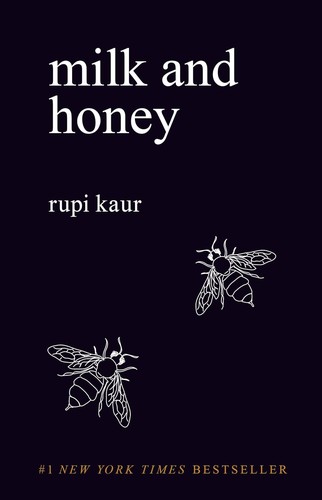
Check price of Milk and Honey on Amazon
What to Read Next
- The Sun and Her Flowers by Rupi Kaur: Kaur's second collection
- Salt by Nayyirah Waheed: another minimalist poetry collection
- Ariel by Sylvia Plath: a more intense classic collection
Related: 15 Books Like Milk and Honey You’ll Love
Frequently Asked Questions
What does Milk and Honey mean?
It suggests sweetness and nourishment, in contrast to the pain explored in the poems.
How many chapters does Milk and Honey have?
Four: the hurting, the loving, the breaking and the healing.
Is Milk and Honey appropriate for teens?
It contains references to sexual abuse, so it is best for older teens and adults.
Who is Rupi Kaur?
She is a Canadian poet and illustrator born in India.
Is Milk and Honey worth reading?
It depends on what you want. The book is best for readers new to poetry and fans of short, direct verse. If that describes you, it is likely a good fit. If not, the titles under What to Read Next may suit you better.
Can this summary replace reading Milk and Honey?
No. A summary covers the main events and ideas, but it cannot carry the author's voice, detail or pacing. Use it to decide whether to read the book, to refresh your memory or to prepare for a discussion.