
Disclosure: As an Amazon Associate, Bookish Wisdom earns from qualifying purchases. This doesn't change our picks or your price.
TL;DR: Best-selling novelist Paul Sheldon is rescued from a car crash by his “number one fan,” Annie Wilkes, a former nurse. He wakes in her remote home with broken legs and learns that she is not who she seems. When she reads his latest book, she forces him to write a new novel to her liking.
Table of Contents
Misery at a Glance
| Author | Stephen King |
| First published | 1987 |
| Type | Psychological horror |
| Best for | readers who like tight, tense thrillers |
Misery is a novel by Stephen King, first published in 1987. The novel was adapted into a 1990 film that won Kathy Bates an Oscar. It is a classic of horror. Below you will find a part-by-part summary, five key takeaways, a few ideas worth remembering and a note on who will enjoy it most. The part-by-part section gives away the plot, including the ending, so skip it if you have not read the book yet.
Content note: Contains torture, graphic violence and addiction.
What Happens, Part by Part (Contains Spoilers)
The crash
Paul, who has just finished a manuscript, crashes his car in a snowstorm. Annie rescues him.
Annie's house
He wakes with broken legs. Annie says the roads are closed.
Misery
Paul is famous for the Misery Chastain novels. He wrote a book that kills off the heroine.
The demand
Annie is upset and demands he bring Misery back. She forces him to burn his new manuscript.
Writing for his life
Paul writes a new book while planning to escape.
Escape
The final chapters are a tense struggle. The ending is grim.
The Summary at a Glance
| Part | In one line |
|---|---|
| The crash | Paul, who has just finished a manuscript, crashes his car in a snowstorm. |
| Annie's house | He wakes with broken legs. |
| Misery | Paul is famous for the Misery Chastain novels. |
| The demand | Annie is upset and demands he bring Misery back. |
| Writing for his life | Paul writes a new book while planning to escape. |
| Escape | The final chapters are a tense struggle. |
5 Key Takeaways
- Obsession can be dangerous.
- Creativity can be a means of survival.
- Fans can have unhealthy attachments.
- Isolation increases fear.
- Writing can be an escape.
Ideas Worth Remembering
These are paraphrased, not direct quotes:
- The two-character focus builds tension.
- Paul's writing process is part of the plot.
- Annie is a memorable villain.
Who Should Read Misery?
Read it if you like psychological suspense. It is intense.
Questions to Think About After Reading
These prompts work for solo reading, a book club or a classroom discussion of Misery:
- Which character did you understand best, and what did the author do to make you feel that way?
- Which scene would you change, and what would that do to the ending?
- What does the book say about its main theme that you agree or disagree with?
Quick Facts to Remember
- Book: Misery by Stephen King (1987)
- Type: Psychological horror
- Best for: readers who like tight, tense thrillers
- Main idea in one line: Obsession can be dangerous.
Reading Time and Format
Novels differ a lot in length and pace, so check the page count of your edition before you start. If you prefer to listen, many public libraries lend audiobooks through free apps, and a narrated edition can suit a long novel well. Whichever format you choose, a library copy is a low-cost way to try the book before you buy, and used or digital editions are often cheaper than new print copies.
How to Use This Summary
Use this page as a quick reference before a book club meeting, an exam, or a decision about whether Misery is worth your time. The takeaways are written to stand on their own. If a point interests you, go back to the book for the author's full argument, examples and style, which no short summary can carry.
A simple way to get the most from it: first read the TL;DR and the takeaways to decide if the book fits your interests, then read the part-by-part section for the structure, and finally write down one idea you want to remember or one question you want answered by the full text.
A Note on Accuracy and Spoilers
This summary is based on the published text of Misery, not on any film, series or stage adaptation, which often change the story. Details are kept at the level of the main events so that nothing is invented. Editions differ slightly in length and wording, so page numbers and small details may vary from your copy.
Should You Read the Book?
If you plan to read it, set aside a few evenings and read the opening chapters before you decide. A summary tells you what happens, but the voice and pacing are what make a novel work or not. If you are still unsure, read a free sample or the first chapter, because the opening pages usually show whether the voice and subject suit you. Reviews from readers with tastes like yours can help too, but your own reaction to a few pages is the best test.
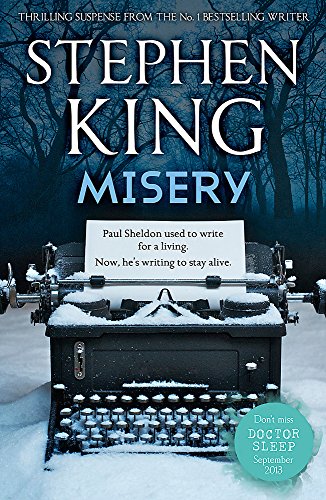
Check price of Misery on Amazon
What to Read Next
- The Shining by Stephen King: a haunted hotel
- Carrie by Stephen King: a bullied girl with powers
- Rebecca by Daphne du Maurier: a gothic psychological story
Related: 15 Books Like Misery You’ll Love · Doctor Sleep by Stephen King: Summary and Key Takeaways
Frequently Asked Questions
Is Misery scary?
It is tense and disturbing.
Is there a movie?
Yes, a 1990 film.
Who is Annie Wilkes?
The fan who holds Paul captive.
Is Misery worth reading?
It depends on what you want. The book is best for readers who like tight, tense thrillers. If that describes you, it is likely a good fit. If not, the titles under What to Read Next may suit you better.
Can this summary replace reading Misery?
No. A summary covers the main events and ideas, but it cannot carry the author's voice, detail or pacing. Use it to decide whether to read the book, to refresh your memory or to prepare for a discussion.