

Disclosure: As an Amazon Associate, Bookish Wisdom earns from qualifying purchases. This doesn't change our picks or your price.
TL;DR: Philip Ashley is raised by his older cousin Ambrose on a Cornish estate. When Ambrose travels to Italy, marries their distant cousin Rachel and then dies, his letters hint that Rachel may have poisoned him. Philip prepares to hate her, but when she arrives in Cornwall, he falls in love. Is Rachel innocent or a murderer?
Table of Contents
My Cousin Rachel at a Glance
| Author | Daphne du Maurier |
| First published | 1951 |
| Type | Novel |
| Best for | readers who love gothic mysteries and ambiguous heroines |
My Cousin Rachel is a novel by Daphne du Maurier, published in 1951. It is a gothic romance built around a mystery that the reader must judge. Below you will find a part-by-part summary, five key takeaways, ideas worth remembering and a note on who will enjoy it.
Content note: Includes possible poisoning and death.
Main Characters
- Philip Ashley: A young Cornish heir and the narrator.
- Rachel: Ambrose's widow, beautiful and mysterious.
- Ambrose Ashley: Philip's cousin and guardian.
- Rainaldi: Rachel's Italian lawyer and friend.
- Louise Kendall: Philip's childhood friend.
What Happens, Part by Part (Contains Spoilers)
Ambrose
Philip, an orphan, is raised by his older cousin Ambrose on their Cornish estate. Ambrose goes to Italy for his health and marries Rachel. His letters grow strange, accusing her of tormenting him. Philip rushes to Florence but arrives after Ambrose's death.
Suspicion
Philip suspects Rachel killed Ambrose. When she comes to Cornwall, he plans to confront her. Instead, he is charmed by her warmth and grace.
Love
Philip falls in love with Rachel. On his twenty-fifth birthday, he signs over his entire estate to her. They share a night together, and Philip believes they will marry. Rachel insists she will not.
Doubt
Philip falls ill after drinking Rachel's herbal tea. He finds laburnum seeds, which are poisonous, among her things. He wonders if she is poisoning him, as Ambrose believed.
The end
Philip lets Rachel walk on a dangerous bridge he knows is unsafe. She falls and dies. Afterward, he finds a letter suggesting she may have been innocent. The question of her guilt remains unanswered.
5 Key Takeaways
- Suspicion can destroy love.
- Ambiguity can be as powerful as answers.
- Jealousy distorts judgment.
- People see what they fear or want to see.
- Trust is difficult to rebuild.
Ideas Worth Remembering
These are paraphrased, not direct quotes:
- Was she guilty? The reader must decide.
- Love can blind and suspicion can poison.
- Some mysteries remain forever unsolved.
Who Should Read My Cousin Rachel?
Read My Cousin Rachel if you enjoy gothic mysteries and romance with ambiguity. It suits adults.
About Daphne du Maurier
Daphne du Maurier (1907–1989) was an English novelist from a famous artistic family. She lived in Cornwall, which inspired many of her books. Her novels include Rebecca, Jamaica Inn and Frenchman's Creek, and her short stories inspired Hitchcock's The Birds and the film Don't Look Now.
Questions to Think About After Reading
These prompts work for solo reading, a book club or a classroom discussion of My Cousin Rachel:
- Was Rachel guilty?
- How does Philip's jealousy shape the story?
- Why does du Maurier leave the mystery unsolved?
How to Use This Summary
Use this page as a quick reference before a book club meeting, an exam, or a decision about whether My Cousin Rachel is worth your time. The takeaways are written to stand on their own. If a point interests you, go back to the book for the author's full story, characters and style, which no short summary can replace.
A Note on Accuracy and Spoilers
This summary is based on the published text of My Cousin Rachel, not on any film, series or stage adaptation, which often change the story. Details are kept at the level of the main events so that nothing is invented. Editions differ slightly in length and wording, so page numbers and small details may vary between copies.
Should You Read the Book?
Yes. It is atmospheric and haunting, with a famously ambiguous ending.
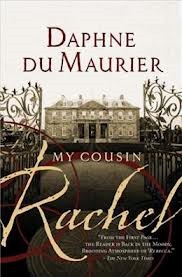
Check price of My Cousin Rachel on Amazon
What to Read Next
- Rebecca by Daphne du Maurier: a gothic classic about a mysterious wife
- Jamaica Inn by Daphne du Maurier: smugglers in Cornwall
- The Woman in White by Wilkie Collins: a Victorian mystery
Related: 15 Books Like My Cousin Rachel You’ll Love · Jamaica Inn by Daphne du Maurier: Summary and Key Takeaways
Frequently Asked Questions
What is My Cousin Rachel about?
A young man falls in love with his cousin's widow, whom he suspects of murder.
Who wrote it?
Daphne du Maurier, in 1951.
Did Rachel kill Ambrose?
The novel never says for sure.
Is there a film?
Yes, a 1952 film and a 2017 film with Rachel Weisz.
What age is it for?
Adults.
How long is it?
About 350 pages.
Where is it set?
In Cornwall and Florence.
What is laburnum?
A poisonous plant whose seeds Philip finds.
Who narrates?
Philip Ashley.
How does Rachel die?
She falls from an unsafe bridge.
Who is Rainaldi?
Rachel's Italian lawyer, whom Philip distrusts.
Who is Louise Kendall?
Philip's childhood friend, who doubts Rachel.
Why does Philip give Rachel his estate?
He is in love with her and hopes she will marry him.
What is the tone of the book?
Dark, romantic and suspenseful, with a constant feeling of unease.
Why is the ending famous?
Because it leaves readers to decide for themselves whether Rachel was guilty.
Who are the main characters in My Cousin Rachel?
The main characters are Philip Ashley, Rachel, Ambrose Ashley, Rainaldi and Louise Kendall. Philip Ashley: A young Cornish heir and the narrator. Rachel: Ambrose's widow, beautiful and mysterious. Ambrose Ashley: Philip's cousin and guardian.
Is My Cousin Rachel worth reading?
It depends on what you want. The book is best for readers who love gothic mysteries and ambiguous heroines. If that describes you, it is likely a good fit. If not, the titles under What to Read Next may suit you better.