
Disclosure: As an Amazon Associate, Bookish Wisdom earns from qualifying purchases. This doesn’t change our picks or your price.
Quick answer: Good discussion questions for Pachinko by Min Jin Lee focus on four generations of a Korean family in Japan, discrimination and belonging, sacrifice, identity, and the opening line “History has failed us, but no matter”. Below are 19 questions grouped by theme, plus a spoiler-free summary.
Quick facts
Author: Min Jin Lee
Published: 2017
Setting: Korea and Japan, 1910–1989
Adaptation: Apple TV+ series (2022)
Content note: war, discrimination, suicide and sexual content
Pachinko opens with one of the most famous first lines of recent fiction: “History has failed us, but no matter.” Min Jin Lee follows four generations of a Korean family who move to Japan, where they face discrimination for decades. It was a National Book Award finalist and became an acclaimed Apple TV+ series. It’s long and sweeping, and it gives book clubs a lot to discuss about family, identity and survival. This guide includes a spoiler-free summary, characters and themes, and 19 discussion questions grouped by theme. The questions contain spoilers.
Table of Contents
Spoiler-Free Summary
In the early 1900s, in a fishing village on Yeongdo, near Busan, a disabled fisherman and his wife run a boarding house. Their daughter, Sunja, grows up there under Japanese colonial rule.
As a teenager, Sunja falls for Hansu, a wealthy, mysterious older man, and becomes pregnant. When she learns he is married, she refuses to become his mistress. A kind, sickly minister named Isak offers to marry her and take her to Osaka, Japan, where his brother lives.
In Japan, the family faces poverty and constant discrimination as Koreans. The novel follows Sunja, her sons, Noa and Mozasu, and her grandson, Solomon, through war, hardship and the family’s ties to the pachinko parlors where Koreans could find work.
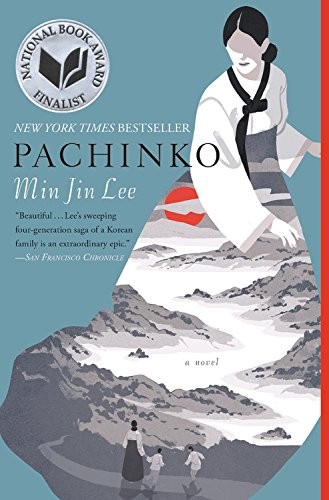
Check price of Pachinko on Amazon
Main Characters and Themes
| Character or Theme | What to Know |
|---|---|
| Sunja | A strong, quiet woman who carries the family through hardship |
| Hansu | A wealthy, powerful man and the father of Sunja’s first son |
| Isak | The kind man who marries Sunja |
| Kyunghee | Sunja’s sister-in-law and lifelong friend |
| Noa | Sunja’s studious first son |
| Mozasu | Sunja’s second son, who works in pachinko |
| Solomon | Mozasu’s son, educated abroad |
| Discrimination | How Koreans in Japan were treated for generations |
| Identity | Belonging to a place that rejects you |
| Pachinko | A game of chance and a metaphor for life |
Discussion Questions (Contains Spoilers)
Sunja
- What do you make of Sunja’s choice to refuse Hansu’s offer?
- How does Sunja’s strength show itself quietly over the years?
- What does Sunja sacrifice for her children?
- How do Sunja and Kyunghee support each other?
Hansu
- Is Hansu a villain, a protector or both?
- How does Hansu’s power help and harm the family?
- How did Noa’s discovery of his father’s identity affect you?
The Next Generations
- How do Noa and Mozasu respond differently to discrimination?
- Why does Noa make the choice he makes later in life?
- How does Solomon’s experience differ from his father’s and grandmother’s?
- What does pachinko mean to the family, financially and symbolically?
History and Belonging
- What did you learn about Koreans living in Japan that you didn’t know?
- How do the characters’ legal status and names shape their lives?
- The first line is “History has failed us, but no matter.” What does it mean to you after finishing the book?
Big Picture
- Which generation’s story affected you most?
- The novel covers almost 80 years. How does the long view change how you see the characters?
- If you’ve seen the Apple TV+ series, how did it compare?
- What does the book suggest about luck and chance?
- Who would you recommend Pachinko to?
If you or someone in your group is struggling, you can call or text 988 to reach the 988 Suicide & Crisis Lifeline (US).
Is Pachinko a Good Book Club Pick?
Choose it if your group wants an ambitious, sweeping novel and has time for it: at about 490 pages, many clubs split it over two meetings, pausing at the end of Book II. It’s slow and steady rather than plot-driven, so it suits patient readers. The payoff is a rich discussion about immigration, discrimination and family that often draws in members’ own family histories.
Book Club Ideas for Pachinko
- Serve Korean food, like kimchi, which Sunja sells to support the family, plus mandu or japchae.
- Read the first line aloud and ask each person what it means to them.
- Look at photos of Busan and Osaka in the early 20th century.
- Share a family story of immigration or starting over, if anyone has one.
Books Like Pachinko
If your group loved it, try Homegoing by Yaa Gyasi for another multigenerational saga, A Thousand Splendid Suns by Khaled Hosseini for women surviving history, or The Covenant of Water by Abraham Verghese for another sweeping family epic.
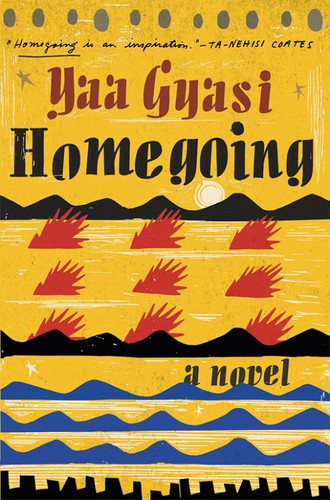
Check price of Homegoing on Amazon
How to Structure Your Meeting
Open by reading the first line aloud and asking what it means to each person now. Then work through two or three questions from each theme above, saving the “big picture” questions for the end. If your group is large, split into pairs for one theme and report back.
A simple 90-minute plan:
- 0–15 minutes: food, catch-up and the opening question.
- 15–60 minutes: the discussion questions, theme by theme.
- 60–75 minutes: one of the book club ideas above, or a quick comparison with the adaptation if there is one.
- 75–90 minutes: everyone rates the book out of five in one sentence, then you pick next month’s read.
Related: the best historical fiction books for book clubs and A Thousand Splendid Suns book club discussion questions.
Frequently Asked Questions
What is Pachinko about?
It follows four generations of a Korean family who move from Korea to Japan in the 1930s and face discrimination, poverty and war while trying to build a life.
Is Pachinko good for book clubs?
Yes. It’s sweeping and moving, with rich themes of identity, family and belonging.
Is Pachinko appropriate for all book clubs?
It includes war, discrimination, a suicide and some sexual content, so share a content note before reading.
What does the title Pachinko mean?
Pachinko is a Japanese gambling game similar to pinball. Many Koreans in Japan worked in pachinko parlors, and the game becomes a symbol of chance in the characters’ lives.