
Disclosure: As an Amazon Associate, Bookish Wisdom earns from qualifying purchases. This doesn't change our picks or your price.
TL;DR: In early 1900s Korea, young Sunja becomes pregnant by a wealthy, married stranger. To save her honor, a gentle young man, Isak, marries her and takes her to Japan. Across four generations, Sunja's family faces discrimination as Koreans in Japan, struggling for belonging, identity and survival.
Table of Contents
Pachinko at a Glance
| Author | Min Jin Lee |
| First published | 2017 |
| Type | Novel |
| Best for | readers who want a sweeping, emotional family saga about identity and resilience |
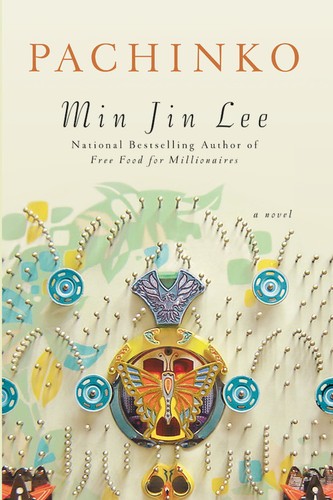
Pachinko is a novel by Korean American author Min Jin Lee, published in 2017. It was a finalist for the National Book Award and became an Apple TV+ series. Below you will find a part-by-part summary, five key takeaways, ideas worth remembering and a note on who will enjoy it.
Content note: Includes discrimination, war, sexual content and suicide.
Main Characters
- Sunja: A strong, resilient woman.
- Koh Hansu: A wealthy, powerful man and the father of Sunja's first son.
- Isak Baek: The gentle, sickly man who marries Sunja.
- Noa: Sunja's first son.
- Mozasu: Sunja's second son, who runs pachinko parlors.
What Happens, Part by Part (Contains Spoilers)
Yeongdo
In Yeongdo, near Busan, Sunja helps her widowed mother run a boardinghouse. She falls for Hansu, a fish broker, and becomes pregnant. Hansu reveals he is married in Japan. Sunja refuses to be his mistress.
Osaka
Isak Baek, a guest at the boardinghouse, marries Sunja and takes her to Osaka, where they live with his brother Yoseb and sister-in-law Kyunghee in a Korean ghetto. Isak is later arrested by the Japanese police and dies after his release.
Survival
Sunja sells kimchi and candy to support her sons, Noa and Mozasu. During World War II, Hansu secretly protects the family and helps them move to the countryside.
Noa
Noa, studious and proud, attends Waseda University with money from Hansu. When he learns that Hansu, a gangster, is his real father, he is devastated. He leaves and hides as a Japanese man in Nagano. Years later, when Sunja finds him, Noa takes his own life.
The ending
Mozasu succeeds in the pachinko business, a trade seen as disreputable. His son Solomon, educated in America, faces discrimination in Japan's banking world. Sunja, old, visits Isak's grave and reflects on her family's endurance.
5 Key Takeaways
- Belonging can be denied by society.
- Family sacrifice spans generations.
- Identity is complex for immigrants.
- Resilience helps people endure injustice.
- The past shapes the present.
Ideas Worth Remembering
These are paraphrased, not direct quotes:
- History has failed us, but no matter.
- Survival itself can be a victory.
- Life is a game of chance, like pachinko.
Who Should Read Pachinko?
Read Pachinko if you want a sweeping, emotional family saga. It suits adults and older teens interested in history and identity.
Questions to Think About After Reading
These prompts work for solo reading, a book club or a classroom discussion of Pachinko:
- Why does Noa reject his identity?
- What does pachinko symbolize?
- How does discrimination shape each generation?
How to Use This Summary
Use this page as a quick reference before a book club meeting, an exam, or a decision about whether Pachinko is worth your time. The takeaways are written to stand on their own. If a point interests you, go back to the book for the author's full story, characters and style, which no short summary can replace.
A Note on Accuracy and Spoilers
This summary is based on the published text of Pachinko, not on any film, series or stage adaptation, which often change the story. Details are kept at the level of the main events so that nothing is invented. Editions differ slightly in length and wording, so page numbers and small details may vary between copies.
Should You Read the Book?
Yes, if you enjoy multigenerational stories. Lee writes with clarity and compassion, and Sunja is unforgettable. The book is long and spans many characters and time jumps, which some readers find uneven, but it brings an often-overlooked history to life.
Check price of Pachinko on Amazon
What to Read Next
- Free Food for Millionaires by Min Jin Lee: Lee's first novel
- Homegoing by Yaa Gyasi: a multigenerational saga
- The Joy Luck Club by Amy Tan: mothers, daughters and identity
Frequently Asked Questions
What is Pachinko about?
A Korean family's struggles in Japan over four generations.
What is pachinko?
A Japanese gambling game similar to pinball.
Who is Noa's father?
Koh Hansu.
What happens to Noa?
He takes his own life.
Is there a TV series?
Yes, on Apple TV+.
How long is it?
About 490 pages.
Where is it set?
Korea and Japan, from 1910 to 1989.
What is the first line?
“History has failed us, but no matter.”
Who is Hansu?
A powerful fish broker with links to the Japanese underworld who fathers Noa and secretly protects Sunja's family for decades.
Why are Koreans treated badly in Japan?
Japan ruled Korea from 1910 to 1945, and Koreans in Japan faced discrimination in jobs, housing and citizenship, even across generations.
Who is Solomon?
Mozasu's son, educated in America, who returns to Japan and faces the same barriers his family has always faced.
Is the TV series faithful?
It follows the main story but moves back and forth in time and expands some characters.
Who are the main characters in Pachinko?
The main characters are Sunja, Koh Hansu, Isak Baek, Noa and Mozasu. Sunja: A strong, resilient woman. Koh Hansu: A wealthy, powerful man and the father of Sunja's first son. Isak Baek: The gentle, sickly man who marries Sunja.
Is Pachinko worth reading?
It depends on what you want. The book is best for readers who want a sweeping, emotional family saga about identity and resilience. If that describes you, it is likely a good fit. If not, the titles under What to Read Next may suit you better.