
Disclosure: As an Amazon Associate, Bookish Wisdom earns from qualifying purchases. This doesn't change our picks or your price.
Quick answer: The best quotes from Cloud Atlas by David Mitchell include “Yet what is any ocean but a multitude of drops?” and “Truth is singular. Its 'versions' are mistruths.” Below are 4 of the most memorable lines, with who says them, where they come from and what they mean.
Quick facts
- Book: Cloud Atlas by David Mitchell
- First published: 2004
- Quotes covered: 4
- Best for: essays, captions, book club talks and rereads
Table of Contents
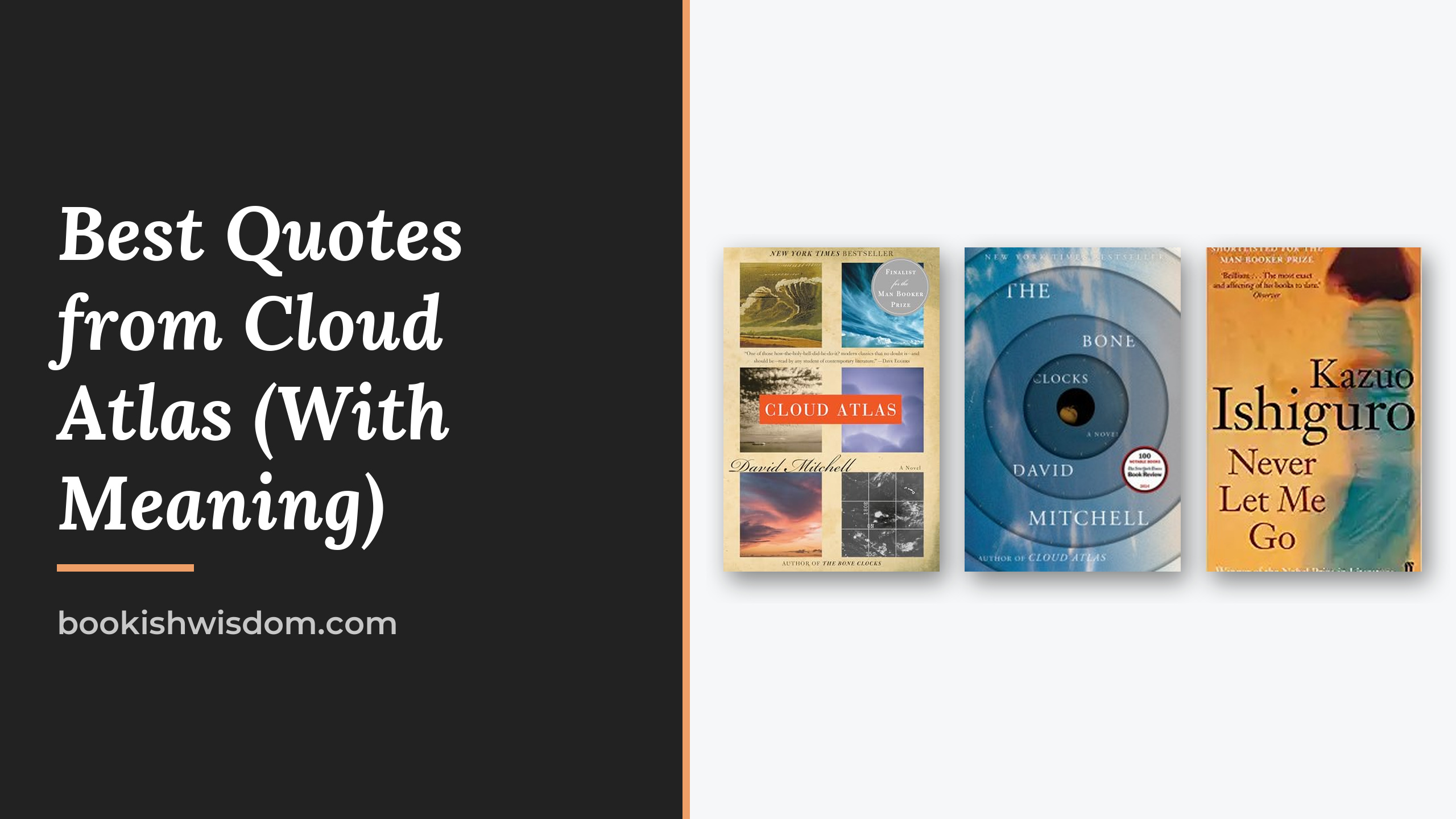
What Cloud Atlas Is About
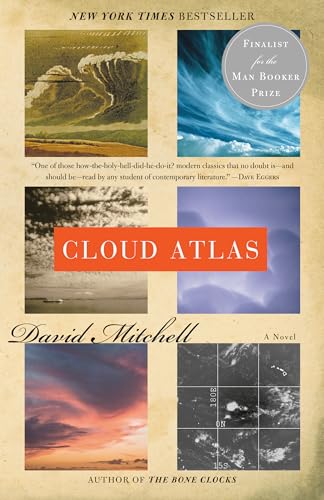
Six linked stories nest inside each other like Russian dolls: a nineteenth-century Pacific voyage, a young composer's letters from 1930s Belgium, a 1970s California thriller, a comic escape from a modern nursing home, the testimony of a cloned worker in a future Korea and a tale told in a post-apocalyptic Hawaii. Each story is interrupted halfway and then completed in reverse order, as characters find echoes of one another across time.
Check price of Cloud Atlas on Amazon
The Best Quotes from Cloud Atlas, Explained
1. “Yet what is any ocean but a multitude of drops?”
Adam Ewing, final line. Ewing's last line answers the claim that one life cannot change the world. Every great change is made of small acts.
2. “Truth is singular. Its 'versions' are mistruths.”
Sonmi-451. The clone Sonmi insists on truth in a world built on lies. The line shows her courage.
3. “A half-finished book is, after all, a half-finished love affair.”
Timothy Cavendish. The comic publisher explains why he cannot leave a story unfinished. It also comments on the novel's broken-in-half structure.
4. “Power, time, gravity, love. The forces that really kick ass are all invisible.”
Half-Lives, the Luisa Rey story. The playful line sums up the invisible connections that tie the six stories together.
Why These Lines Stay With Readers
Cloud Atlas was shortlisted for the Booker Prize and later adapted into a 2012 film, though many lines shared online come from the film rather than the book. Mitchell changes voice, genre and style for each section, which makes the novel a showcase of storytelling. Its quotes are used to discuss power, predation, reincarnation-like echoes and the idea that small choices ripple across centuries. Readers often finish it and immediately start again to catch the links they missed. The novel's structure rewards patience, since every story's second half answers questions raised in its first. Students often pick one recurring image, such as the comet-shaped birthmark, and trace it through all six sections.
How to Use These Quotes
- In an essay: introduce the quote, give its context in one sentence, then explain how it supports your point.
- For a book club: read one line aloud and ask whether everyone agrees with the speaker.
- For a caption or card: pick a short line and credit David Mitchell and Cloud Atlas.
- For a reread: look for the moment each line appears and notice what changes around it.
A Note on Quoting Cloud Atlas Accurately
Wording can differ slightly between editions, translations and film versions, and many lines shared online are paraphrased or misattributed. If you need an exact quote for an essay, check it against a printed copy of Cloud Atlas and note the edition and page number. The lines above are given as they appear in the book, not as they were changed for later adaptations.
When you quote in an essay, keep the quotation short and let your own explanation do most of the work. A good pattern is to name the speaker, place the line in the story, quote it and then spend two or three sentences on what it shows. Quotes from Cloud Atlas work best when they support a clear point about a character or theme, rather than standing alone.
Reading the Lines in Context
A quote often means more once you know where it falls in the story. Before using any of these lines, reread the surrounding page or two and ask what has just happened, who is listening and what the speaker wants. The same words can sound hopeful, ironic or desperate depending on that moment. Noticing this context is what turns a memorable line into real evidence for an argument about the book.
Discussion Questions
- Which quote above best sums up Cloud Atlas for you, and why?
- Do any of these lines mean something different once you know how the book ends?
- Which quote would you disagree with, and what would you say back?
If You Love the Writing in Cloud Atlas
-
The Bone Clocks by David Mitchell
-

Never Let Me Go by Kazuo Ishiguro
Related: Cloud Atlas by David Mitchell: Summary and Key Takeaways · Themes in Cloud Atlas Explained
Frequently Asked Questions
What is the most famous quote from Cloud Atlas?
One of the best-known lines is “Yet what is any ocean but a multitude of drops?” (adam Ewing, final line).
Who wrote Cloud Atlas?
Cloud Atlas was written by David Mitchell and first published in 2004.
Can I use quotes from Cloud Atlas in an essay?
Yes. Short quotations with clear credit to David Mitchell are standard in essays and reviews. Always explain the quote in your own words.
What should I read after Cloud Atlas?
Try The Bone Clocks by David Mitchell or Never Let Me Go by Kazuo Ishiguro.