
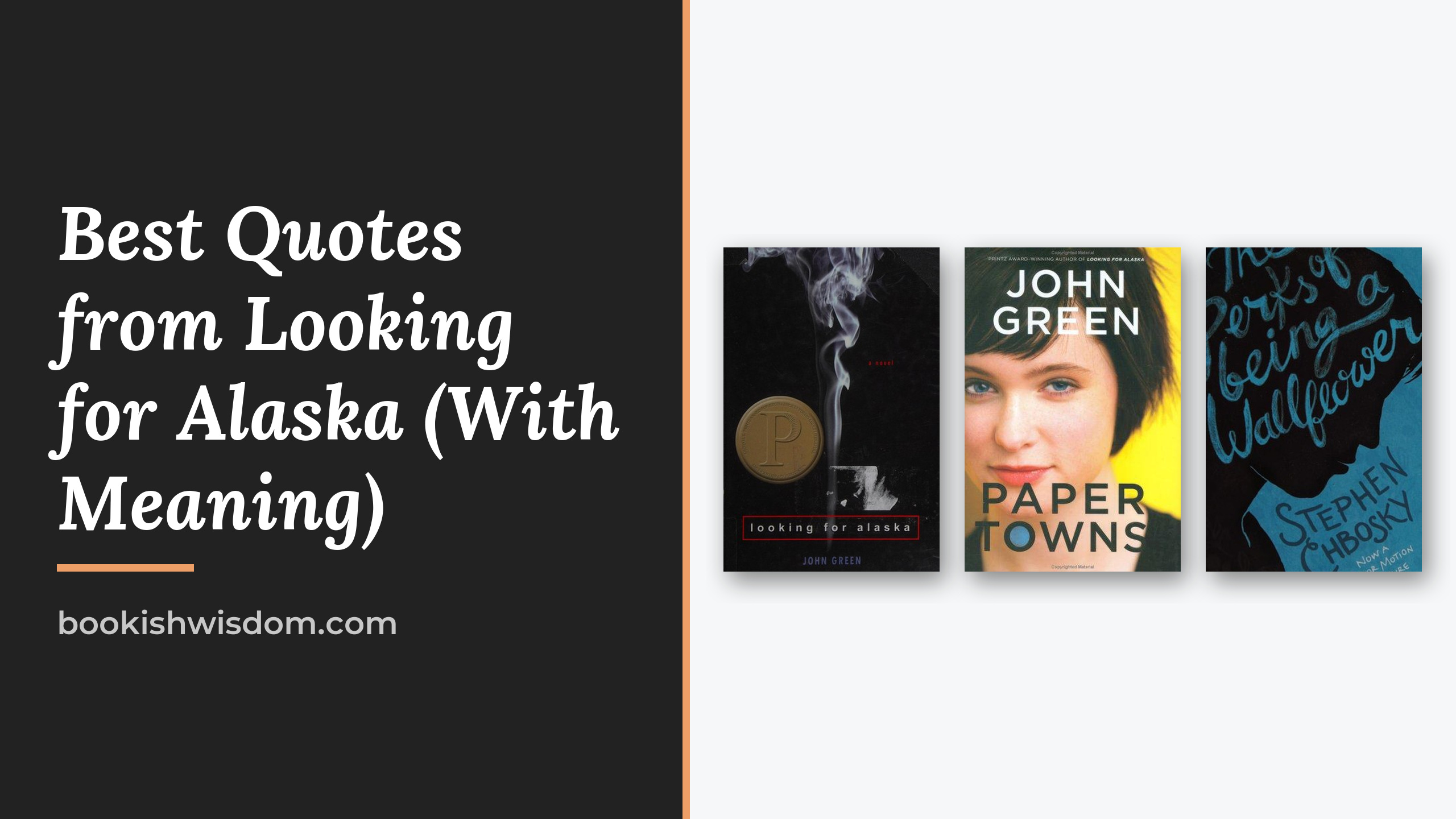
Disclosure: As an Amazon Associate, Bookish Wisdom earns from qualifying purchases. This doesn't change our picks or your price.
Quick answer: The best quotes from Looking for Alaska by John Green include “I go to seek a Great Perhaps.” and “How will I ever get out of this labyrinth!” Below are 4 of the most memorable lines, with who says them, where they come from and what they mean.
Quick facts
- Book: Looking for Alaska by John Green
- First published: 2005
- Quotes covered: 4
- Best for: essays, captions, book club talks and rereads
Table of Contents
What Looking for Alaska Is About
Miles Halter, a quiet teenager who collects famous last words, leaves Florida for Culver Creek boarding school in Alabama to seek what the poet Rabelais called a Great Perhaps. There he meets his roommate, the Colonel, and the brilliant, funny and unpredictable Alaska Young, and he falls for her. The novel is divided into Before and After, counting down to an event that changes all of them.
Check price of Looking for Alaska on Amazon
The Best Quotes from Looking for Alaska, Explained
1. “I go to seek a Great Perhaps.”
Rabelais's last words, quoted by Miles. Miles leaves home with these words in mind. They capture his hope that life holds something bigger than his ordinary routine.
2. “How will I ever get out of this labyrinth!”
Simon Bolivar's last words, quoted by Alaska. Alaska becomes obsessed with this line. She and Miles argue about whether the labyrinth is life or suffering.
3. “If people were rain, I was drizzle and she was a hurricane.”
Miles, about Alaska. Miles compares his quiet nature with Alaska's wild energy. The line is one of the most quoted from the book.
4. “Imagining the future is a kind of nostalgia.”
Alaska. Alaska says people spend their lives dreaming about the future to escape the present. It is a sharp thought about hope and restlessness.
Why These Lines Stay With Readers
Looking for Alaska won the Michael L. Printz Award and launched John Green's career. Its lines about friendship, memory and big questions are quoted widely by teen readers. Green has said the book grew out of his own time at a boarding school in Alabama, which gives the campus scenes, pranks and late-night talks their realistic feel. Readers often say it captures how intense friendships feel at sixteen.
How to Use These Quotes
- In an essay: introduce the quote, give its context in one sentence, then explain how it supports your point.
- For a book club: read one line aloud and ask whether everyone agrees with the speaker.
- For a caption or card: pick a short line and credit John Green and Looking for Alaska.
- For a reread: look for the moment each line appears and notice what changes around it.
A Note on Quoting Looking for Alaska Accurately
Wording can differ slightly between editions, translations and film versions, and many lines shared online are paraphrased or misattributed. If you need an exact quote for an essay, check it against a printed copy of Looking for Alaska and note the edition and page number. The lines above are given as they appear in the book, not as they were changed for later adaptations.
When you quote in an essay, keep the quotation short and let your own explanation do most of the work. A good pattern is to name the speaker, place the line in the story, quote it and then spend two or three sentences on what it shows. Quotes from Looking for Alaska work best when they support a clear point about a character or theme, rather than standing alone.
Discussion Questions
- Which quote above best sums up Looking for Alaska for you, and why?
- Do any of these lines mean something different once you know how the book ends?
- Which quote would you disagree with, and what would you say back?
If You Love the Writing in Looking for Alaska
-
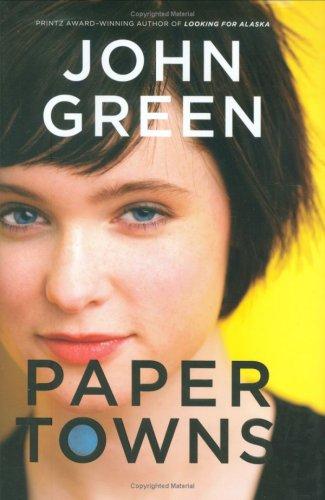
Paper Towns by John Green
-

The Perks of Being a Wallflower by Stephen Chbosky
Related: Looking for Alaska by John Green: Summary and Key Takeaways · Themes in Looking for Alaska Explained
Frequently Asked Questions
What is the most famous quote from Looking for Alaska?
One of the best-known lines is “I go to seek a Great Perhaps.” (rabelais's last words, quoted by Miles).
Who wrote Looking for Alaska?
Looking for Alaska was written by John Green and first published in 2005.
Can I use quotes from Looking for Alaska in an essay?
Yes. Short quotations with clear credit to John Green are standard in essays and reviews. Always explain the quote in your own words.
What should I read after Looking for Alaska?
Try Paper Towns by John Green or The Perks of Being a Wallflower by Stephen Chbosky.