
Disclosure: As an Amazon Associate, Bookish Wisdom earns from qualifying purchases. This doesn't change our picks or your price.
Quick answer: The best quotes from Much Ado About Nothing by William Shakespeare include “I wonder that you will still be talking, Signior Benedick: nobody marks you.” and “I had rather hear my dog bark at a crow than a man swear he loves me.” Below are 5 of the most memorable lines, with who says them, where they come from and what they mean.
Quick facts
- Book: Much Ado About Nothing by William Shakespeare
- First published: c. 1598
- Quotes covered: 5
- Best for: essays, captions, book club talks and rereads
Table of Contents
What Much Ado About Nothing Is About
In Messina, the soldiers Claudio and Benedick return from war. Claudio falls in love with sweet Hero, while Benedick and Hero's cousin Beatrice keep up a war of witty insults. Their friends trick the two into falling in love, while the villain Don John tricks Claudio into believing Hero is unfaithful. Claudio shames her at the altar, and it takes a bumbling constable and a staged death to set things right.
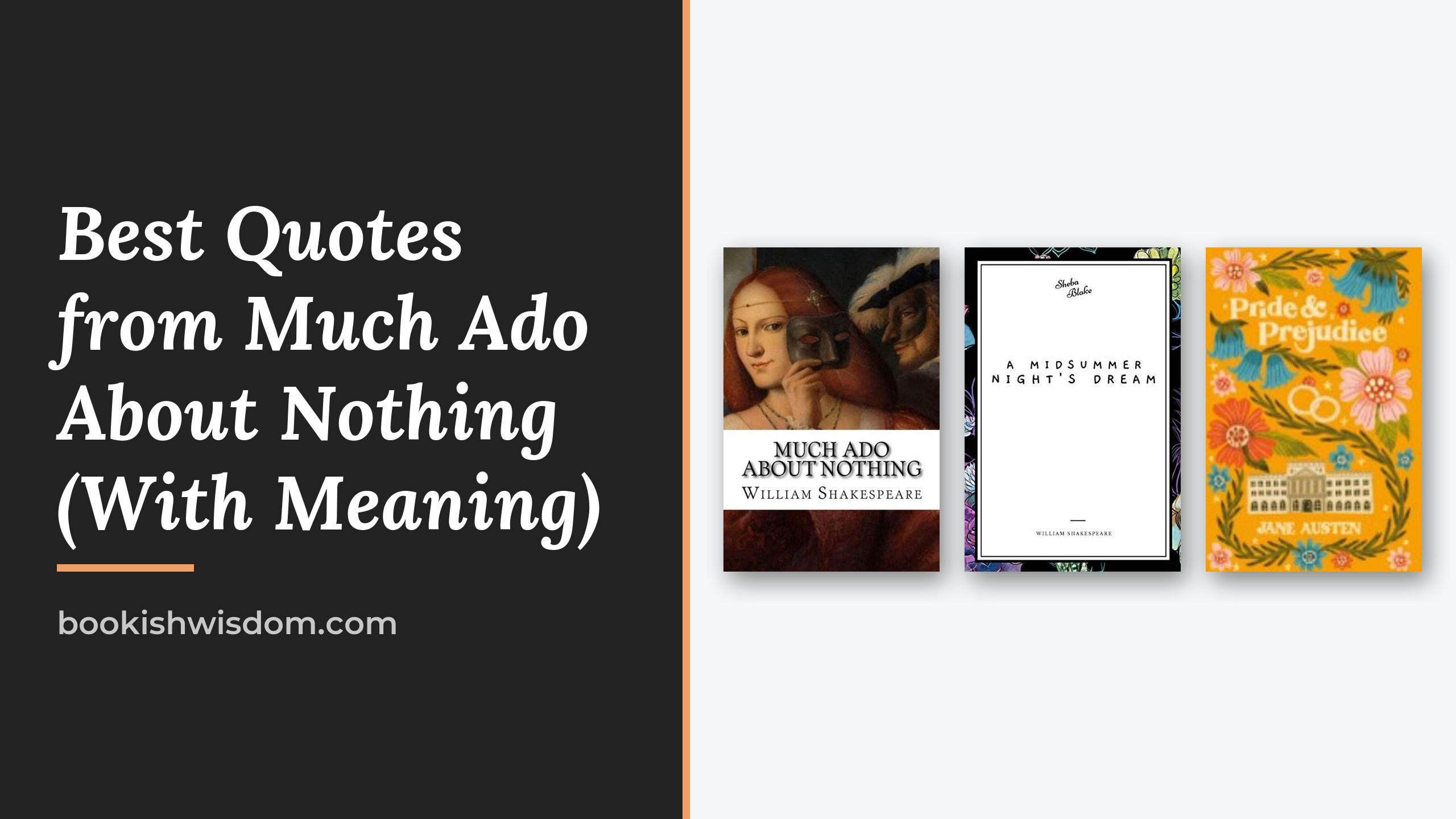
Check price of Much Ado About Nothing on Amazon
The Best Quotes from Much Ado About Nothing, Explained
1. “I wonder that you will still be talking, Signior Benedick: nobody marks you.”
Beatrice. Beatrice's first jab at Benedick sets the tone for their sparring. Her wit makes her one of Shakespeare's most popular heroines.
2. “I had rather hear my dog bark at a crow than a man swear he loves me.”
Beatrice. Beatrice claims she wants nothing to do with love. Her sharp humor hides the feelings she will soon admit.
3. “Sigh no more, ladies, sigh no more, / Men were deceivers ever.”
Balthasar's song. The song tells women not to waste tears on unfaithful men. It fits a play full of deceptions, both cruel and kind.
4. “The world must be peopled.”
Benedick. After vowing never to marry, Benedick changes his mind and makes this comic excuse. The line shows how easily pride gives way to love.
5. “I do love nothing in the world so well as you: is not that strange?”
Benedick, to Beatrice. The two finally confess their feelings. After all their arguing, this tender, slightly puzzled admission is one of the sweetest moments in the play.
Why These Lines Stay With Readers
Much Ado About Nothing is beloved for Beatrice and Benedick, whose quick wit still feels modern. Its lines are popular at weddings and in essays on love, pride and how easily people are fooled.
How to Use These Quotes
- In an essay: introduce the quote, give its context in one sentence, then explain how it supports your point.
- For a book club: read one line aloud and ask whether everyone agrees with the speaker.
- For a caption or card: pick a short line and credit William Shakespeare and Much Ado About Nothing.
- For a reread: look for the moment each line appears and notice what changes around it.
A Note on Quoting Much Ado About Nothing Accurately
Wording can differ slightly between editions, translations and film versions, and many lines shared online are paraphrased or misattributed. If you need an exact quote for an essay, check it against a printed copy of Much Ado About Nothing and note the edition and page number. The lines above are given as they appear in the book, not as they were changed for later adaptations.
When you quote in an essay, keep the quotation short and let your own explanation do most of the work. A good pattern is to name the speaker, place the line in the story, quote it and then spend two or three sentences on what it shows. Quotes from Much Ado About Nothing work best when they support a clear point about a character or theme, rather than standing alone.
Discussion Questions
- Which quote above best sums up Much Ado About Nothing for you, and why?
- Do any of these lines mean something different once you know how the book ends?
- Which quote would you disagree with, and what would you say back?
If You Love the Writing in Much Ado About Nothing
-
A Midsummer Night's Dream by William Shakespeare
-
Pride and Prejudice by Jane Austen
Related: Much Ado About Nothing by William Shakespeare: Summary and Key Takeaways · Much Ado About Nothing Characters: A Complete Guide
Frequently Asked Questions
What is the most famous quote from Much Ado About Nothing?
One of the best-known lines is “I wonder that you will still be talking, Signior Benedick: nobody marks you.” (beatrice).
Who wrote Much Ado About Nothing?
Much Ado About Nothing was written by William Shakespeare and first published in c. 1598.
Can I use quotes from Much Ado About Nothing in an essay?
Yes. Short quotations with clear credit to William Shakespeare are standard in essays and reviews. Always explain the quote in your own words.
What should I read after Much Ado About Nothing?
Try A Midsummer Night's Dream by William Shakespeare or Pride and Prejudice by Jane Austen.