
Disclosure: As an Amazon Associate, Bookish Wisdom earns from qualifying purchases. This doesn't change our picks or your price.
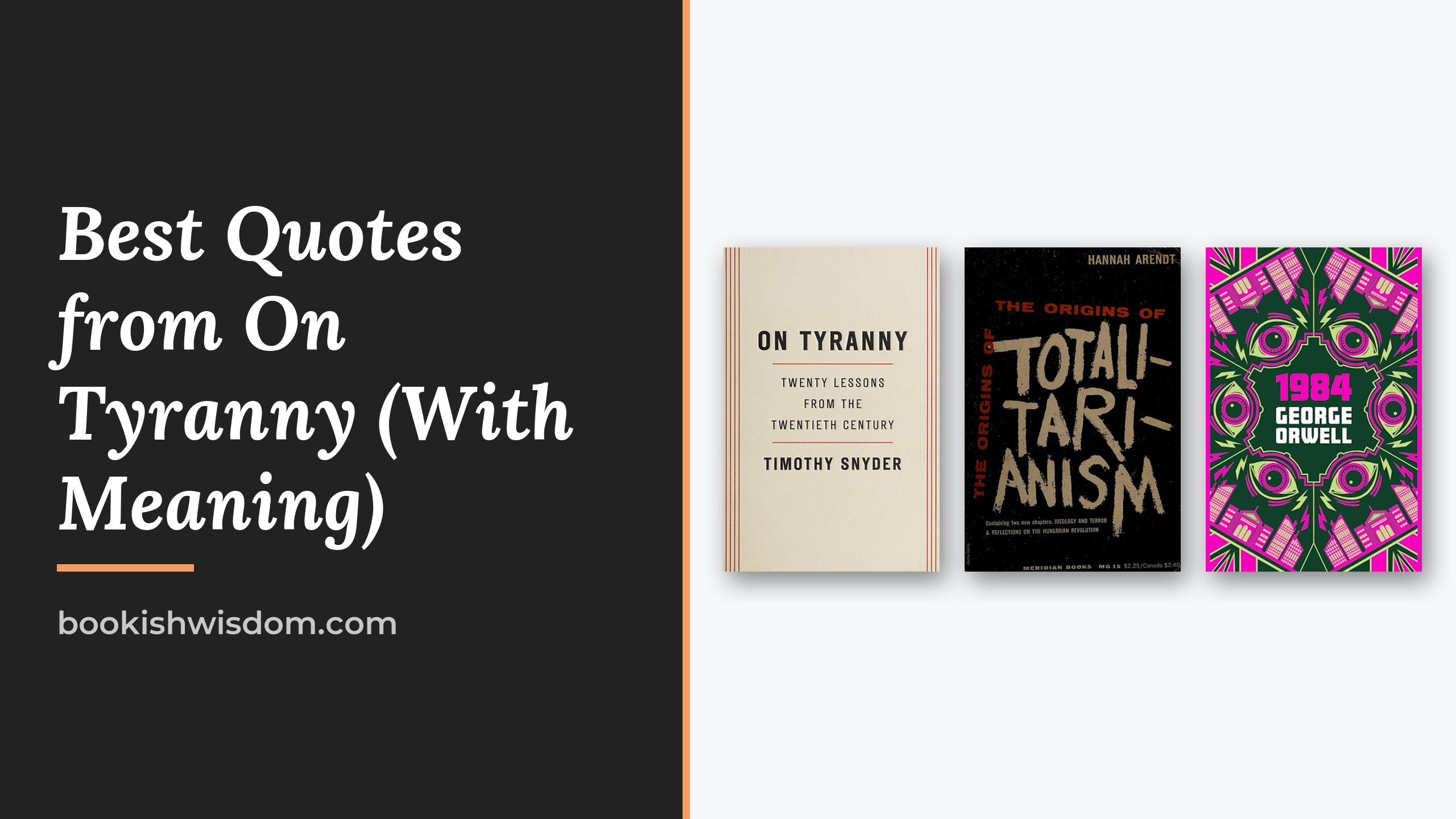
Quick answer: The best quotes from On Tyranny by Timothy Snyder include “Do not obey in advance.” and “Defend institutions.” Below are 5 of the most memorable lines, with who says them, where they come from and what they mean.
Quick facts
- Book: On Tyranny by Timothy Snyder
- First published: 2017
- Quotes covered: 5
- Best for: essays, captions, book club talks and rereads
Table of Contents
What On Tyranny Is About
Historian Timothy Snyder, an expert on twentieth-century Europe, offers twenty short lessons drawn from the rise of fascism and communism. Each chapter gives practical advice for protecting democracy, such as defending institutions, supporting a free press, believing in truth and being kind to neighbors. The book is short enough to read in an afternoon.
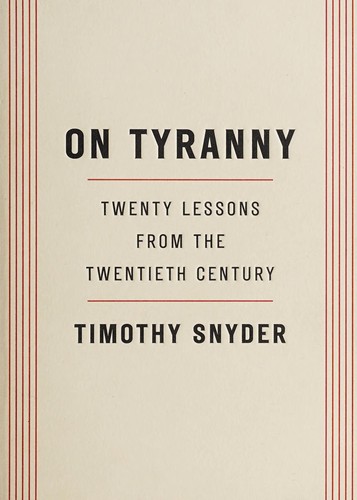
Check price of On Tyranny on Amazon
The Best Quotes from On Tyranny, Explained
1. “Do not obey in advance.”
Lesson 1. Snyder warns that much of the power of authoritarianism is freely given. People often obey before they are even asked.
2. “Defend institutions.”
Lesson 2. Courts, newspapers and unions protect citizens only if people protect them.
3. “To abandon facts is to abandon freedom.”
Lesson 10. If nothing is true, no one can criticize power. Truth is the basis of freedom.
4. “Post-truth is pre-fascism.”
Lesson 10. Snyder argues that the breakdown of truth opens the way for tyranny.
5. “Be calm when the unthinkable arrives.”
Lesson 19. Leaders often use emergencies to grab power. Staying calm helps citizens resist.
Why These Lines Stay With Readers
On Tyranny became a surprise bestseller and has been translated into dozens of languages. Snyder wrote it quickly after the 2016 US election, drawing on his research into Nazi Germany and the Soviet Union. Its short, punchy chapter titles make the lessons easy to remember and quote. The book is used in classrooms and discussion groups across the political spectrum to talk about civic responsibility, media literacy and history. A graphic edition illustrated by Nora Krug appeared in 2021, and readers often pair the book with longer histories of the twentieth century to see the examples behind each lesson. Other lessons include 'Take responsibility for the face of the world', 'Make eye contact and small talk' and 'Be as courageous as you can', so the advice moves from public life to everyday habits. Each chapter ends with a short historical example, often from Germany in the 1930s or Central Europe after 1945, which shows how ordinary people either resisted or went along with injustice. That mix of history and practical action is why readers find the lines so easy to apply.
How to Use These Quotes
- In an essay: introduce the quote, give its context in one sentence, then explain how it supports your point.
- For a book club: read one line aloud and ask whether everyone agrees with the speaker.
- For a caption or card: pick a short line and credit Timothy Snyder and On Tyranny.
- For a reread: look for the moment each line appears and notice what changes around it.
A Note on Quoting On Tyranny Accurately
Wording can differ slightly between editions, translations and film versions, and many lines shared online are paraphrased or misattributed. If you need an exact quote for an essay, check it against a printed copy of On Tyranny and note the edition and page number. The lines above are given as they appear in the book, not as they were changed for later adaptations.
When you quote in an essay, keep the quotation short and let your own explanation do most of the work. A good pattern is to name the speaker, place the line in the story, quote it and then spend two or three sentences on what it shows. Quotes from On Tyranny work best when they support a clear point about a character or theme, rather than standing alone.
Reading the Lines in Context
A quote often means more once you know where it falls in the story. Before using any of these lines, reread the surrounding page or two and ask what has just happened, who is listening and what the speaker wants. The same words can sound hopeful, ironic or desperate depending on that moment. Noticing this context is what turns a memorable line into real evidence for an argument about the book.
Discussion Questions
- Which quote above best sums up On Tyranny for you, and why?
- Do any of these lines mean something different once you know how the book ends?
- Which quote would you disagree with, and what would you say back?
If You Love the Writing in On Tyranny
-

The Origins of Totalitarianism by Hannah Arendt
-
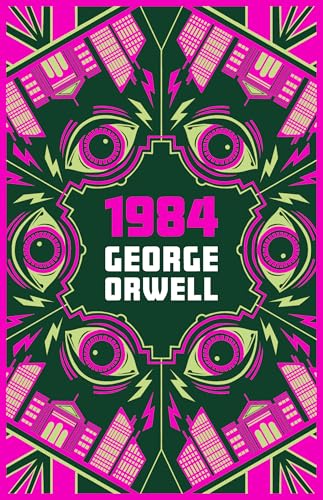
Nineteen Eighty-Four by George Orwell
Related: On Tyranny by Timothy Snyder: Summary and Key Takeaways · 15 Books Like On Tyranny You’ll Love
Frequently Asked Questions
What is the most famous quote from On Tyranny?
One of the best-known lines is “Do not obey in advance.” (lesson 1).
Who wrote On Tyranny?
On Tyranny was written by Timothy Snyder and first published in 2017.
Can I use quotes from On Tyranny in an essay?
Yes. Short quotations with clear credit to Timothy Snyder are standard in essays and reviews. Always explain the quote in your own words.
What should I read after On Tyranny?
Try The Origins of Totalitarianism by Hannah Arendt or Nineteen Eighty-Four by George Orwell.