
Disclosure: As an Amazon Associate, Bookish Wisdom earns from qualifying purchases. This doesn't change our picks or your price.
Quick answer: The best quotes from Pygmalion by George Bernard Shaw include “I washed my face and hands afore I come, I did.” and “Walk! Not bloody likely.” Below are 4 of the most memorable lines, with who says them, where they come from and what they mean.
Quick facts
- Book: Pygmalion by George Bernard Shaw
- First published: 1913
- Quotes covered: 4
- Best for: essays, captions, book club talks and rereads
Table of Contents
What Pygmalion Is About
Phonetics professor Henry Higgins bets his friend Colonel Pickering that he can teach Eliza Doolittle, a Cockney flower girl from Covent Garden, to speak so well that she can pass as a duchess. After months of lessons, Eliza triumphs at a society party, but Higgins treats her as an experiment rather than a person. Eliza must decide who she is now that she can no longer go back to her old life.
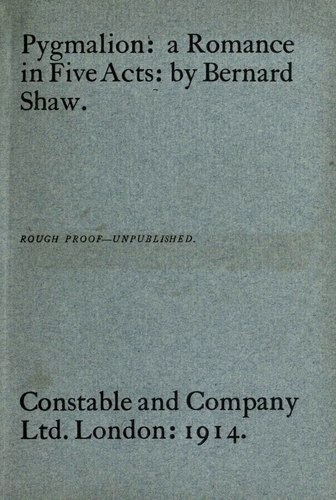
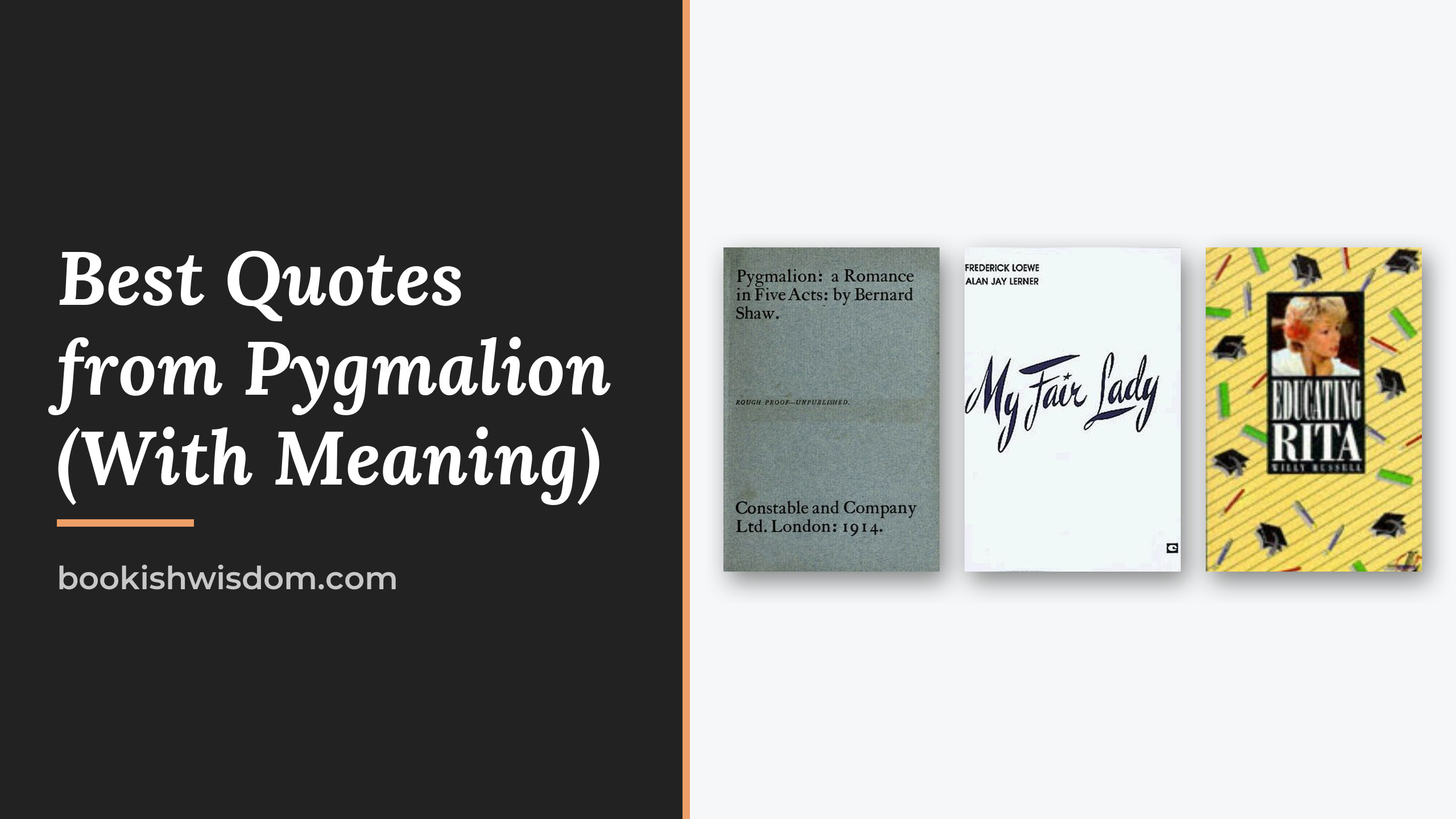
Check price of Pygmalion on Amazon
The Best Quotes from Pygmalion, Explained
1. “I washed my face and hands afore I come, I did.”
Eliza Doolittle, Act II. Eliza's proud insistence shows her dignity. She is poor, but she wants respect.
2. “Walk! Not bloody likely.”
Eliza, Act III. At a polite tea party, Eliza's perfect accent slips into shocking language. The line caused a sensation at the 1914 London premiere.
3. “the difference between a lady and a flower girl is not how she behaves, but how she's treated.”
Eliza, Act V. This is the heart of the play. Eliza realizes that class is about how people are treated, not who they really are.
4. “The great secret, Eliza, is not having bad manners or good manners or any other particular sort of manners, but having the same manner for all human souls”
Higgins, Act V. Higgins defends treating everyone the same, rudely. The line shows his odd fairness and his blindness to Eliza's feelings.
Why These Lines Stay With Readers
Pygmalion is Shaw's most popular play and the basis for the musical My Fair Lady. Its quotes are often used in discussions about class, language and identity, because Shaw shows how an accent can open or close doors. Eliza's journey from flower girl to independent woman makes her one of the great stage heroines, and Shaw insisted she should not end up marrying Higgins. The witty dialogue keeps the play funny, while the questions about respect and self-worth make it serious. Students often compare the original ending with the musical's romantic version.
How to Use These Quotes
- In an essay: introduce the quote, give its context in one sentence, then explain how it supports your point.
- For a book club: read one line aloud and ask whether everyone agrees with the speaker.
- For a caption or card: pick a short line and credit George Bernard Shaw and Pygmalion.
- For a reread: look for the moment each line appears and notice what changes around it.
A Note on Quoting Pygmalion Accurately
Wording can differ slightly between editions, translations and film versions, and many lines shared online are paraphrased or misattributed. If you need an exact quote for an essay, check it against a printed copy of Pygmalion and note the edition and page number. The lines above are given as they appear in the book, not as they were changed for later adaptations.
When you quote in an essay, keep the quotation short and let your own explanation do most of the work. A good pattern is to name the speaker, place the line in the story, quote it and then spend two or three sentences on what it shows. Quotes from Pygmalion work best when they support a clear point about a character or theme, rather than standing alone.
Reading the Lines in Context
A quote often means more once you know where it falls in the story. Before using any of these lines, reread the surrounding page or two and ask what has just happened, who is listening and what the speaker wants. The same words can sound hopeful, ironic or desperate depending on that moment. Noticing this context is what turns a memorable line into real evidence for an argument about the book.
Discussion Questions
- Which quote above best sums up Pygmalion for you, and why?
- Do any of these lines mean something different once you know how the book ends?
- Which quote would you disagree with, and what would you say back?
If You Love the Writing in Pygmalion
-
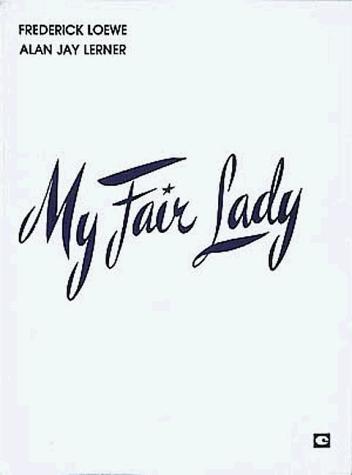
My Fair Lady by Alan Jay Lerner
-
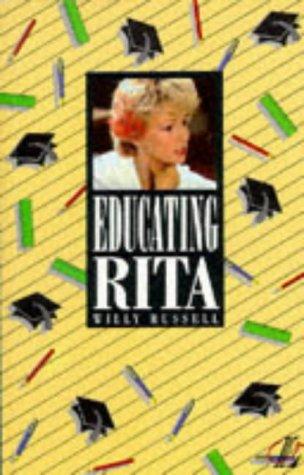
Educating Rita by Willy Russell
Related: 15 Books Like Pygmalion You’ll Love
Frequently Asked Questions
What is the most famous quote from Pygmalion?
One of the best-known lines is “I washed my face and hands afore I come, I did.” (eliza Doolittle, Act II).
Who wrote Pygmalion?
Pygmalion was written by George Bernard Shaw and first published in 1913.
Can I use quotes from Pygmalion in an essay?
Yes. Short quotations with clear credit to George Bernard Shaw are standard in essays and reviews. Always explain the quote in your own words.
What should I read after Pygmalion?
Try My Fair Lady by Alan Jay Lerner or Educating Rita by Willy Russell.