
Disclosure: As an Amazon Associate, Bookish Wisdom earns from qualifying purchases. This doesn't change our picks or your price.
TL;DR: In January 1945, four young refugees fleeing the Soviet advance converge on the Baltic coast hoping to board the Wilhelm Gustloff, a ship that promises escape. Their stories, told in short alternating chapters, show the human cost of war just before the worst maritime disaster in history.
Table of Contents
Salt to the Sea at a Glance
| Author | Ruta Sepetys |
| First published | 2016 |
| Type | Young adult historical fiction |
| Best for | readers of World War II fiction and little-known history |
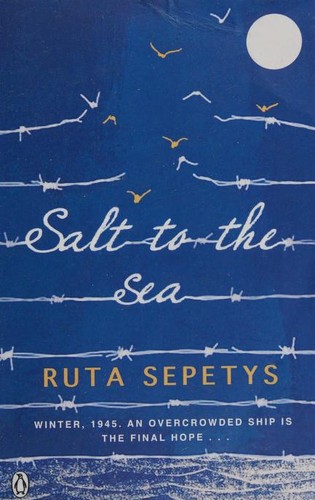
Salt to the Sea is a novel by Ruta Sepetys, first published in 2016. The book is based on the real sinking of the Wilhelm Gustloff, which many historians call the deadliest maritime disaster in history. Below you will find a part-by-part summary, five key takeaways, a few ideas worth remembering and a note on who will enjoy it most. The part-by-part section gives away the plot, including the ending, so skip it if you have not read the book yet.
Content note: Includes war violence, loss and implied sexual violence.
What Happens, Part by Part (Contains Spoilers)
Four narrators
The book alternates between four voices: Joana, a Lithuanian nurse, Emilia, a Polish teenager, Florian, a Prussian with a secret, and Alfred, a German sailor with delusions of grandeur. Their chapters are short and urgent.
The trek
Joana, Emilia and Florian travel with a group of refugees across snowy roads. They help each other, find a young boy to protect and face attacks along the way.
Secrets
Each carries a burden. Joana feels guilt for what she has seen, Emilia is hiding a pregnancy, and Florian carries something he stole. Their secrets unfold as their trust grows.
Alfred's letters
Alfred, serving on the Wilhelm Gustloff, writes imaginary letters to a girl and dreams of heroism. His self-importance contrasts with the suffering of the refugees.
The ship
The group reaches the port and boards the ship, which is crowded with thousands of civilians. The sense of relief is brief, because they are on a ship that is a target.
The sinking
Soviet torpedoes strike the ship in the cold night. The final chapters show a desperate struggle to survive, and the characters' fates become clear in the ending.
5 Key Takeaways
- War harms ordinary people, and history often forgets the civilians.
- Short chapters from different voices can build a large picture of an event.
- Kindness in a time of crisis can be an act of resistance.
- Secrets and guilt weigh on people, but shared burdens are lighter.
- A little-known history can be as powerful as a famous one.
Ideas Worth Remembering
These are paraphrased, not direct quotes:
- The author wanted to bring a forgotten tragedy to a wide audience.
- The reader knows about the ship's fate, which gives each page a sense of dread.
- The four voices show that victims and perpetrators are not always easy to separate.
Who Should Read Salt to the Sea?
Read it if you like historical fiction, especially stories of World War II from less familiar angles. It is suitable for teens and adults, but it deals with serious loss.
Questions to Think About After Reading
These prompts work for solo reading, a book club or a classroom discussion of Salt to the Sea:
- Which character did you understand best, and what did the author do to make you feel that way?
- Which scene would you change, and what would that do to the ending?
- What does the book say about its main theme that you agree or disagree with?
How to Use This Summary
Use this page as a quick reference before a book club meeting, an exam, or a decision about whether Salt to the Sea is worth your time. The takeaways are written to stand on their own. If a point interests you, go back to the book for the author's full argument, examples and style, which no short summary can carry.
A Note on Accuracy and Spoilers
This summary is based on the published text of Salt to the Sea, not on any film, series or stage adaptation, which often change the story. Details are kept at the level of the main events so that nothing is invented. Editions differ slightly in length and wording, so page numbers and small details may vary from your copy.
Should You Read the Book?
If you plan to read it, set aside a few evenings and read the opening chapters before you decide. A summary tells you what happens, but the voice and pacing are what make a novel work or not.
Check price of Salt to the Sea on Amazon
What to Read Next
- Between Shades of Gray by Ruta Sepetys: Sepetys's novel about Lithuanian deportations
- The Book Thief by Markus Zusak: a WWII story narrated by Death
- All the Light We Cannot See by Anthony Doerr: a WWII novel with alternating voices
Related: 15 Books Like Salt to the Sea You’ll Love
Frequently Asked Questions
Is Salt to the Sea a true story?
It is fiction, but it is based on the real sinking of the Wilhelm Gustloff in January 1945.
Who are the narrators?
Joana, Emilia, Florian and Alfred.
What age is it for?
It is usually read by ages 14 and up.
Does the book have a happy ending?
The ending is bittersweet, with loss and some survival.
Is Salt to the Sea worth reading?
It depends on what you want. The book is best for readers of World War II fiction and little-known history. If that describes you, it is likely a good fit. If not, the titles under What to Read Next may suit you better.
Can this summary replace reading Salt to the Sea?
No. A summary covers the main events and ideas, but it cannot carry the author's voice, detail or pacing. Use it to decide whether to read the book, to refresh your memory or to prepare for a discussion.