

Disclosure: As an Amazon Associate, Bookish Wisdom earns from qualifying purchases. This doesn't change our picks or your price.
TL;DR: Eighteen-year-old Caroline “Carrie” Meeber leaves her small town for Chicago in 1889. After struggling in factory work, she becomes the mistress of a salesman, Drouet, and later of a manager, George Hurstwood, who steals money and flees with her to New York. As Carrie rises to fame as an actress, Hurstwood sinks into poverty and despair.
Table of Contents
Sister Carrie at a Glance
| Author | Theodore Dreiser |
| First published | 1900 |
| Type | Novel |
| Best for | readers who want a classic of American realism about ambition and desire |
Sister Carrie is the first novel of Theodore Dreiser, published in 1900. It was controversial because Carrie is never punished for her choices. Below you will find a part-by-part summary, five key takeaways, ideas worth remembering and a note on who will enjoy it.
Content note: Includes a suicide, poverty and relationships outside marriage.
Main Characters
- Carrie Meeber: An ambitious young woman from Wisconsin.
- Charles Drouet: A charming traveling salesman.
- George Hurstwood: A married manager of a fashionable bar.
- Minnie Hanson: Carrie's sister in Chicago.
- Bob Ames: A thoughtful engineer Carrie admires.
What Happens, Part by Part (Contains Spoilers)
Chicago
Carrie takes a train to Chicago and meets Drouet. She lives with her sister and works in a shoe factory, but the work is exhausting and poorly paid. After falling ill and losing her job, she accepts Drouet's help and becomes his mistress.
Hurstwood
Drouet introduces Carrie to his friend Hurstwood, who falls in love with her. Carrie acts in an amateur play and discovers she has talent. Hurstwood's wife learns of his interest in Carrie and demands a divorce settlement.
The theft
Hurstwood, drunk and desperate, takes money from his employer's safe. The safe clicks shut, and he flees with the money, tricking Carrie into coming with him. He later returns most of it but cannot go back. They marry in Montreal, though the marriage is not legal.
New York
In New York, Hurstwood's fortunes decline. His business fails, and he becomes lazy and depressed. Carrie gets work in the theater and becomes successful. She leaves Hurstwood, who becomes a beggar.
Endings
Carrie becomes a famous actress, admired and wealthy, but she still feels restless and unfulfilled. Hurstwood, homeless and broken, takes his own life in a cheap lodging house. Carrie sits in her rocking chair, dreaming of a happiness she may never find.
5 Key Takeaways
- Ambition can lead to success without happiness.
- Cities promise opportunity but also danger.
- Fortunes can rise and fall dramatically.
- Desire for more drives people's choices.
- Society's morals do not always match reality.
Ideas Worth Remembering
These are paraphrased, not direct quotes:
- Getting what you want does not always satisfy you.
- Small decisions can change the course of a life.
- Success for one person can mirror another's fall.
Who Should Read Sister Carrie?
Read Sister Carrie if you enjoy American realism, city life and complex characters. It suits adults and older teens.
Questions to Think About After Reading
These prompts work for solo reading, a book club or a classroom discussion of Sister Carrie:
- Is Carrie a heroine or a survivor?
- Why does Hurstwood decline so completely?
- What does Carrie want?
How to Use This Summary
Use this page as a quick reference before a book club meeting, an exam, or a decision about whether Sister Carrie is worth your time. The takeaways are written to stand on their own. If a point interests you, go back to the book for the author's full story, characters and style, which no short summary can replace.
A Note on Accuracy and Spoilers
This summary is based on the published text of Sister Carrie, not on any film, series or stage adaptation, which often change the story. Details are kept at the level of the main events so that nothing is invented. Editions differ slightly in length and wording, so page numbers and small details may vary between copies.
Should You Read the Book?
Yes. It is long and detailed, but Hurstwood's decline is unforgettable, and the novel's honesty still feels modern.
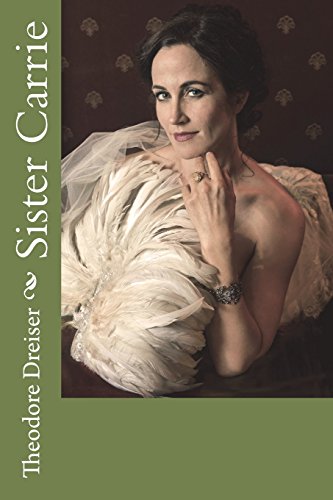
Check price of Sister Carrie on Amazon
What to Read Next
- An American Tragedy by Theodore Dreiser: Dreiser's masterpiece
- The House of Mirth by Edith Wharton: a woman and money
- The Great Gatsby by F. Scott Fitzgerald: the American Dream and desire
Frequently Asked Questions
What is Sister Carrie about?
A young woman rises to fame in the city while her lover falls into poverty.
Who wrote it?
Theodore Dreiser, in 1900.
Why was it controversial?
Carrie is not punished for her relationships, which shocked readers.
What happens to Hurstwood?
He becomes homeless and takes his own life.
What does Carrie become?
A successful actress.
What age is it for?
Adults and older teens.
How long is it?
About 500 pages.
Is there a film?
Yes, Carrie (1952), starring Laurence Olivier.
Who is Drouet?
The salesman who first helps Carrie.
Where is it set?
In Chicago and New York.
Is it an example of naturalism?
Yes. It shows people shaped by social and economic forces.
Why does Carrie leave Hurstwood?
His money runs out, and he stops working while she succeeds.
Who is Bob Ames?
A thoughtful young engineer who encourages Carrie to aim higher.
Who are the main characters in Sister Carrie?
The main characters are Carrie Meeber, Charles Drouet, George Hurstwood, Minnie Hanson and Bob Ames. Carrie Meeber: An ambitious young woman from Wisconsin. Charles Drouet: A charming traveling salesman. George Hurstwood: A married manager of a fashionable bar.
Is Sister Carrie worth reading?
It depends on what you want. The book is best for readers who want a classic of American realism about ambition and desire. If that describes you, it is likely a good fit. If not, the titles under What to Read Next may suit you better.