
Disclosure: As an Amazon Associate, Bookish Wisdom earns from qualifying purchases. This doesn't change our picks or your price.
TL;DR: Billy Pilgrim, an American soldier captured in the Second World War, survives the firebombing of Dresden in an underground meat locker. He becomes “unstuck in time”, jumping between moments of his life, including his abduction by aliens called Tralfamadorians, who teach him that all moments exist at once.
Table of Contents
Slaughterhouse-Five at a Glance
| Author | Kurt Vonnegut |
| First published | 1969 |
| Type | Novel |
| Best for | readers who want a darkly funny, unforgettable anti-war classic |
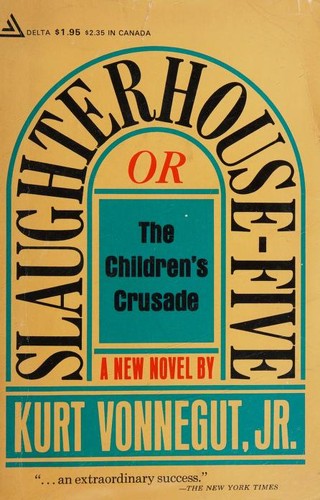
Slaughterhouse-Five, or The Children's Crusade is a novel by Kurt Vonnegut, first published in 1969. Vonnegut himself survived the bombing of Dresden as a prisoner of war, and the book mixes science fiction, satire and memoir. Below you will find a part-by-part summary, five key takeaways, ideas worth remembering and a note on who will enjoy it.
Content note: Includes war violence and mass death.
Main Characters
- Billy Pilgrim: A gentle, passive soldier who becomes unstuck in time.
- The Tralfamadorians: Aliens who see all of time at once.
- Roland Weary: A bullying soldier captured with Billy.
- Edgar Derby: A kind older soldier executed for taking a teapot.
- Kilgore Trout: A struggling science fiction writer Billy admires.
What Happens, Part by Part (Contains Spoilers)
Unstuck in time
Vonnegut opens by explaining his long struggle to write about Dresden. Billy Pilgrim, an optometrist from Ilium, New York, claims he has become unstuck in time, experiencing moments of his life out of order. He jumps between the war, his marriage, his old age and other moments.
Captured
During the Battle of the Bulge, Billy, an unarmed assistant, is lost behind enemy lines with the bully Roland Weary and two scouts. They are captured by Germans. Weary dies in a boxcar and blames Billy. The prisoners are sent to a camp and then to Dresden.
Tralfamadore
Billy says that in 1967 he was abducted by Tralfamadorians, who kept him in a zoo with a film star, Montana Wildhack. They see all moments of time at once, so for them death is just one moment among many, and they say, “So it goes.”
Dresden
In Dresden, the prisoners are kept in Slaughterhouse-Five, a former meat-packing building. When Allied bombers destroy the city in February 1945, Billy and the others survive in an underground meat locker. Afterward, they dig corpses out of the ruins, and Edgar Derby is executed for taking a teapot.
The ending
After the war, Billy marries and becomes rich, survives a plane crash and loses his wife. He begins telling people about Tralfamadore. He predicts his own assassination years later, accepting it calmly. The novel ends in Dresden after the war, with a bird asking, “Poo-tee-weet?”
5 Key Takeaways
- War is absurd and destroys ordinary people.
- Trauma can break a person's sense of time.
- Humor can make unbearable events easier to face.
- Accepting what can't be changed is one way to cope, but it raises moral questions.
- Fiction can tell the truth about history.
Ideas Worth Remembering
These are paraphrased, not direct quotes:
- So it goes.
- There is nothing intelligent to say about a massacre.
- Every moment matters, even if we can't change it.
Who Should Read Slaughterhouse-Five?
Read Slaughterhouse-Five if you want a short, darkly funny classic about war and trauma. It suits older teens and adults.
Questions to Think About After Reading
These prompts work for solo reading, a book club or a classroom discussion of Slaughterhouse-Five:
- Is Billy really unstuck in time, or is it trauma?
- What does “So it goes” mean each time it appears?
- How does Vonnegut make us laugh and grieve at once?
How to Use This Summary
Use this page as a quick reference before a book club meeting, an exam, or a decision about whether Slaughterhouse-Five is worth your time. The takeaways are written to stand on their own. If a point interests you, go back to the book for the author's full story, characters and style, which no short summary can replace.
A Note on Accuracy and Spoilers
This summary is based on the published text of Slaughterhouse-Five, not on any film, series or stage adaptation, which often change the story. Details are kept at the level of the main events so that nothing is invented. Editions differ slightly in length and wording, so page numbers and small details may vary between copies.
Should You Read the Book?
If the summary caught your interest, read the opening chapters before you decide. A summary tells you what happens, but the voice and pacing are what make a book work or not.
Check price of Slaughterhouse-Five on Amazon
What to Read Next
- Catch-22 by Joseph Heller: the other great anti-war satire
- Cat's Cradle by Kurt Vonnegut: Vonnegut's apocalyptic satire
- The Things They Carried by Tim O'Brien: a modern classic about war and memory
Related: 15 Books Like Slaughterhouse-Five You’ll Love
Frequently Asked Questions
What is Slaughterhouse-Five about?
A soldier survives the Dresden bombing and becomes unstuck in time.
Did Vonnegut survive Dresden?
Yes. He was a prisoner of war there.
What does “So it goes” mean?
The phrase follows every death in the book, showing acceptance and irony.
Who are the Tralfamadorians?
Aliens who see all moments of time at once.
Why is it banned?
It has been challenged for profanity, sex and violence.
Is it science fiction?
It mixes science fiction with war memoir.
How long is it?
It is short, around 200 pages.
Is there a film?
Yes. A 1972 film was made.
What is the Children's Crusade?
The subtitle, pointing out that the soldiers were very young.
Is Slaughterhouse-Five worth reading?
It depends on what you want. The book is best for readers who want a darkly funny, unforgettable anti-war classic. If that describes you, it is likely a good fit. If not, the titles under What to Read Next may suit you better.