
Disclosure: As an Amazon Associate, Bookish Wisdom earns from qualifying purchases. This doesn’t change our picks or your price.
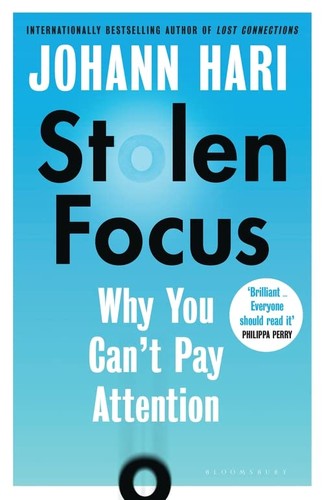
TL;DR: In Stolen Focus: Why You Can’t Pay Attention—and How to Think Deeply Again, journalist Johann Hari argues that our struggle to concentrate isn’t just a personal failing. He identifies a dozen causes, including constant task-switching, attention-harvesting technology, poor sleep, stress and the decline of deep reading, and calls for both personal changes and wider social action.
If you’ve ever picked up your phone “for a second” and lost twenty minutes, or struggled to read more than a few pages of a book, you’re not alone. Johann Hari, author of Chasing the Scream and Lost Connections, set out to understand why focus feels so hard today. He interviewed hundreds of experts and even spent three months offline in Provincetown, Massachusetts. Stolen Focus combines his personal experiment with research and interviews. Here’s a complete summary of the book’s main ideas and practical lessons.
Table of Contents
Stolen Focus at a Glance
| Detail | Info |
|---|---|
| Author | Johann Hari |
| Published | 2022 |
| Genre | Nonfiction / psychology / technology |
| Core idea | Our attention crisis has many causes, and many of them are systemic |
| Best for | Anyone who feels distracted, parents, teachers and heavy phone users |
What Is Stolen Focus About?
Hari argues that we often blame ourselves for being distracted, but our environment has changed dramatically. The way technology is designed, the pace of work, the food we eat, how we sleep and how children grow up all affect attention. The book explores twelve causes of declining focus and offers solutions at the personal and societal levels.
Key Ideas From the Book
Speed and Switching
We switch between tasks constantly, and each switch costs time and mental energy. Many people believe they’re good at multitasking, but research suggests the brain mostly switches rapidly between tasks, which leads to more mistakes and less creativity.
The Loss of Flow
Hari draws on psychologist Mihaly Csikszentmihalyi’s concept of flow, the deeply absorbed state where time disappears. Constant interruptions make flow harder to reach, yet flow is where many people find their best work and greatest satisfaction.
Exhaustion and Sleep
Poor sleep severely affects attention and memory. Hari argues that modern life, with screens, long hours and artificial light, has eroded sleep for many people.
The Decline of Sustained Reading
Reading long books trains deep, continuous attention. As people shift toward skimming short content online, Hari worries that this capacity weakens, which affects empathy and understanding as well as focus.
Mind-Wandering
Not all distraction is bad. Letting your mind wander, especially on walks or while resting, helps with creativity and problem-solving. Constant stimulation crowds out this useful type of wandering.
Technology Designed to Capture Attention
Hari interviews former tech insiders who describe how many apps are designed to maximize engagement through infinite scroll, notifications and algorithms that favor outrage. He argues the business model of selling attention to advertisers is a major cause of the crisis.
Stress, Diet and Children
Chronic stress keeps people in a state of vigilance that makes deep focus difficult. Hari also discusses diet, environmental factors and the shrinking freedom children have to play outside unsupervised, which he links to attention problems.
5 Key Takeaways From Stolen Focus
- Distraction isn’t just your fault. Many forces in modern life work against focus.
- Stop multitasking. Do one thing at a time to work better and feel calmer.
- Protect your sleep. Rest is one of the most powerful tools for attention.
- Use precommitment. Tools like phone lockboxes or website blockers stop distractions before they start.
- Let your mind wander. Walks and screen-free downtime fuel creativity.
Ideas Worth Remembering
- Your inability to focus is not a personal failing; it’s largely a result of the world you live in. (paraphrased)
- Attention is like a muscle that weakens when it’s constantly interrupted. (paraphrased)
- Getting your focus back requires both individual change and collective action. (paraphrased)
What Do Critics Say?
Many readers find the book eye-opening, but some scientists say Hari occasionally overstates research findings or presents debated studies as settled. It’s best read as an engaging, thought-provoking overview rather than a definitive scientific review.
Who Should Read Stolen Focus?
It’s ideal for anyone who feels their attention span has shrunk, parents and teachers worried about children’s focus, and professionals struggling with constant interruptions. If you enjoyed Dopamine Nation or Digital Minimalism, this is a natural next read.
What to Read Next
- Deep Work by Cal Newport on focused work in a distracted world.
- The Shallows by Nicholas Carr on how the internet affects our brains.
- Indistractable by Nir Eyal for practical ways to control your attention.
Related: Dopamine Nation summary and 12 tips to remember what you read.
Frequently Asked Questions
What is the main idea of Stolen Focus?
The main idea is that our declining ability to pay attention is caused by many factors, including technology design, task-switching, stress and poor sleep, not simply personal weakness.
How many causes of lost focus does Johann Hari identify?
Hari identifies twelve causes, ranging from constant task-switching and attention-harvesting technology to sleep loss, stress, diet and the decline of sustained reading.
How can I improve my focus according to Stolen Focus?
Hari suggests single-tasking, using precommitment tools like phone lockboxes, getting enough sleep, allowing time for mind-wandering and supporting wider changes to how technology is designed.